
Understanding AMD's Matrix Cores
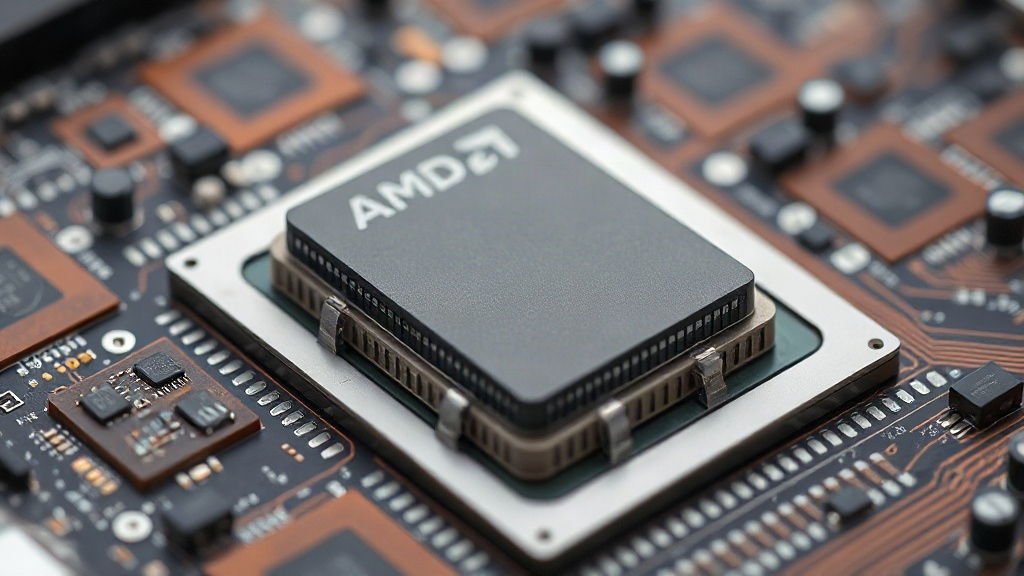
AMD's Matrix Cores, integrated into their Ryzen and EPYC processor lines, represent a significant advancement in hardware acceleration for artificial intelligence and high-performance computing workloads. These specialized units are designed to perform matrix multiplication and accumulation operations, the bedrock of deep learning training and inference, with remarkable efficiency. However, accurately modeling their performance, particularly under diverse workloads and with varying data types, has been a persistent challenge for researchers and developers alike. A new paper, accessible via arXiv, delves into the intricacies of these cores, proposing methods to achieve a higher fidelity of performance prediction.
The paper, titled "Accurate Models of AMD Matrix Cores," addresses the complexities that arise from the architecture of these cores. Unlike traditional CPU cores, Matrix Cores are optimized for massive parallelism and specific data formats (like FP16 and BF16) that are prevalent in AI. Their performance is not a simple extrapolation of general-purpose compute; it is heavily influenced by factors such as memory bandwidth, cache hierarchies, instruction scheduling, and the precise implementation of fused multiply-add (FMA) operations. Developing accurate models is critical for software optimization, compiler development, and hardware design. Without precise models, developers are left to empirical testing, a time-consuming and often incomplete process.
Methodology for Accurate Modeling
The researchers behind this work have developed novel techniques to capture the nuanced behavior of AMD's Matrix Cores. Their approach moves beyond simplistic performance counters and theoretical peak FLOPS calculations. Instead, it focuses on a multi-faceted modeling strategy that accounts for several key aspects:
- Instruction-Level Analysis: The paper meticulously breaks down the instruction set supported by the Matrix Cores, analyzing the latency and throughput of each operation. This includes understanding the interplay between different data types (e.g., FP32, FP16, BF16, INT8) and their impact on execution time.
- Memory Hierarchy Simulation: A significant portion of AI workloads is memory-bound. The models incorporate detailed simulations of the cache structures and memory bandwidth available to the Matrix Cores, predicting how data movement will affect overall performance. This is crucial, as the efficiency of loading and storing matrices can often dwarf the compute time itself.
- Workload Characterization: The researchers developed a suite of benchmarks designed to stress different aspects of the Matrix Cores. These benchmarks mimic real-world AI tasks, such as convolutional neural networks (CNNs) and transformer models, allowing for the validation of the models against actual hardware performance. The models are trained and validated using these diverse workloads, ensuring their applicability beyond synthetic tests.
- Power and Thermal Considerations: While not the primary focus, the paper acknowledges that power consumption and thermal throttling can impact sustained performance. Preliminary analyses suggest that the models can be extended to incorporate these factors, providing a more holistic view of performance under realistic operating conditions.
One of the most surprising details in the research is the significant performance delta observed when switching between FP16 and BF16 formats for certain layers within large language models. While both are lower-precision formats, the models reveal that the specific hardware implementation of BF16 accumulation on AMD's architecture can lead to unexpected bottlenecks if not carefully managed by the compiler or developer. This counterintuitive finding highlights the necessity of granular, architecture-specific modeling rather than relying on generic assumptions about low-precision arithmetic.
Implications for AI Development
The availability of accurate models for AMD's Matrix Cores has profound implications for the entire AI development ecosystem. For AI researchers and data scientists, these models can drastically reduce the time spent on performance tuning. Instead of running lengthy experiments on actual hardware, they can leverage the models to predict the performance of different model architectures, hyperparameter settings, and data preprocessing techniques. This allows for faster iteration cycles and more efficient exploration of the design space.
For software developers and compiler engineers, the models provide a blueprint for optimizing AI frameworks and libraries. Understanding the precise execution characteristics of the Matrix Cores enables the development of more intelligent compilers that can schedule operations, manage data movement, and select optimal instruction sequences for AMD hardware. This is akin to having a detailed roadmap for how to get the most out of the silicon. The research also hints at the potential for dynamic runtime optimizations, where applications could query the model at runtime to adapt their execution strategy based on the specific characteristics of the AMD chip they are running on.
The Future of AI Hardware Modeling
This research marks a significant step forward in understanding and utilizing specialized AI accelerators. As hardware architectures become more complex and heterogeneous, the need for accurate, architecture-specific performance models will only grow. The techniques presented in this paper could serve as a template for modeling other specialized compute units, such as those found in NVIDIA's Tensor Cores or Intel's Xe Matrix Extensions. The challenge ahead lies in scaling these modeling efforts and integrating them seamlessly into existing development tools.
What remains to be seen is how AMD itself will leverage this type of academic research. While they undoubtedly possess internal modeling capabilities, publicly accessible, detailed academic analyses can often uncover subtle performance characteristics or edge cases that internal tooling might overlook. It will be interesting to observe if AMD adopts or builds upon these methodologies in their future hardware documentation or software development kits, thereby democratizing access to high-fidelity performance insights for their user base.
Ultimately, the accurate modeling of hardware components like AMD's Matrix Cores is not merely an academic exercise. It is a fundamental enabler of progress in artificial intelligence, allowing developers to push the boundaries of what is possible by ensuring that the hardware's full potential is realized in software.