
AMD Achieves Trillion-Dollar Valuation Milestone
Advanced Micro Devices (AMD) has officially crossed the $1 trillion market capitalization threshold, a significant achievement that positions the semiconductor giant among an elite group of global corporations. This valuation surge places AMD in the same league as industry titans such as Nvidia, Broadcom, and SK Hynix, all of which command valuations exceeding $1 trillion. The milestone is particularly noteworthy as it signifies AMD’s dramatic ascent in the competitive semiconductor landscape, outperforming long-standing rival Intel in market valuation.
This achievement is not merely a symbolic victory; it reflects a fundamental shift in the perception of AMD's strategic importance and future growth potential. For years, AMD has been steadily gaining market share in crucial segments like CPUs and GPUs, driven by innovative architectures and a relentless focus on performance. The company’s ability to deliver competitive, and often superior, products across both consumer and enterprise markets has fueled investor confidence and propelled its stock price to new heights.
The Trajectory of Growth and Market Share Gains
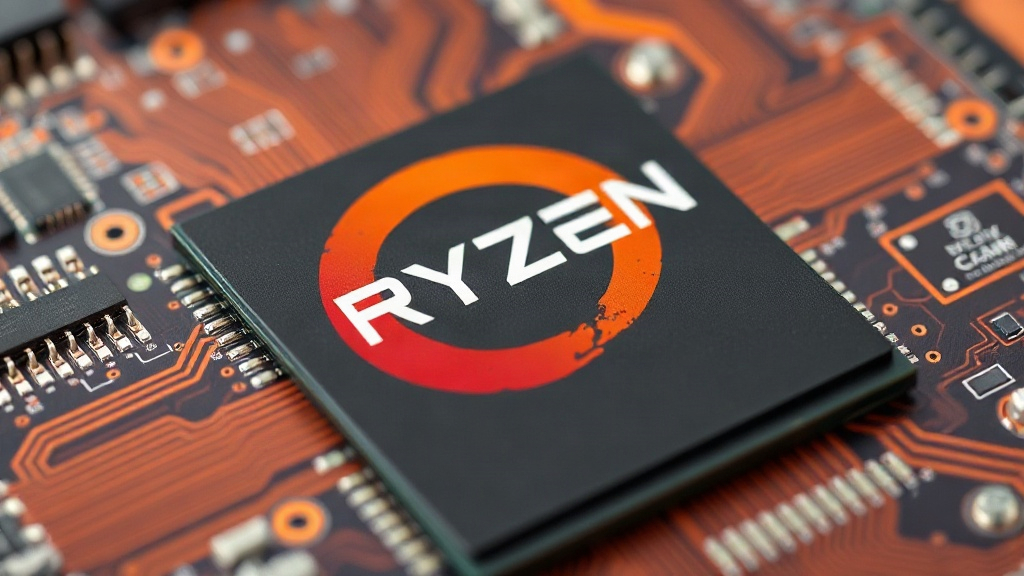
AMD's journey to the trillion-dollar club has been a multi-year effort, characterized by strategic product launches and a consistent expansion of its technological footprint. The company's Ryzen processors have successfully challenged Intel's dominance in the desktop and laptop markets, offering compelling performance and value propositions. Similarly, its EPYC server processors have made substantial inroads into data centers, a segment traditionally dominated by Intel. These gains are not accidental; they are the result of significant R&D investment and a keen understanding of market demands, particularly in areas like high-performance computing and artificial intelligence.
The semiconductor industry is currently experiencing unprecedented demand, fueled by the accelerating adoption of AI, cloud computing, and advanced gaming technologies. Companies that can provide the foundational silicon for these burgeoning fields are seeing immense growth. AMD's product portfolio, which spans CPUs, GPUs, and adaptive SoCs (System-on-Chips), is well-positioned to capitalize on these trends. The company's recent product iterations have consistently pushed performance boundaries, making them attractive options for a wide range of applications, from gaming rigs to massive AI training clusters.
Strategic Wins and Competitive Landscape
A key factor in AMD’s ascent has been its ability to innovate and execute on its product roadmap. The company’s Zen architecture for CPUs and RDNA architecture for GPUs have provided a strong technological foundation. Beyond consumer products, AMD's strategic expansion into the data center and embedded markets has been crucial. Its acquisition of Xilinx, a leader in adaptive computing, further diversified its offerings and strengthened its position in high-growth areas like automotive, industrial, and aerospace sectors. This integration allows AMD to offer more comprehensive solutions, combining CPUs, GPUs, and FPGAs (Field-Programmable Gate Arrays) for specialized workloads.
Compared to Intel, AMD has demonstrated greater agility in adapting to market shifts and a more aggressive product release cadence. While Intel has faced challenges in transitioning to newer manufacturing processes and has been working to regain its technological lead, AMD has largely navigated these complexities more effectively. This has allowed AMD to capture market share and command premium pricing for its high-performance offerings. The current valuation reflects not just current performance but also the market's confidence in AMD's sustained ability to compete and lead in the future of computing hardware.
The Broader Impact on the Semiconductor Industry
AMD’s entry into the trillion-dollar club underscores the immense value and strategic importance of the semiconductor industry in the global economy. It signals a broader trend where companies providing essential computing infrastructure are commanding significant market valuations. This is particularly relevant in the current era of artificial intelligence, where the demand for powerful and efficient processing units is at an all-time high. Nvidia, also in the trillion-dollar club, has seen its valuation skyrocket due to its dominance in AI accelerators. AMD's success, while driven by a broader product portfolio, also benefits from the overall demand for advanced silicon.
What remains to be seen is how this valuation impacts AMD's strategic decisions moving forward. Will the company pursue further aggressive acquisitions, or will it focus on organic growth and R&D to maintain its competitive edge? The pressure to innovate and deliver consistent growth will undoubtedly be immense, especially with competitors like Intel and emerging players vying for market share. The sustained success of AMD will depend on its continued ability to push the boundaries of chip design and manufacturing, while also effectively navigating the complex geopolitical and supply chain dynamics inherent in the global semiconductor market.