%22%20%2F%3E%0A%20%20%3C%2Fsvg%3E)
Early Clues from LLVM Compiler Code
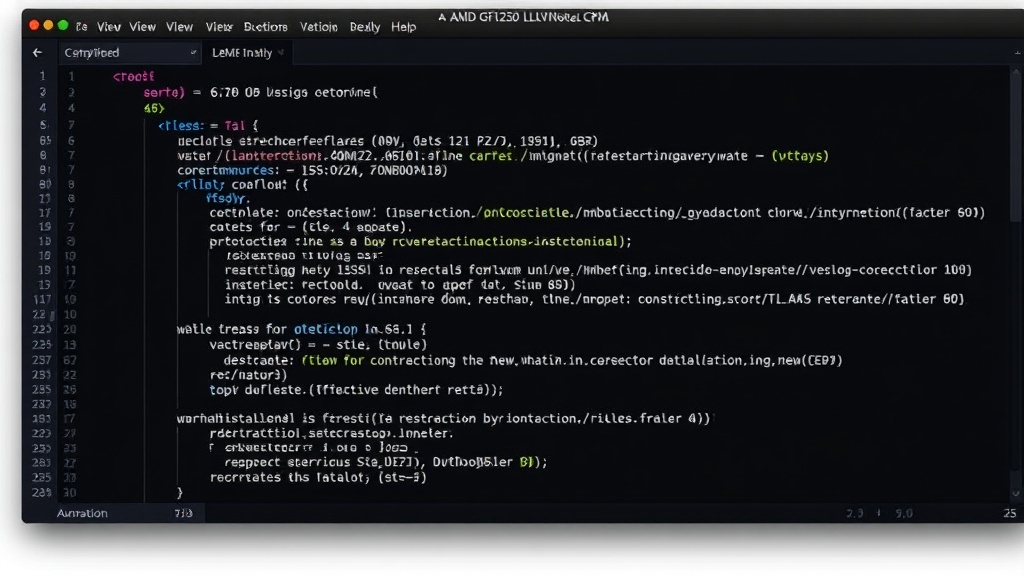
The digital breadcrumbs left by compiler development offer a unique window into the future of hardware architecture. Recent activity within the LLVM compiler infrastructure project reveals details about AMD's upcoming GFX1250, widely believed to be part of the RDNA 4 graphics architecture. While official specifications remain under wraps, the code commits provide tangible insights into the design choices and potential capabilities of AMD's next-generation GPUs. This isn't a full blueprint, but rather a series of cryptographic hints that, when pieced together, paint a surprisingly clear picture.
The LLVM project serves as a foundational compiler framework for many hardware architectures, including AMD's Graphics Core Next (GCN) and its successors. Developers contributing to LLVM often add support for new instruction sets, hardware features, and performance optimizations long before a product officially launches. These contributions are essential for ensuring that software can effectively utilize the new hardware upon release. The GFX1250 identifier, a common naming convention for AMD's internal GPU architecture designations, strongly suggests that these changes are geared towards RDNA 4.
Architectural Shifts and Instruction Set Changes
Analysis of the LLVM commits points to several key shifts. One prominent area of development involves modifications to how the compiler handles shader execution and memory access. Specific instruction set extensions appear to be introduced, targeting improved efficiency in complex shading scenarios and potentially enhancing data throughput. This suggests a focus on optimizing for modern rendering techniques and the ever-increasing complexity of game and professional graphics workloads.
The specifics of these new instructions are, of course, arcane. However, their presence implies that RDNA 4 is not merely an iterative refresh but likely incorporates fundamental changes to the core processing units. We see new opcodes and modifications to existing ones, indicating that AMD is refining its approach to parallel processing. This could manifest in better performance-per-watt, increased raw compute power, or a combination of both. The compiler's need to understand and generate code for these new instructions means they are core to the hardware's design.
Performance Implications and Potential Workloads
While it's premature to make definitive performance claims, the compiler hints suggest where AMD is aiming. The optimizations appear to cater to workloads that are increasingly prevalent: AI inference, machine learning tasks, and highly parallelized rendering pipelines. The ability of the LLVM backend to leverage these new instructions efficiently will be crucial for unlocking the full potential of GFX1250.
Think of the LLVM compiler less like a simple translator and more like an expert conductor for an orchestra of silicon. It takes the composer's score (your software) and directs the musicians (the GPU cores) to play it as efficiently and beautifully as possible. If the conductor doesn't know about a new type of instrument or a specialized technique, that part of the music will be lost or played poorly. These LLVM changes are akin to the conductor learning about new instruments and techniques, preparing them to make the most of the RDNA 4 orchestra.
The presence of specific instruction sets related to matrix operations and tensor processing, even if rudimentary at this stage, is a strong indicator of AMD's intent to bolster its AI and machine learning capabilities. This aligns with the broader industry trend of integrating AI acceleration into discrete GPUs, moving beyond traditional graphics rendering.
What This Means for Developers and Users
For developers, these LLVM changes signal the need to prepare for a new architecture. While the compiler abstracts much of the low-level detail, understanding the underlying architectural shifts can lead to more optimized code. It suggests that libraries and frameworks built for GFX1250 will likely benefit from these new instructions, potentially offering significant performance gains in targeted applications. Staying abreast of LLVM development related to AMD GPUs will be key for those seeking to maximize performance.
For end-users, this translates into the promise of more powerful and efficient graphics hardware. Whether for gaming, content creation, or professional visualization, RDNA 4 aims to deliver improved performance and new capabilities. The focus on AI and complex rendering suggests that future applications will be able to leverage these GPUs in ways we are only beginning to imagine. The competitive landscape also benefits; as AMD pushes the envelope, NVIDIA and Intel are compelled to innovate further, driving the entire industry forward.
Unanswered Questions and Future Outlook
What remains unclear is the exact performance uplift expected from these architectural changes, and how they will be integrated into AMD's product stack. The timing of official product announcements and the full feature set of RDNA 4 are still speculative. Furthermore, the success of these new instructions will hinge on adoption by software vendors and the effectiveness of the compiler toolchains in utilizing them. The true impact of GFX1250 will only be known when it’s in the hands of users and developers, running real-world applications.
The journey from compiler code to a finished product is long and complex. These LLVM commits are an early, but significant, indicator of AMD's strategic direction for its next generation of graphics processors. They provide a much-needed glimpse into the RDNA 4 architecture, offering valuable intelligence for anyone closely following the high-performance computing and graphics hardware space.