
AMD Unveils 256-Core Epyc 9996 'Venice' with Zen 6 Architecture
AMD has officially detailed its highly anticipated 256-core server processor, codenamed 'Venice,' now officially designated as the Epyc 9996. This flagship CPU, built on the forthcoming Zen 6 architecture, aims to deliver a significant leap in data center performance. Early projections suggest performance uplifts of up to 3.4 times compared to competing Intel Xeon processors and a 20% advantage over Nvidia's offerings, according to internal AMD claims. The Epyc 9996 is set to redefine high-performance computing (HPC) and artificial intelligence (AI) workloads with its substantial core count, advanced cache hierarchy, and aggressive clock speeds.
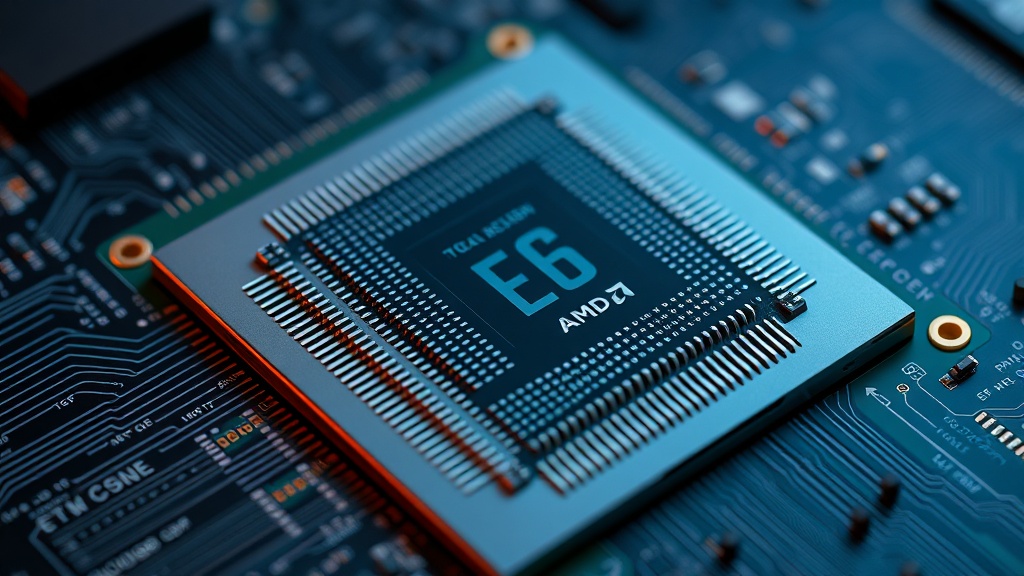
The Epyc 9996 represents a new pinnacle in AMD's server CPU strategy. With 256 cores, it doubles the core count of previous high-end Epyc generations, a move designed to address the escalating demands of modern cloud computing, large-scale data analytics, and complex AI model training. This massive core density is complemented by up to 1024MB (1TB) of L3 cache, a substantial increase that promises to dramatically improve data access speeds and reduce memory latency. Such a large cache is crucial for keeping the numerous cores fed with data, preventing bottlenecks that can cripple performance in highly parallelized tasks.
Zen 6 Architecture and Performance Claims
Underpinning the Epyc 9996 is AMD's next-generation Zen 6 microarchitecture. While specific architectural details remain under wraps, the reported performance gains are staggering. AMD claims a 3.4x improvement over Intel Xeon processors, a metric that likely encompasses a broad range of HPC and server benchmarks. This aggressive target suggests significant IPC (instructions per clock) improvements, higher core counts, and potentially new architectural enhancements tailored for data-intensive workloads. The comparison against Nvidia is also notable, indicating AMD's ambition to challenge not only traditional CPU markets but also the burgeoning AI accelerator space where Nvidia currently dominates.
The clock speed is another critical factor. The Epyc 9996 is slated to feature boost clock speeds exceeding 5GHz. This is a significant milestone for server CPUs, which traditionally prioritize core count and power efficiency over raw clock speed. Achieving such frequencies on a 256-core design implies advanced manufacturing processes and sophisticated thermal management solutions. Furthermore, the processor will support 16-channel memory, likely DDR5 or a future iteration, providing immense memory bandwidth to match the high core count and large L3 cache. This combination of high core density, vast cache, high clock speeds, and broad memory support is engineered to accelerate a wide spectrum of demanding applications.
Venice-X: A Cache-Optimized Variant
Beyond the flagship Epyc 9996, AMD is also developing a specialized variant, the Venice-X. This version, expected to launch in the second half of 2027, will focus on further enhancing performance for specific HPC workloads through the strategic use of 3D V-Cache technology. The Venice-X will reportedly feature 96 cores and boast an even larger L3 cache, reaching up to 1152MB. Its boost clock speeds are targeted at 5.15 GHz, slightly higher than the standard Epyc 9996. The inclusion of 3D V-Cache in AMD's data center lineup signifies a commitment to providing tailored solutions for memory-sensitive applications, such as complex simulations, financial modeling, and certain types of scientific research where large datasets need to be processed rapidly.
The return of 3D V-Cache to AMD's server portfolio is a strategic move. While the Epyc 9996's 1TB L3 cache is already immense, the Venice-X's 1152MB, stacked using 3D V-Cache technology, offers a different approach to memory performance. This technology allows for a denser, more accessible cache, which can yield substantial performance benefits in applications that are highly sensitive to cache size and latency. The 96-core configuration for Venice-X suggests a balance between core count and cache capacity, optimized for specific HPC tasks rather than general-purpose server workloads. This dual-pronged approach—a high-core-count flagship and a cache-focused variant—allows AMD to address a broader spectrum of data center demands.
Market Implications and Future Outlook
The introduction of the Epyc 9996 and Venice-X signals AMD's aggressive push to capture a larger share of the lucrative data center CPU market. The claimed performance figures, if realized, would represent a significant disruption for Intel, which has historically held a strong position in this segment. For Nvidia, it suggests a growing challenge not just from specialized AI hardware but also from increasingly powerful general-purpose CPUs that can handle AI inference and certain training tasks with greater efficiency. The sheer scale of the Epyc 9996's core count and cache capacity positions it as a formidable competitor for cloud providers, HPC centers, and AI-focused enterprises looking to consolidate workloads and improve operational efficiency.
The timeline for these releases, with Venice expected sooner and Venice-X in late 2027, indicates a phased rollout of AMD's Zen 6 strategy. Developers and IT professionals will need to prepare for a new generation of hardware that can unlock unprecedented levels of performance, but also potentially requires adjustments in software optimization and system architecture. The increasing complexity and power of these CPUs highlight the ongoing race in the semiconductor industry to meet the ever-growing demands of AI, big data, and scientific computing. AMD's Epyc 9996 and Venice-X are poised to be key players in this evolution, pushing the boundaries of what is possible in high-performance computing.