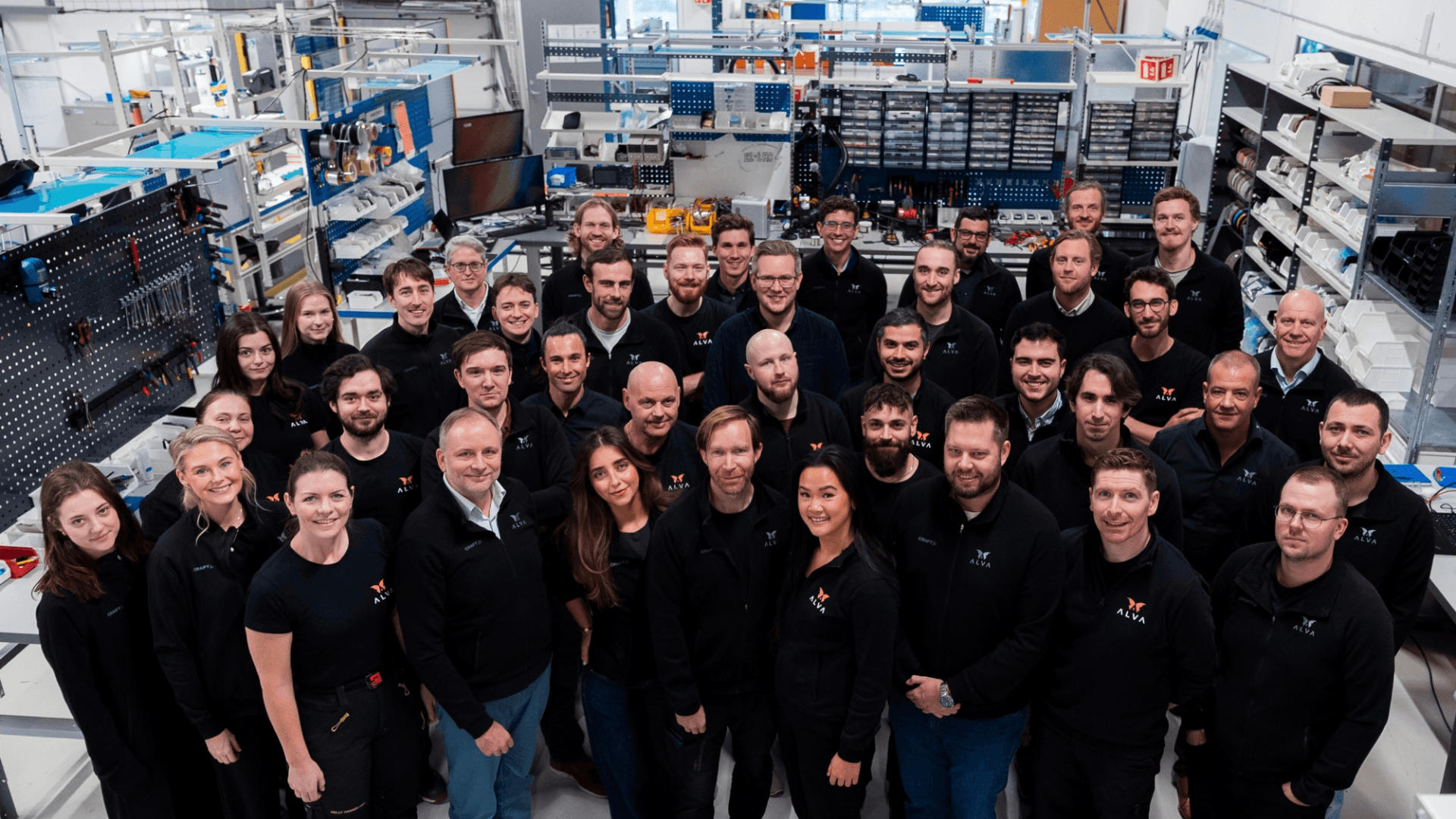
Alva Industries Scales Next-Generation Electric Motor Production with €16M Funding
Alva Industries, a Norwegian deeptech company focused on developing ultra-compact electric motors, has successfully closed an equity financing round, securing €16 million. This significant capital injection is earmarked to fuel the expansion of its manufacturing capabilities and accelerate its international growth strategy. The company's innovative approach to electric motor design promises higher efficiency and smaller form factors, positioning it as a key player in the burgeoning market for advanced electric propulsion systems.
The demand for more efficient, lighter, and smaller electric motors is rapidly increasing across numerous sectors, from electric vehicles and drones to industrial automation and robotics. Alva Industries' technology aims to meet this demand head-on by rethinking motor architecture. Unlike traditional designs, Alva's motors are built with a focus on integrated power electronics and advanced materials, allowing for a more compact and powerful unit. This differentiation is critical in applications where space and weight are at a premium, such as in the next generation of electric aircraft or high-performance electric vehicles.
Addressing the Market Demand for Compact, High-Performance Motors
The core of Alva Industries' innovation lies in its proprietary design that integrates stator and rotor components in a novel way, coupled with advanced thermal management. This allows for significantly higher power density – more power output for a given size and weight – compared to conventional electric motors. The company reports that its motors can achieve up to 30% higher power density and operate with greater efficiency than current market leaders. This translates directly into longer range for EVs, increased payload capacity for drones, and more compact, energy-efficient machinery for industrial clients.
The recent funding round was led by a consortium of investors who recognize the transformative potential of Alva's technology. While specific investor names were not disclosed in the primary announcement, the substantial sum suggests strong confidence in the company's technical roadmap and commercial strategy. This capital will be instrumental in scaling up Alva's manufacturing processes. Currently, the company likely operates with pilot production lines, and this investment will enable the transition to full-scale industrial manufacturing, capable of meeting anticipated demand from key clients.
Beyond manufacturing, the €16 million will also support Alva Industries' global expansion efforts. This includes establishing sales, support, and potentially R&D presence in key international markets. The company is targeting sectors where its unique motor technology can provide a distinct competitive advantage. Early applications are expected in the burgeoning electric vertical takeoff and landing (eVTOL) aircraft market, where weight and space savings are paramount. Further opportunities lie within the electric vehicle sector, particularly for high-performance applications, and in specialized industrial automation where precision and miniaturization are critical.
The Future of Electric Propulsion: What's Next for Alva?
The company's strategy appears to be one of targeted disruption. Instead of competing directly with established, high-volume motor manufacturers in every segment, Alva is focusing on niches where its technological edge offers the most significant benefits. This approach allows them to build credibility and market share before potentially expanding into broader applications. The development of ultra-compact electric motors is not just about incremental improvements; it's about enabling entirely new product categories and enhancing the performance of existing ones.
What remains to be seen is how quickly Alva Industries can translate its technological prowess into mass-produced, cost-competitive units. The transition from a deeptech startup to a scalable industrial manufacturer is fraught with challenges, including supply chain management, quality control at scale, and navigating complex certification processes, especially for aerospace applications. However, with this substantial funding, Alva has acquired the resources to tackle these hurdles head-on. Their success will not only benefit the company but could also accelerate the adoption of electric propulsion across a wider range of industries.
The €16 million in funding is a clear signal that investors are betting on the future of electrification and the critical role of advanced motor technology. Alva Industries is now poised to move from the laboratory and pilot phase into a significant manufacturing and growth phase, potentially reshaping the landscape of electric motor applications.