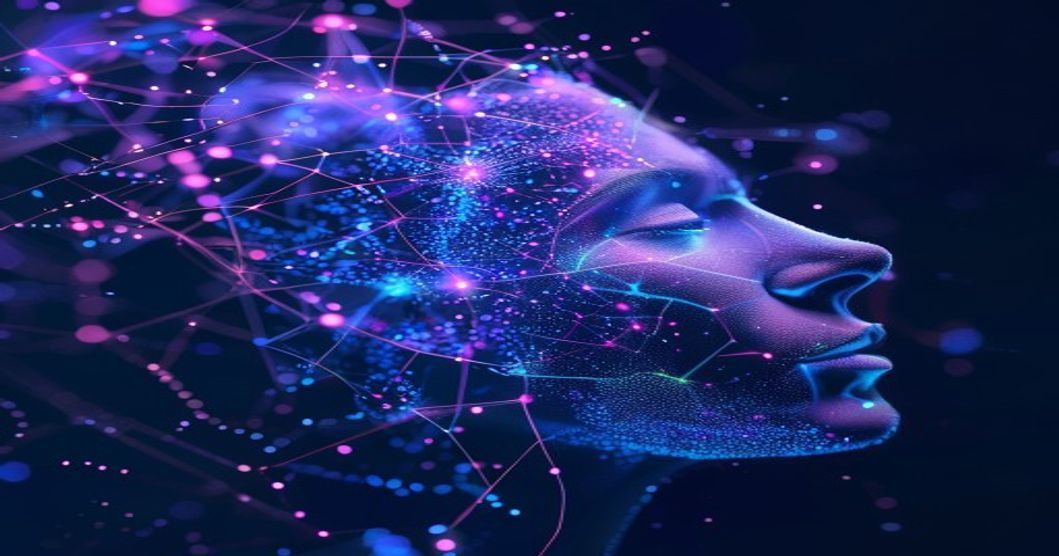
The Unfolding Landscape of AI and Human Distinction
The relentless march of artificial intelligence has, perhaps counterintuitively, amplified a profound interest in the very qualities that distinguish human beings. As AI systems become more adept at tasks once thought to be exclusively human—from creative endeavors like writing poetry and composing music to complex problem-solving and strategic decision-making—the focus shifts. We are compelled to examine the essence of human nature, not as a static set of biological or cognitive traits, but as a dynamic interplay of consciousness, emotion, subjective experience, and the inherent messiness of our existence. This isn't a new philosophical debate, but the accelerating pace of AI development has brought it from the ivory tower into the everyday conversation of technologists, ethicists, and increasingly, the general public.
Consider the concept of consciousness. While AI can process information, learn patterns, and even exhibit behaviors that mimic understanding, the subjective, internal experience of being conscious remains an enigma. We don't just process data; we feel it. We experience qualia—the redness of red, the sharpness of pain, the warmth of love. These are not reducible to algorithms or computational processes, at least not with our current understanding. AI can simulate empathy by analyzing vast datasets of human emotional expression and responding in kind, but it does not *feel* empathy. This gap between simulation and genuine subjective experience is a critical differentiator.
Another facet is creativity. AI can generate novel images, music, and text by learning from massive datasets of existing human creations. It can combine styles, predict what might be aesthetically pleasing, and produce outputs that are often indistinguishable from human work to the casual observer. However, human creativity often stems from a place of personal history, lived experience, emotional depth, and a unique perspective shaped by a lifetime of interactions with the world. It is driven by inspiration, intuition, and a desire for self-expression that goes beyond pattern recognition. The spark of a truly original idea, born from a unique confluence of thought and feeling, is something AI has yet to replicate in a way that feels genuinely authored by an internal, subjective self.
The Role of Emotion and Subjectivity
Emotions play a central role in human decision-making, motivation, and social interaction. While AI can be programmed to recognize and respond to emotional cues, it does not possess genuine emotions. Our capacity for love, grief, joy, and anger are deeply intertwined with our biology, our social conditioning, and our personal histories. These emotions color our perceptions, influence our choices, and drive our actions in ways that are often irrational but profoundly human. For instance, the act of sacrifice, driven by love or loyalty, is difficult to model computationally without reducing it to a cold cost-benefit analysis. This emotional intelligence, this capacity for deep feeling, remains a hallmark of human experience.
Subjectivity itself is a key differentiator. Each human experiences the world through a unique lens, shaped by their individual consciousness, memories, values, and cultural background. This means that even when presented with the same information, humans will interpret it, react to it, and draw conclusions from it in distinct ways. AI, by its nature, tends towards objectivity and consistency, processing information based on its training data and algorithms. While this can be advantageous for tasks requiring impartiality, it misses the rich tapestry of individual perspectives that define human society and culture. Think of it less like a universal translator and more like a highly sophisticated, but ultimately impersonal, data processor. The nuances of personal interpretation, the gut feelings, and the intuitive leaps that guide human judgment are born from this subjective experience.
The Unanswered Question of Embodiment
Furthermore, the concept of embodiment is crucial. Humans are biological beings with physical bodies that interact with the world. Our physical sensations, our limitations, and our mortality shape our understanding and experience of existence. AI, even when embodied in robots, lacks this fundamental biological grounding. It does not experience fatigue, hunger, physical pain, or the primal drive for survival in the same way. This embodied experience informs our values, our sense of time, and our appreciation for the finite nature of life. The way we learn from physical interaction, from trial and error in the real world, is a form of intelligence that is deeply rooted in our physicality. What happens when AI becomes so advanced that it can perfectly simulate physical experience, or when humans begin to integrate more deeply with AI, blurring the lines of embodiment? This is a question that remains largely unaddressed.
The development of increasingly sophisticated AI systems forces us to confront what it truly means to be human. It is not merely about intelligence or problem-solving capacity, but about the rich, complex, and often messy tapestry of consciousness, emotion, subjectivity, and embodied experience. As AI continues to evolve, our understanding of these uniquely human traits will undoubtedly deepen, shaping our future interactions with technology and with each other.