
Beyond the Hype: AI's Ground Game in Healthcare
The popular imagination often conjures images of AI in healthcare as sentient robots performing surgery or diagnostic machines that instantly cure all ailments. This sci-fi vision, while compelling, distracts from the more immediate, profound, and perhaps more impactful ways AI is reshaping the medical landscape. The future isn't about a flashy, omnipresent AI physician, but rather a quieter, more integrated approach centered on data privacy, patient control, and subtle operational efficiencies.
This shift is driven by a fundamental understanding: healthcare data is extraordinarily sensitive. Unlike data from e-commerce or social media, medical information carries profound personal implications. Breaches can lead to discrimination, financial ruin, and severe emotional distress. Consequently, the development and deployment of AI in this sector must prioritize robust privacy safeguards and ethical considerations above all else. This necessity is pushing innovation towards techniques that process data without compromising its confidentiality.
The Rise of Private AI and Federated Learning
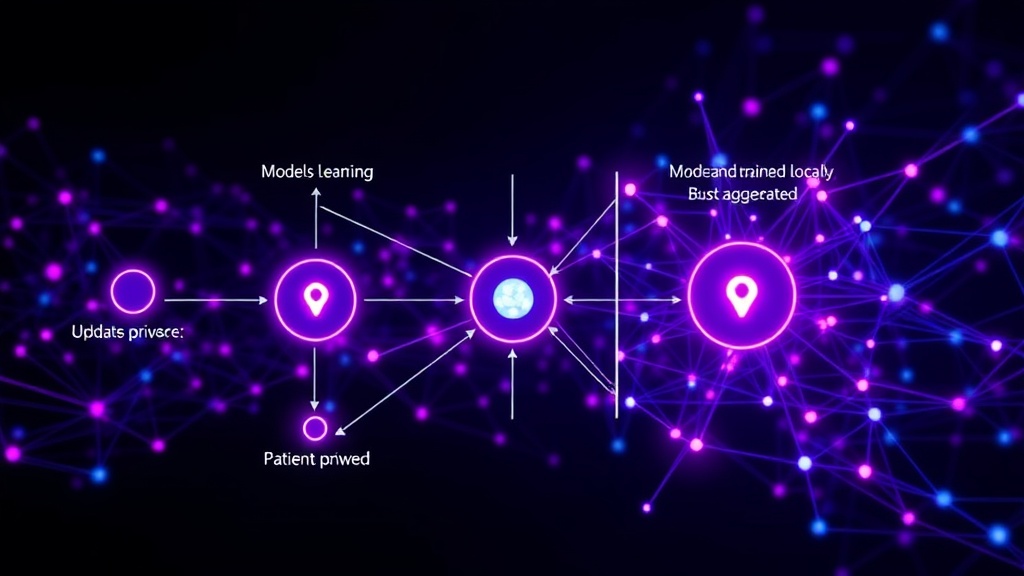
A key development enabling this quieter revolution is the advancement of techniques like federated learning and differential privacy. Instead of aggregating vast datasets from individual patients into a central cloud server for AI model training, federated learning allows models to be trained locally on a patient's device or within a secure institutional environment. Only the model updates, not the raw data, are shared and aggregated. This approach is akin to a group of chefs all learning a new recipe. Instead of sharing all their ingredients (patient data), they each try the recipe in their own kitchen and then share notes on what worked and what didn't (model updates). The original ingredients remain private to each chef.
Differential privacy adds another layer of protection by introducing carefully calibrated noise into datasets or query results. This noise is sufficient to obscure any individual's contribution but statistically insignificant enough to still allow for accurate aggregate analysis. Imagine trying to identify a single person's voice in a crowded stadium; differential privacy makes it impossible to isolate that one voice while still allowing you to understand the general din of the crowd. These methods are crucial for building trust and ensuring regulatory compliance, particularly with stringent data protection laws like GDPR and HIPAA.
Empowering Patients with Data Ownership
The future of AI in healthcare also hinges on patient empowerment. For too long, individuals have had limited control over their own health data. AI, coupled with blockchain and secure personal data vaults, can change this paradigm. Patients can grant granular, time-limited access to their anonymized or pseudonymized data for research purposes, or for personalized AI-driven health insights. This puts the patient at the center of the data ecosystem, transforming them from passive subjects into active participants and beneficiaries.
Consider an AI-powered wellness app that analyzes your activity, sleep, and dietary patterns. Instead of sending this raw data to a third-party server, the AI processes it locally on your phone. It might then offer personalized recommendations. If you choose to contribute anonymized insights to a broader health study, the system would use differential privacy to ensure your specific data remains unidentifiable, while still contributing to the collective understanding of health trends. This model fosters a relationship of trust, where patients feel secure sharing information because they control who sees it and how it's used.
AI as an Augmentation Tool, Not a Replacement
The narrative of AI replacing doctors is a red herring. The more realistic and beneficial application is AI as an augmentation tool for healthcare professionals. AI can sift through millions of research papers to identify relevant studies for a specific patient's condition, flag potential drug interactions, analyze medical images with superhuman speed and accuracy, or predict patient deterioration in ICUs. These are tasks that burden clinicians and can lead to burnout, but which AI can handle efficiently, freeing up doctors to focus on direct patient care, complex decision-making, and empathy—qualities that AI cannot replicate.
For instance, radiologists already use AI to help detect subtle anomalies in X-rays and CT scans. The AI acts as a tireless second reader, highlighting areas of concern that a human might miss due to fatigue or the sheer volume of images. This doesn't replace the radiologist; it enhances their diagnostic capabilities, leading to earlier and more accurate diagnoses. Similarly, AI can analyze electronic health records (EHRs) to identify patients at high risk for conditions like sepsis or hospital readmission, allowing care teams to intervene proactively.
The Quiet Infrastructure of Health AI
The real work of AI in healthcare is often invisible. It involves optimizing hospital workflows, predicting supply chain needs for pharmaceuticals, personalizing treatment plans based on genetic and lifestyle data, and improving the efficiency of clinical trials. These applications, while less glamorous than robot surgeons, have a direct and significant impact on patient outcomes and the sustainability of healthcare systems. They are the quiet infrastructure that underpins a more effective, equitable, and patient-centric future.
The development of these systems requires a deep understanding of both AI and the complex regulatory and ethical landscape of medicine. Companies and researchers focusing on these