%22%20%2F%3E%0A%20%20%3C%2Fsvg%3E)
The Cognitive Delegation Dilemma
The rapid proliferation of AI tools across every facet of work and life presents a profound shift in how we process information and make decisions. From drafting emails and writing code to generating creative content and analyzing complex data, AI is increasingly acting as a cognitive co-pilot, or even a surrogate thinker. This pervasive integration raises a fundamental question: are we offloading too much of our thinking to artificial intelligence, and what are the long-term consequences for our own cognitive abilities?
The current discourse often frames AI as a productivity enhancer, a tool that frees up human bandwidth for more strategic or creative endeavors. However, this perspective overlooks the potential for a more insidious effect: the atrophy of our own critical thinking, problem-solving, and decision-making skills. When AI consistently provides the answers, synthesizes information, and even structures arguments, we risk becoming passive recipients of its output rather than active participants in the cognitive process. This is akin to relying solely on a calculator for every arithmetic problem; while efficient in the short term, it can diminish one's innate mathematical fluency.
The Erosion of Core Cognitive Skills
At the heart of this concern is the potential for a decline in fundamental cognitive skills. Critical thinking, the ability to analyze information objectively and make reasoned judgments, is a prime candidate for erosion. When AI can instantly summarize lengthy documents, identify key themes, and even suggest conclusions, the incentive to engage in deep, analytical reading and synthesis diminishes. Similarly, problem-solving skills may weaken if AI is always the first resort for identifying solutions, debugging code, or strategizing. The process of struggling with a problem, exploring different avenues, and learning from mistakes is crucial for developing robust problem-solving capabilities. Offloading this struggle to AI bypasses this essential learning loop.
Decision-making is another area of concern. AI can analyze vast datasets and present probabilities or optimized choices, but the human element of judgment, intuition, and ethical consideration can be sidelined. If we consistently defer to AI's recommendations without rigorous personal vetting, we risk making decisions based on algorithmic outputs that may lack nuance, context, or an understanding of human values. This is particularly worrying in fields like medicine, law, or finance, where human judgment is paramount.
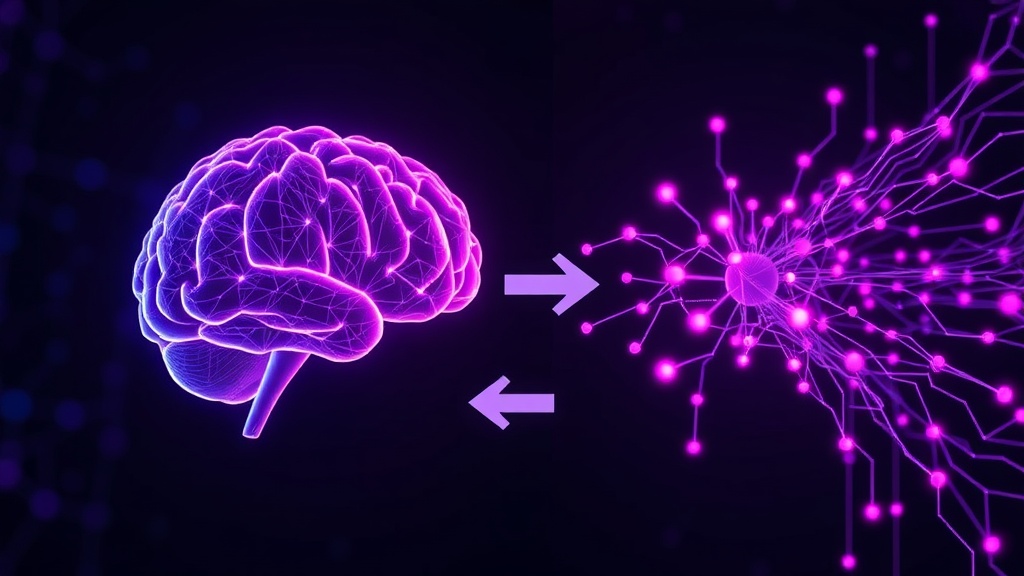
Augmentation vs. Atrophy: The Two Paths Forward
The trajectory is not predetermined. The outcome hinges on how we choose to interact with AI. One path leads to cognitive atrophy, where our reliance on AI results in a diminished capacity for independent thought. This occurs when AI is used as a crutch, replacing the need for effort and deep engagement. The user becomes a mere operator, inputting prompts and accepting outputs without question or deeper reflection. This path risks creating a generation less capable of complex reasoning, creativity, and critical evaluation.
The alternative path is cognitive augmentation. This view posits that AI, when used thoughtfully, can elevate human capabilities. By automating mundane tasks, AI can free up mental resources for higher-order thinking – strategic planning, novel idea generation, complex problem framing, and empathetic communication. In this model, AI acts as a powerful tool that amplifies human intelligence, allowing individuals to tackle problems previously out of reach. For instance, a researcher might use AI to sift through thousands of papers, not to get the answers, but to identify novel connections and formulate new hypotheses that would have been impossible to spot manually. Developers can leverage AI for boilerplate code, allowing them to focus on architectural design and complex algorithms.
The Role of Intentionality and Education
Navigating this dichotomy requires intentionality. Developers, founders, and creators must actively cultivate habits that preserve and enhance their cognitive skills. This means consciously choosing when to engage AI and when to rely on personal expertise and effort. For developers, this might involve writing code from scratch for learning purposes, even if AI can generate it faster. For writers, it could mean using AI for initial drafts or research but dedicating significant time to refining the prose, infusing it with personal voice and critical insights. For founders, it means using AI for market analysis but retaining the human intuition and strategic vision that drives business direction.
Education plays a critical role. Curricula need to evolve to teach not just how to use AI tools, but how to use them responsibly and critically. Understanding the limitations of AI, its potential biases, and the importance of human oversight is paramount. We need to foster a generation that views AI as a collaborator, not an oracle. This involves teaching metacognitive skills – thinking about one's own thinking process – and how to integrate AI into that process effectively without abdicating responsibility.
The Unanswered Question of Long-Term Societal Impact
What remains largely unaddressed is the long-term societal impact of widespread cognitive offloading. If entire populations become less adept at critical thinking and independent problem-solving, what does this mean for democratic discourse, scientific advancement, and the very definition of human intelligence? Will we see a widening gap between those who master AI as an augmentation tool and those who become dependent on it? The current discussions often focus on immediate productivity gains, but the deeper, systemic shifts in human cognition warrant far more attention and proactive strategy.
Ultimately, the question of whether we are offloading too much of our thinking to AI is not a simple yes or no. It is a dynamic challenge that requires constant self-awareness, intentional design of our AI interactions, and a commitment to cultivating our own cognitive faculties. The future of human intelligence may well depend on our ability to harness AI’s power without sacrificing the very skills that make us uniquely human.