The AI Investment Conundrum: A $725 Billion Gamble
The artificial intelligence boom is characterized by staggering financial commitments. Big Tech is reportedly pouring approximately $725 billion into AI development and deployment this year alone. This figure, while impressive, raises critical questions about the sustainability of this investment. Compounding this concern is an analysis from J.P. Morgan, which suggests the AI industry requires a perpetual annual revenue of $650 billion merely to achieve a 10 percent return on investment. This stark juxtaposition between colossal spending and the immense revenue required to justify it forms the crux of the debate: are we witnessing a sustainable demand surge, or a speculative bubble fueled by circular investments?
The Money Loop: Interconnected Investments
A significant factor contributing to the perception of a potential bubble is the intricate web of investments among major AI players. Companies are investing in each other, creating a self-reinforcing loop that can inflate demand figures. For instance, Nvidia, a key provider of AI hardware, has invested in OpenAI. OpenAI, in turn, is a massive consumer of cloud computing services, directing enormous sums to providers like Oracle. These cloud providers, to meet the demands of AI workloads, then turn around and purchase more chips from companies like Nvidia. This circular flow of capital means that demand figures might not solely reflect genuine end-user adoption but also the strategic financial maneuvers between major industry participants.
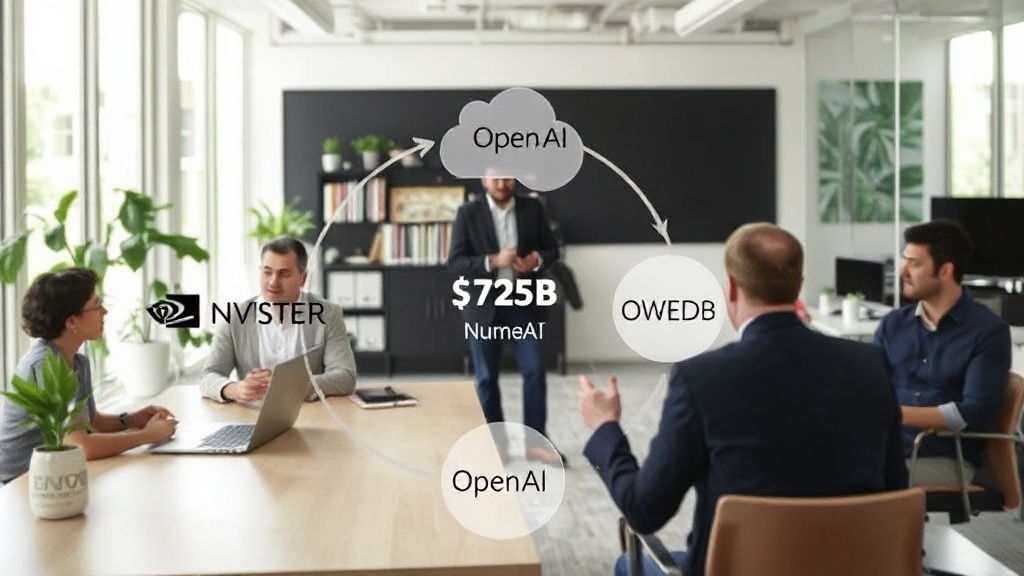
This interconnectedness can obscure the true market appetite for AI products and services. When demand is partly generated by one company's investment in another, it becomes harder to ascertain organic growth. The question then becomes: if these strategic investments were to cease or reallocate, would the demand figures hold steady?
The Token Revolt: Shifting Power Dynamics
Beyond the financial mechanics, a growing sentiment among developers and users is challenging the current AI landscape. This 'token revolt' stems from several factors, including the increasing cost of accessing powerful AI models and the consolidation of control by a few large corporations. As models become more capable, the cost of inference—running the models to get results—escalates. This is often passed on to users through token-based pricing, making advanced AI capabilities prohibitively expensive for smaller companies, independent developers, and even researchers.
Furthermore, the reliance on proprietary APIs from a handful of tech giants means that users are subject to their terms of service, pricing changes, and potential deprecation of features. This lack of control and the rising costs are driving a movement towards open-source alternatives and more decentralized AI solutions. Developers are seeking greater transparency, lower costs, and the freedom to fine-tune models for their specific needs without being beholden to large corporations. This pushback could signal a significant shift in how AI resources are accessed and utilized, potentially impacting the revenue streams that Big Tech has come to rely upon.
The Enduring AI Demand: Beyond the Hype
Despite the concerns about financial loops and token costs, the underlying demand for AI capabilities remains robust. The transformative potential of AI across industries—from drug discovery and climate modeling to personalized education and enhanced cybersecurity—is undeniable. Businesses are recognizing AI's capacity to automate complex tasks, derive insights from vast datasets, and create entirely new products and services.
The $725 billion being spent is not solely on speculative ventures; a significant portion is directed towards fundamental research, infrastructure development (like specialized AI chips and data centers), and the training of AI models. The core technologies driving AI, such as advancements in transformer architectures, reinforcement learning, and the availability of massive datasets, continue to evolve at a rapid pace. This evolution fuels genuine innovation and creates new use cases that were previously unimaginable.
The key distinction lies between the hype-driven financial speculation and the real-world utility and demand for AI's problem-solving capabilities. While the current investment model might exhibit characteristics of a bubble, the intrinsic value and potential applications of AI suggest that demand for its core functionalities will persist. The challenge for the industry is to transition from a capital-intensive, closed-ecosystem model to a more sustainable, accessible, and economically viable framework. This will likely involve a greater embrace of open-source models, more efficient inference techniques, and innovative pricing strategies that democratize access to AI power.
Navigating the Future: Sustainability Over Speculation
The question of whether the current AI investment landscape is a bubble or sustainable demand hinges on the industry's ability to address the structural issues highlighted. The circular money loop needs to be disentangled from genuine market adoption. The 'token revolt' needs to be met with more equitable access models and a commitment to open innovation. If the industry can achieve this transition, the current massive spending could indeed pave the way for a sustainable AI-driven future. However, if the financial loops and high costs persist without addressing user needs, the risk of a significant market correction remains. The enduring demand for AI's problem-solving power provides a strong foundation, but the edifice built upon it must be constructed with more sustainable materials.