A New Paradigm for Device Interaction
The landscape of human-computer interaction is evolving. While software-based AI agents and APIs have become ubiquitous, a new project named Aiden is exploring a fundamentally different approach: a physical AI agent that interfaces with devices at a hardware level. This isn't another chatbot or a cloud-based assistant. Aiden is designed to physically operate a smartphone or computer through a USB connection, mimicking human actions like typing, swiping, and clicking. The project, spearheaded by the AidenAI.IO team, leverages a combination of Go, C++, and Python to achieve this ambitious goal, notably operating without relying on any existing device APIs.
The core innovation of Aiden lies in its ability to abstract away the need for specific device interfaces. Instead of developers needing to learn and integrate with countless different APIs for each operating system or application, Aiden aims to provide a universal method of control. This is akin to having a skilled operator who can pick up any device and learn to use it through observation and practice, rather than needing a specific manual for each one. The project's firmware is open-source, hosted on GitHub, inviting developers and enthusiasts to explore its architecture and contribute.
Technical Architecture and Stack
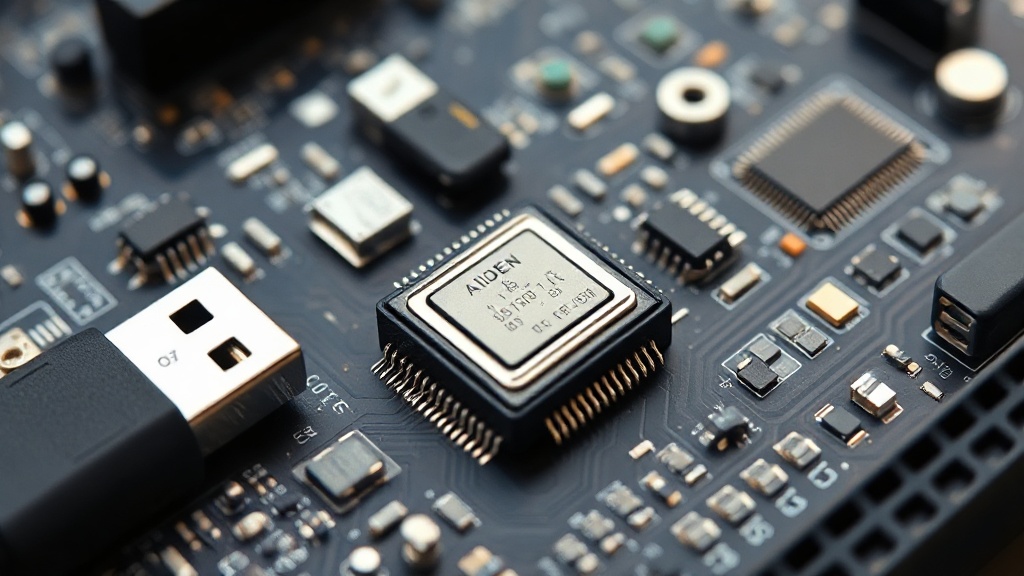
Aiden's architecture is built upon a robust, multi-language stack. The firmware, written primarily in Go, handles the low-level communication and orchestration. Go's strengths in concurrency and network programming make it a suitable choice for managing the continuous data flow and command execution required for real-time device operation. Complementing Go, C++ is employed for performance-critical tasks. This could include image processing for visual input from the device, complex decision-making algorithms, or precise motor control if the hardware were to involve physical actuators beyond simple USB input simulation.
Python likely plays a role in the higher-level AI and machine learning components. This could involve natural language processing for understanding user commands, computer vision for interpreting screen content, or sophisticated planning algorithms for determining the sequence of actions to achieve a goal. The decision to build from the ground up, bypassing existing APIs, suggests a focus on universality and a desire to overcome the limitations or fragmentation inherent in official developer interfaces. This approach allows Aiden to potentially interact with any device that exposes a USB input interface, regardless of its operating system or installed software.
Implications and Future Potential
The implications of a successful physical AI agent like Aiden are far-reaching. For developers, it could democratize automation. Instead of relying on fragile API integrations that can break with software updates, developers could use Aiden to automate tasks across a wide range of devices and applications. This opens up possibilities for automated testing, data scraping from complex interfaces, and even creating assistive technologies for individuals who might find traditional input methods challenging.
For end-users, Aiden could represent a more intuitive way to interact with their devices. Imagine instructing your phone to perform a complex series of actions simply by describing them, and having Aiden execute them as if you were doing it yourself. This could be particularly valuable for repetitive tasks or for users who are less tech-savvy. The project's open-source nature also means that the community can extend Aiden's capabilities, potentially leading to specialized agents for specific industries or use cases. The surprising detail here is not just the technical feat of simulating human input, but the potential to create a truly universal operating layer for digital devices, independent of vendor-specific software development kits.
What remains to be seen is the scalability and robustness of this approach. Simulating human input can be prone to errors, especially with dynamic interfaces or unexpected system behaviors. The accuracy and speed of Aiden's operations will be critical factors in its adoption. Furthermore, the security implications of a device that can control other devices at such a low level warrant careful consideration. However, the foundational work laid out by the AidenAI.IO team presents a compelling vision for the future of AI-driven device interaction, one that prioritizes a hardware-level, universal approach over fragmented software solutions.