The LLM Code Generation Paradox: Skill Meets Input Quality
The advent of sophisticated AI models capable of generating functional code has sparked a lively debate about the future of software development. While tools like OpenAI's GPT series and Anthropic's Opus offer remarkable capabilities, their effectiveness is intrinsically tied to the quality of the inputs they receive. The core challenge isn't whether AI can write code, but rather, how effectively it can do so when tasked with building complex systems. The consensus among practitioners is clear: AI is a powerful co-pilot, but the pilot—the system architect—must still be human.
The principle of "garbage in, garbage out" is amplified when dealing with AI code generation. Large Language Models (LLMs) are fundamentally pattern-matching engines. They operate by identifying and replicating patterns learned from vast datasets. When these datasets comprise well-documented, established technology stacks with clear architectural boundaries and abundant examples, LLMs can produce surprisingly robust and efficient code. This is akin to asking a brilliant but literal-minded assistant to follow a meticulously detailed blueprint; the output will closely match the design.
Conversely, feeding an LLM an undefined problem, a poorly structured existing codebase, or ambiguous requirements leads to predictable, subpar results. The AI, lacking true understanding or creative problem-solving beyond its training data, will generate code that reflects the chaos of its input. This doesn't diminish the AI's potential; it highlights the indispensable role of human expertise in defining the problem space, establishing the architectural foundation, and guiding the generation process.

Architecture: The Unseen Framework for AI-Generated Code
The foundation of any application—its architecture—is paramount, especially when leveraging AI for code generation. System design dictates how components interact, how data flows, how the application scales, and how it maintains security and reliability. An LLM can generate a function to sort a list or an API endpoint to fetch user data, but it cannot, at present, conceive of a microservices architecture versus a monolithic one, nor can it independently decide on the optimal database schema for a given workload or the trade-offs between eventual consistency and strong consistency for a specific feature.
This is where human developers and architects remain critical. They must provide the AI with a well-defined context. This involves:
- Defining Requirements: Clearly articulating what the system needs to do, its performance targets, and its constraints.
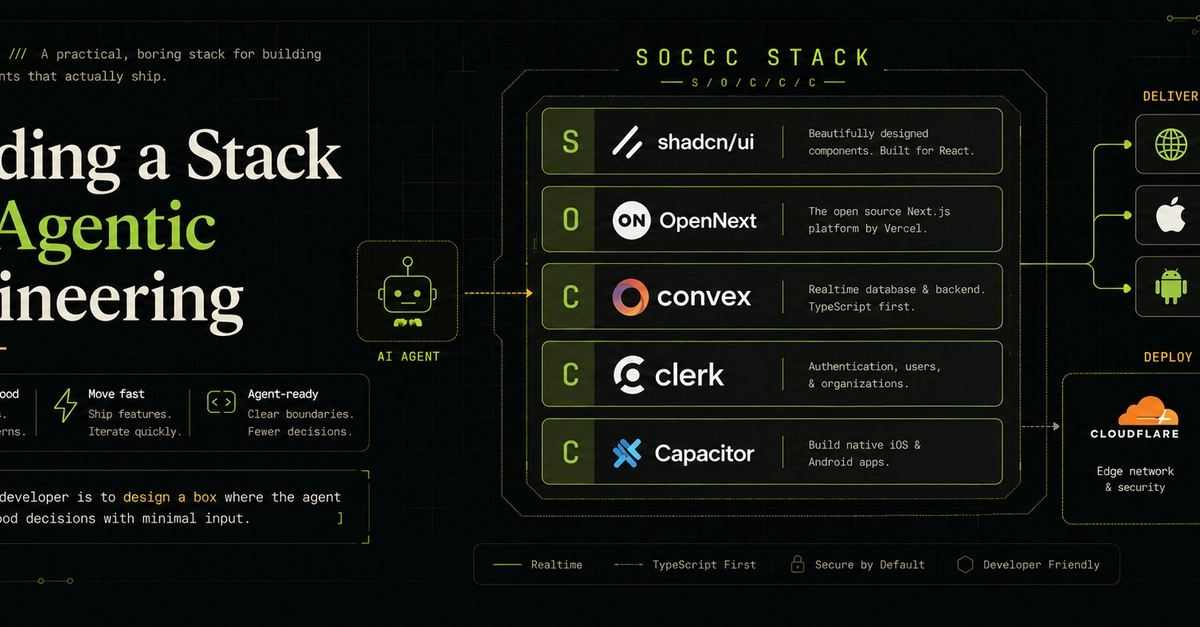
- Establishing Architecture: Designing the high-level structure, choosing appropriate technologies, and defining interfaces between components.
- Setting Architectural Boundaries: Ensuring that the AI-generated code fits seamlessly within the established structure and adheres to defined patterns and standards.
- Iterative Refinement: Reviewing AI-generated code, debugging, optimizing, and providing feedback to guide the AI toward better solutions.
Think of an LLM as a highly skilled artisan who can craft exquisite furniture. However, without an architect to design the house, specify the room dimensions, plan the plumbing and electrical systems, and ensure structural integrity, the artisan's beautiful chairs and tables will have no place to go. The AI can build the bricks, but the human must design the building.
The Human Element: Beyond Pattern Matching
Current LLMs, even the most advanced like Opus 5 and GPT 4.5, are sophisticated pattern matchers. They excel at tasks that have clear, well-trodden paths in their training data. They can write boilerplate code, implement standard algorithms, and even generate code for specific frameworks if given sufficient context and examples. This dramatically accelerates development cycles for common tasks.
However, true system design involves more than just replicating patterns. It requires:
- Understanding Business Needs: Translating abstract business goals into concrete technical requirements.
- Anticipating Future Needs: Designing for scalability, maintainability, and extensibility that may not be immediately apparent.
- Risk Assessment: Identifying potential failure points, security vulnerabilities, and performance bottlenecks before they materialize.
- Trade-off Analysis: Making informed decisions between competing priorities, such as speed of development versus long-term maintainability, or cost versus performance.
- Creativity and Innovation: Devising novel solutions to unique problems that may not have direct parallels in existing datasets.
These are cognitive functions that current AI models do not possess. They cannot reason about the business impact of a technical decision, nor can they truly innovate beyond the boundaries of their training data. The human developer provides the strategic vision, the critical thinking, and the contextual understanding that AI currently lacks.
The Future: Collaboration, Not Replacement
The narrative should shift from AI replacing developers to AI augmenting them. Developers equipped with advanced AI coding tools will be more productive, capable of focusing on higher-level tasks like system design, architectural integrity, and complex problem-solving. The ability to effectively prompt, guide, and critically evaluate AI-generated code will become a key skill.
For founders and product leaders, this means understanding that AI can accelerate feature delivery, but it doesn't eliminate the need for experienced technical leadership. The quality of the underlying architecture will remain the primary determinant of a product's success and longevity. Investing in strong system design and experienced architects is more critical than ever, as they are the ones who will harness AI's power effectively, ensuring that the code generated serves a well-conceived and robust system, rather than contributing to technical debt.
The tools will evolve, and AI will undoubtedly become more capable. But the fundamental principle holds: a brilliant AI can write code, but a human must design the system. The quality of the blueprint dictates the strength of the structure, regardless of who lays the bricks.