
The Problem: SEO Workflow Fragmentation
The modern SEO professional's workflow is often a complex dance across numerous specialized tools. A developer, frustrated by this fragmentation, has built an AI-powered workspace designed to consolidate these disparate tasks into a single, cohesive platform. The core issue identified is the time and mental overhead spent context-switching between tools for keyword research, SERP analysis, content brief creation, AI writing, and competitor analysis.
This scattered approach, while functional, creates inefficiencies. Imagine trying to assemble a complex piece of furniture, but each screw, each panel, and each instruction manual is scattered across different rooms of your house. You spend more time fetching and organizing than actually building. This is the daily reality for many SEO and content marketing professionals.
The goal of this new AI workspace is to eliminate this friction. By integrating key functionalities, it aims to allow users to focus more on strategic content creation and less on tool management.

The Solution: An Integrated AI Workspace
The newly developed AI workspace integrates several critical SEO functions. At its current stage, the platform offers:
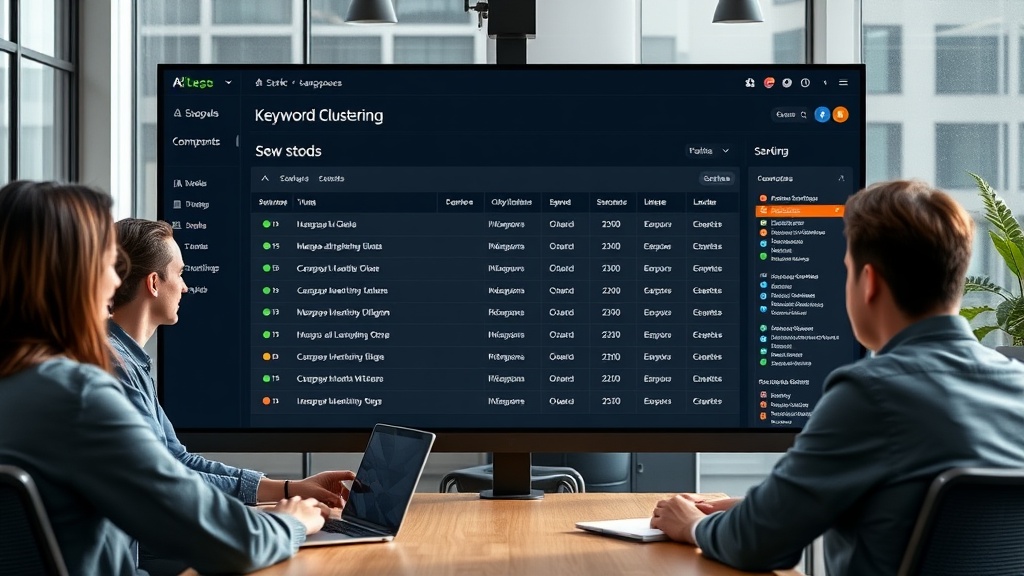
- AI-Powered Keyword Clustering: Organizes broad keyword lists into thematic groups, helping to identify content pillars and topical authority opportunities. This moves beyond simple keyword lists to understanding user intent and the interconnectedness of search queries.
- Keyword Research: Provides tools for discovering relevant keywords, assessing their difficulty, and understanding search volume, all within the same interface.
- Competitor Analysis: Allows users to input competitor domains and analyze their top-performing content, keyword strategies, and backlink profiles, offering insights into market positioning.
- SEO Content Briefs: Generates detailed briefs for content creators, outlining target keywords, suggested headings, important entities, and recommended word counts based on SERP analysis.
- Content Generation: Leverages AI to assist in drafting articles, meta descriptions, and other SEO-focused copy, directly informed by the research and briefs generated within the platform.
- Project Organization: Includes features to manage multiple SEO projects, track progress, and store research and content assets in a centralized location.
The developer emphasizes that the project is still under active development. The primary motivation is not commercial, but a genuine desire to solve a practical problem faced by professionals in the SEO and content marketing fields. Feedback is actively sought to refine the tool and ensure it effectively addresses user needs.
Seeking User Feedback for Refinement
The developer is specifically looking for input from individuals who regularly engage in SEO and content marketing. The aim is to understand pain points, identify missing features, and validate the effectiveness of the current functionalities. Questions likely to be explored include the intuitiveness of the user interface, the accuracy and utility of the AI-generated insights, and how well the integrated workflow compares to existing tool stacks.
This approach to development, driven by user feedback from the outset, is crucial for building tools that truly resonate with their target audience. It allows for iterative improvement based on real-world use cases rather than theoretical design. The open call for feedback suggests a commitment to building a practical, user-centric solution.
What remains to be seen is how this integrated workspace will perform against established, specialized SEO tools in terms of depth of analysis and breadth of features. While consolidation is valuable, users often rely on niche tools for highly specific, advanced functionalities. The success of this workspace may hinge on its ability to balance integration with sufficient depth in each core SEO task.
Broader Implications for SEO Workflows
The development of integrated AI workspaces like this signals a potential shift in how SEO and content marketing tasks are managed. For years, the industry has relied on a suite of best-of-breed tools, each excelling in a particular area. This has led to subscription costs, data silos, and the aforementioned workflow inefficiencies.
An AI workspace that effectively consolidates these functions could offer significant advantages. For smaller teams or individual freelancers, it could reduce software expenditure and simplify operations. For larger organizations, it could improve collaboration by providing a single source of truth for SEO strategy and content planning. The AI component is key, moving beyond simple aggregation to intelligent assistance in tasks like keyword grouping, content ideation, and draft generation.
The success of such a tool will depend on its ability to deliver accurate, actionable insights and to maintain a user experience that is superior to the sum of its individual tool parts. As AI continues to evolve, expect more platforms to emerge that aim to streamline complex professional workflows by intelligently integrating multiple functions. This project, while still seeking feedback, represents an early exploration into this promising direction for SEO professionals.