
The Challenge: Taming Event Footage with AI
Event production companies like SAC, based in Brazil, often grapple with a deluge of raw video footage. After each event, this can amount to terabytes of data from multiple cameras and mobile devices. The critical challenge lies in transforming this raw material into engaging short-form content for platforms like Instagram and TikTok – think event recaps, highlight reels, and promotional teasers. Manually sifting through, editing, and assembling this footage is a time-consuming and resource-intensive process, hindering scalability. SAC is investigating the potential of an AI-assisted workflow to automate significant portions of this video production pipeline, moving beyond purely manual methods.
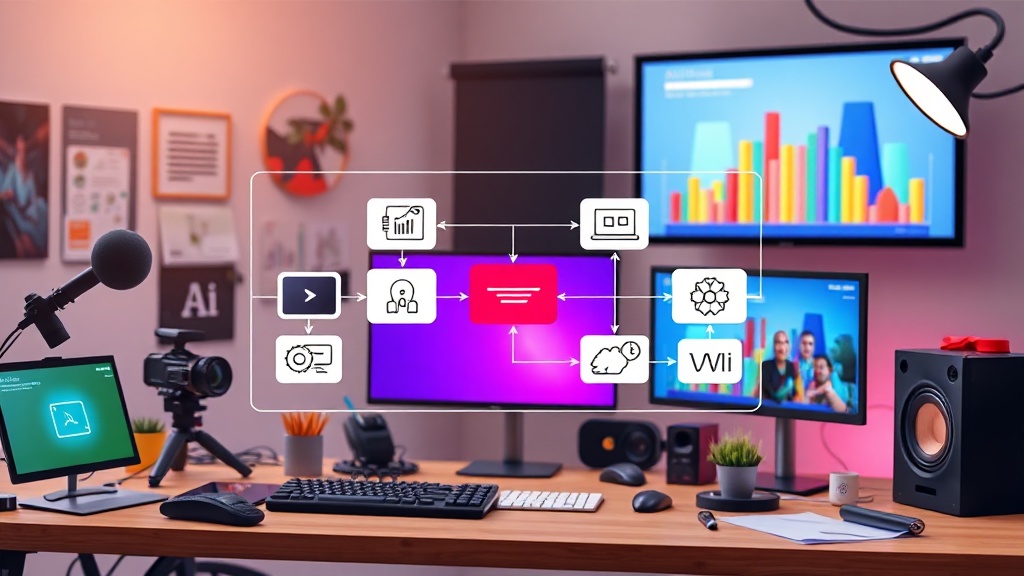
The proposed workflow begins with raw footage, which is ingested into cloud storage. From there, AI analysis is intended to process the content, followed by an automated editing and assembly stage. This is then subject to human review before the final versions are rendered for social media distribution. The core question for SAC is not just whether AI can perform these tasks, but which technical approaches offer the most practical and effective solutions for their specific needs.
AI Analysis: Identifying Key Moments
The cornerstone of an AI-assisted video workflow for event production is the analysis phase. This involves using artificial intelligence to understand the content of the raw footage and identify segments that are most likely to be valuable for social media content. Several AI techniques can be applied here:
- Speech-to-Text Transcription and Analysis: Transcribing all audio from the video footage allows for keyword spotting and sentiment analysis. If speakers mention specific topics, names, or themes relevant to the event, these segments can be flagged. Tools like OpenAI's Whisper or Google's Speech-to-Text API can provide highly accurate transcriptions. Analyzing these transcripts can reveal key discussions, audience reactions (e.g., applause), and speaker highlights.
- Computer Vision for Scene and Action Recognition: AI models can be trained to recognize specific visual elements or actions. For event production, this could include identifying speakers on stage, audience engagement (e.g., people clapping, cheering), key visual moments (e.g., product launches, performances), and even facial recognition to identify important attendees or speakers. Libraries like OpenCV, combined with pre-trained models from TensorFlow or PyTorch, can be leveraged for these tasks.
- Audio Event Detection: Beyond speech, AI can detect significant audio events such as applause, cheers, music spikes, or even specific sound cues that indicate an important moment occurred. This complements visual analysis by providing another layer of context.
- Shot Boundary Detection and Scene Segmentation: AI can automatically identify where one shot ends and another begins, and segment the footage into logical scenes. This helps in breaking down the large volume of raw footage into manageable clips for further processing.
The surprising detail here is not the complexity of these AI capabilities, but their increasing accessibility and affordability. What was once the domain of large media corporations is now within reach for smaller production houses, provided they can integrate these tools effectively.
Automated Editing and Assembly: From Raw Clips to Narrative
Once key moments are identified, the next step is to assemble them into a coherent narrative. This is where automated editing tools, often powered by AI, come into play. The goal is to create a first pass of the video content that requires minimal human intervention.
- Highlight Reel Generation: Based on the AI analysis (keywords, recognized actions, audio cues), algorithms can automatically select the most compelling clips and stitch them together. This could involve prioritizing clips with high audience energy, clear speaker mentions of key topics, or visually striking moments.
- Template-Based Assembly: For consistent content like event recaps, pre-defined templates can guide the AI. These templates might dictate the order of segments (e.g., opening remarks, keynotes, audience reactions, closing), the duration of each clip, and the inclusion of specific branding elements or music.
- Automated Transitions and Music Syncing: Advanced tools can add basic transitions between clips and even sync cuts to the beat of background music, creating a more polished feel.
Think of this stage less like an AI director making artistic choices and more like an extremely fast, rule-following assistant editor who can sift through hours of footage and pull out all the clips tagged with 'excitement' or 'product launch' in minutes.

Review, Refinement, and Deployment
The output from the automated assembly stage is not a final product, but a strong first draft. Human review remains crucial for quality control, creative direction, and ensuring brand consistency.
- Human-in-the-Loop Review: Editors will review the AI-generated edits, making fine-tuning adjustments to pacing, clip selection, and narrative flow. They can also add more sophisticated transitions, color correction, and audio mixing.
- Content Adaptation: The AI can assist in adapting the core content for different platforms. For instance, it can help in automatically cropping and reformatting horizontal video for vertical social media formats, or generating multiple versions with different highlight focuses.
- Metadata Tagging and Optimization: AI can also assist in generating relevant metadata, such as descriptive titles, tags, and captions, which are crucial for social media discoverability and SEO.
The final step is deployment to social media channels. This could involve scheduling posts, monitoring engagement, and using analytics to inform future content creation strategies.
Technical Approaches and Considerations
Implementing such a workflow requires careful consideration of the underlying technology stack:
- Cloud Infrastructure: Scalable cloud storage (e.g., AWS S3, Google Cloud Storage) is essential for handling large volumes of raw footage. Cloud computing platforms (AWS, GCP, Azure) will be necessary for running AI models and video processing tasks.
- AI/ML Platforms and APIs: Leveraging existing AI services from cloud providers or specialized AI companies can significantly accelerate development. This includes APIs for speech recognition, video analysis, and natural language processing.
- Video Processing Libraries: Libraries like FFmpeg are indispensable for video manipulation, transcoding, and editing tasks.
- Workflow Orchestration: Tools like Apache Airflow or cloud-native workflow services can manage the complex sequence of tasks in the AI-assisted pipeline.
- Data Management: A robust system for managing, versioning, and tagging video assets and their associated AI analysis data is critical.
The primary technical hurdle for SAC and similar companies will be integrating these disparate tools into a seamless workflow. This requires a blend of cloud engineering, AI/ML expertise, and video production knowledge. What nobody has addressed yet is the optimal balance between AI automation and human creative oversight for different types of event content. Finding that sweet spot will define the success of these AI-assisted workflows.