
Imagine listening to a podcast about the Peloponnesian War, only to pause the playback and ask, "Wait, did the Trojan War actually happen?" This isn't science fiction; it's the core functionality of a new history learning tool built by an independent developer. Leveraging large language models (LLMs) and text-to-speech (TTS) technology, the tool can research and write a two-host podcast episode on virtually any historical topic in minutes. The truly novel aspect, however, is the ability to interrupt the narrative mid-episode to ask clarifying questions, which the AI hosts then answer before resuming the story.
From Concept to Interactive Episode
The concept stems from a desire for a more engaging and personalized way to learn history. Traditional podcasts, while informative, are linear. Users absorb information passively. This new tool flips that model, creating an active learning experience. The process begins with a user inputting a historical topic. The underlying LLM then researches the subject, synthesizing information to create a script. This script is then transformed into a multi-host podcast episode, complete with distinct voices for each host and even generated artwork, all within a remarkably short timeframe.
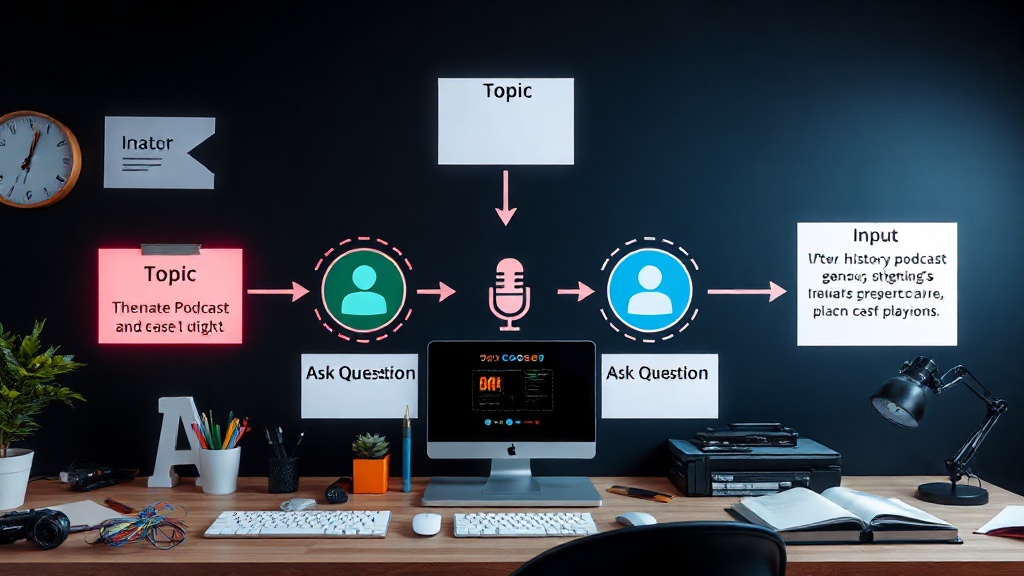
The interactive element is where the technology shines. During playback, a user can tap a microphone icon and pose a question aloud. The AI detects this interruption, pauses the main narrative, and generates an answer to the specific query. This means listeners aren't just passively receiving information; they're actively shaping their learning journey. If a particular detail is unclear or sparks curiosity, the listener can immediately seek clarification without breaking their immersion entirely. The hosts then seamlessly transition back to the original episode flow, ensuring a cohesive listening experience.
The Technology Behind the Voice
The engine driving this interactive history podcast is a sophisticated combination of AI technologies. Large Language Models, such as those developed by OpenAI or Google, are instrumental in the research and scriptwriting phases. These models can sift through vast amounts of historical data, identify key events and figures, and construct a coherent narrative. The challenge lies in not just generating factual content but also in maintaining a consistent tone and persona for the two hosts, ensuring the dialogue feels natural and engaging, rather than robotic.
Text-to-speech (TTS) technology is then employed to bring the script to life. Advanced TTS systems can now produce highly realistic human voices, complete with intonation and emotion. By using different TTS models or parameters for each host, the tool can create distinct auditory personalities, enhancing the podcast's believability. The integration of these two technologies allows for dynamic content generation, where the narrative can be altered or augmented in real-time based on user interaction.
Implications for Education and Content Creation
This development has significant implications for educational tools and content creation. For students, it offers a more dynamic and responsive way to engage with historical subjects. Instead of static textbooks or lectures, learners can interact with historical narratives as if they were conversing with experts. This could be particularly beneficial for subjects that often feel dry or inaccessible, making them more approachable and memorable.
For content creators, this represents a new paradigm in audio storytelling. The ability to generate personalized, interactive episodes on demand could democratize podcast creation, allowing individuals to produce high-quality, engaging content without extensive technical skills or resources. It opens up possibilities for niche historical topics to be explored and for content to be tailored to specific audience interests. Think of it less like a traditional podcast and more like an AI-powered historical tutor that speaks in episodes.
Future Possibilities and Unanswered Questions
While the current iteration focuses on history podcasts, the underlying technology is adaptable to other genres. Imagine a science podcast where you can ask for a deeper explanation of a complex theory, or a literature podcast where you can inquire about a character's motivations. The potential for personalized, interactive audio content is vast.
However, several questions remain. How will the accuracy and bias of the LLM's historical research be managed and verified? What are the long-term implications for human podcast hosts and educators? And crucially, what happens when a user asks a question that the AI cannot answer or misunderstands, and how will the system gracefully handle such scenarios to maintain the user experience? The development marks a significant step, but the path forward for truly intelligent, interactive audio content is still being charted.