
The Demo Illusion vs. The Editing Reality
Every AI video generator promises effortless content creation. Demos showcase polished, perfectly rendered shorts, making it seem like magic. But the real test of these tools isn't the flawless demo; it's what happens when you need to make a minor adjustment. Can you fix the third scene without redoing the other four? This is the crucial differentiator that separates genuinely useful AI video tools from those that are merely a black box. The ability to edit specific elements without a full system reset is the true measure of value, not the slickness of a pre-programmed demonstration.
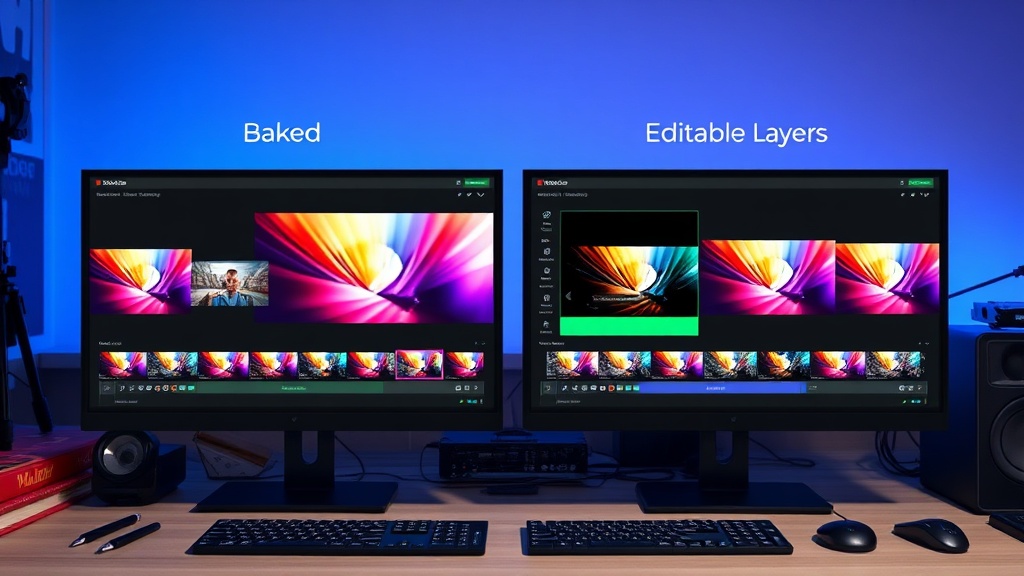
The core issue lies in how these tools process and present the AI-generated video. Underneath the marketing jargon, AI video generators largely fall into two distinct categories. The first type delivers a finished product, a flattened MP4 file where every frame is rendered and immutable. Once generated, the video is essentially baked. If the AI included incorrect information, a misspoken name, or a nonsensical visual, your only recourse is to start over. This is akin to trying to change a single brick in a fully constructed wall without affecting the surrounding structure. It's impossible.
The second, and far more practical, category of AI video tools offers a different approach. These systems generate video content by layering elements that remain individually addressable. Think of it less like a fully rendered painting and more like a digital collage where each component – the text, the background, the voiceover, the visual clips – can be selected and modified independently. This distinction is critical for any user who needs to ensure accuracy, maintain brand consistency, or simply adapt content to specific, evolving needs. The power isn't just in generation; it's in the control that follows.
Understanding the "Baked" vs. "Editable" Divide
The "baked pixels" approach treats AI video generation as a one-shot process. You provide a prompt, and the system renders a complete video file. This is convenient for generating a quick, one-off piece of content where perfection isn't paramount, or when the AI's output is consistently accurate. However, for professional use cases, marketing campaigns, or any scenario requiring precision, this method quickly becomes a bottleneck. A single error necessitates a complete regeneration, consuming time and computational resources with no guarantee of a better outcome. This is a significant limitation for anyone who needs to iterate or fine-tune their content. The entire process becomes a gamble, hoping the AI gets it right on the next attempt.
In contrast, tools that offer "editable layers" allow for granular control. When you input a prompt, the AI doesn't just output a final video. Instead, it generates distinct assets that can be manipulated. For instance, if the AI generates a short clip of someone speaking, and you need to correct a name mentioned in the voiceover, you can often edit just the text transcript, and the tool will re-render only that specific audio segment, potentially resyncing it with the visuals. Similarly, if a particular text overlay is incorrect, you can select that text box and change it, with the tool updating only that visual element. This is crucial for maintaining accuracy in data-driven content, such as financial reports or product updates, where a single wrong digit can have significant consequences.
Why Editability Matters for Real-World Use
The implications of this divide are substantial for users across various fields. For marketers, the ability to tweak call-to-action buttons, update promotional offers, or correct product names in a video without starting from scratch is invaluable. It allows for rapid deployment of content that is both timely and accurate. For educators, correcting factual errors or updating curriculum references in explainer videos becomes feasible, ensuring that learning materials remain current and reliable. For content creators focused on short-form video, like those for TikTok, Instagram Reels, or YouTube Shorts, the iterative nature of content creation demands tools that can keep pace. The ability to quickly adapt to trends, user feedback, or even minor AI misinterpretations is essential for maintaining a consistent output and engaging an audience.
Consider the scenario where an AI generates a short promotional video for a new software feature. The demo shows a seamless walkthrough. However, upon review, you realize the AI used an outdated UI element in a crucial step. With a "baked" tool, you'd have to re-prompt, hoping the AI selects the correct UI element this time. This could take multiple attempts. With an editable tool, you might be able to select the visual element representing the UI, point the AI to a correct screenshot or asset, and have it regenerate just that portion of the video. This saves significant time and reduces the frustration associated with AI content generation. The efficiency gains are not just marginal; they can be transformative for workflows that rely on frequent content updates.
The "Black Box" Problem and Its Solutions
The term "black box" aptly describes AI tools where the internal processes are opaque and the output is final. You input data, and you get a result, with no insight or control over the intermediate steps. This is often the case with "baked pixel" generators. The underlying models might be powerful, but their application results in a rigid output. The challenge for developers and users alike is to move beyond this black box mentality.
The solution lies in architectural design. Tools that expose intermediate representations or allow for post-generation editing are key. This might involve exposing the AI's script, allowing users to edit the text and have the video regenerate based on the revised script. It could mean providing access to individual generated assets, such as voice clips, background music, or visual elements, which can then be reassembled or modified. Some advanced tools might even allow for prompt refinement at a more granular level, enabling users to guide the AI's generation process more precisely. The goal is to give users agency over the content, transforming the AI from a one-time generator into a collaborative assistant.
Looking Ahead: The Future of Editable AI Video
As AI video generation technology matures, the demand for editable, controllable tools will only increase. The initial novelty of AI-generated content is giving way to the practical need for integration into professional workflows. Users are realizing that "good enough" is rarely sufficient when accuracy, branding, and iterative improvement are on the line. The tools that will gain traction are those that empower users, providing transparency and control over the creative process. This means moving beyond the demo reel and focusing on the real-world usability that comes from genuine editability. The future of AI video generation is not in creating perfect, unchangeable outputs, but in building flexible systems that users can guide and refine to meet their specific objectives.