The Assessment-First Approach
The prevailing wisdom in AI education has focused on chatbots as the primary interface for student interaction. However, a new system called Doerkit challenges this paradigm, arguing that the most effective path to learning improvement lies in assessment and spaced cumulative review. This open-source project, developed by Michael Tuszynski, is the culmination of a series of posts exploring the potential of an assessment-first methodology in AI-driven education. The core premise is that an AI grading written answers against a rubric, combined with targeted review, is more impactful than conversational AI alone.
Doerkit is built on the idea that active recall and iterative feedback are superior to passive consumption of information, even when delivered via AI. Instead of students engaging with a chatbot that might be ignored, Doerkit focuses on generating and grading assessments, then using that data to inform a personalized review schedule. This approach aims to directly address knowledge gaps and reinforce learning through repeated exposure to material, tailored to the individual student's performance.
Running Doerkit in Five Minutes
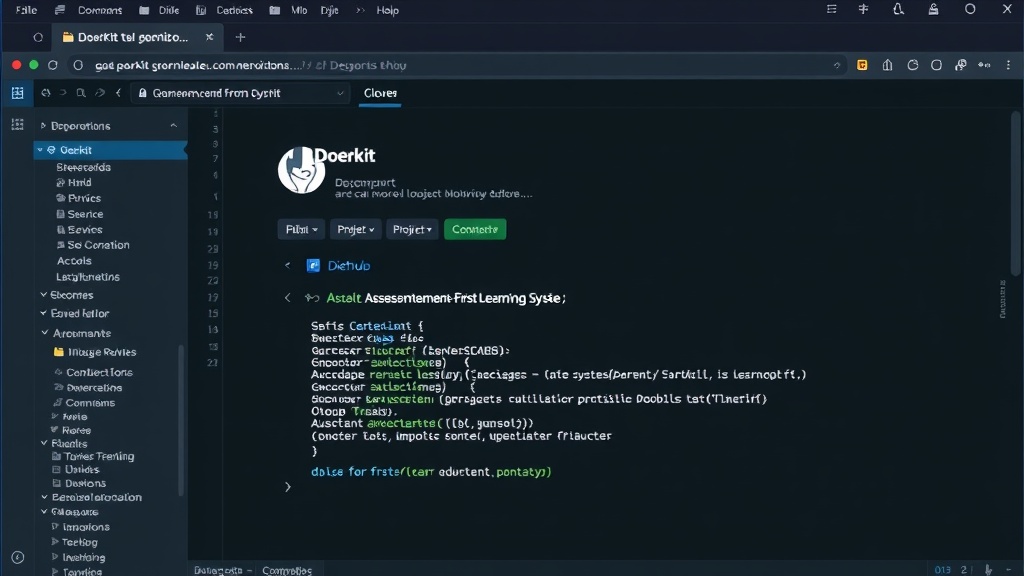
The practical implementation of Doerkit is designed for rapid deployment. The project leverages a tool called doerkit, which is a complete course framework. It includes six statistics lessons sourced from OpenStax Open Educational Resources (OER), integrated quizzes, and a system for cumulative review. A key component is the 'dosage dashboard,' which provides insights into student engagement and learning progress. The entire system can be set up by cloning the GitHub repository and running a simple command, making it accessible for educators and developers looking to experiment with this learning model.
The system's architecture prioritizes ease of use and modification. Developers can fork the repository and adapt the content, lessons, and rubrics to suit specific educational needs. The underlying technology is designed to be lightweight and efficient, ensuring that the focus remains on the pedagogical approach rather than complex infrastructure. This accessibility is crucial for fostering adoption and further development within the educational technology community.
How it Works: Assessment and Review
At its heart, Doerkit functions by continuously assessing a student's understanding. When a student engages with the material, they are presented with questions or tasks that require them to apply their knowledge. These responses are then graded against a predefined rubric, much like a human instructor would. The AI's ability to objectively score responses against specific criteria is central to its effectiveness.
Following the assessment, the system identifies areas where the student struggled. This information feeds into a spaced cumulative review system. Material that was answered incorrectly or with uncertainty is reintroduced at increasing intervals, a technique proven to enhance long-term retention. This contrasts with traditional review methods that might simply re-present all material equally, regardless of mastery. The dosage dashboard visualizes this process, showing students and educators which topics require more attention and tracking progress over time. This data-driven approach allows for a highly personalized learning journey.
The Bet and Future Directions
The fundamental bet behind Doerkit is that this assessment-first, spaced review model will yield superior learning outcomes compared to current AI-driven educational products that rely heavily on conversational interfaces. The project is positioned as a 'running system to argue with,' inviting scrutiny and further development from the broader community. Tuszynski suggests that the AI education industry has, thus far, built the wrong product, with chatbots often becoming ignored digital distractions rather than effective learning tools.
Where the bet breaks is a question that remains open for exploration. Potential failure points could include the complexity of developing accurate and nuanced grading rubrics for a wide range of subjects, the AI's ability to handle diverse student response styles, or the challenge of motivating students to consistently engage with the review system. However, the project provides a tangible, runnable example that allows these questions to be investigated empirically. The open-source nature of Doerkit encourages collaboration, aiming to refine the assessment-first model and explore its applicability across various disciplines and educational levels.
The future development of Doerkit could involve expanding the range of subjects supported, integrating more sophisticated natural language understanding for rubric application, and developing more engaging interfaces for the review process. The project also opens the door for research into how AI-powered assessment can be used not just for learning, but also for diagnostic purposes, identifying learning disabilities or specific pedagogical challenges that might otherwise go unnoticed.