
The Unexpected Bottleneck: Environmental Factors in AI Development
In the intricate world of AI development, where code optimization, algorithmic efficiency, and hardware capabilities are often scrutinized for performance bottlenecks, a developer recently encountered a confounding issue: their AI model training was unexpectedly slow. The culprit, they discovered, wasn't a bug in the Python code or an inefficient TensorFlow architecture, but something far more mundane and often overlooked – the air in the room. This realization, detailed on Dev.to, highlights how environmental conditions can subtly but significantly impact computational tasks, particularly those involving sensitive hardware and extended processing times.
The developer, working on an image classification model using Python and TensorFlow, found their training process taking an inordinate amount of time. Initial debugging efforts focused on the usual suspects: code optimization, data pipeline efficiency, and potential syntax errors. However, after meticulously checking the training loop and data preprocessing, a sense of unease persisted. The performance was consistently poor, defying logical explanations rooted in software alone.
The journey to uncovering the environmental factor was one of persistent troubleshooting. The developer began to suspect that the issue might lie beyond the software stack. This led to an investigation into the physical environment where the computations were occurring. The hypothesis was that factors like ambient temperature and air circulation could be affecting the performance of the hardware, specifically the GPU, which is critical for deep learning tasks.
Investigating Hardware and Environmental Impact
The core of the problem seemed to stem from thermal throttling. Graphics Processing Units (GPUs), especially those tasked with intensive, long-duration AI training, generate significant heat. When ambient room temperatures are high, or when there is inadequate airflow around the hardware, the GPU's internal temperature sensors can trigger thermal throttling. This is a protective mechanism where the GPU intentionally reduces its clock speed to prevent overheating and potential damage. While effective for hardware preservation, this throttling directly translates to slower processing speeds and, consequently, much longer training times.
The developer's experience illustrates a critical point often missed in performance tuning: hardware doesn't operate in a vacuum. Its performance is intrinsically linked to its operating environment. For AI workloads that demand sustained high performance from GPUs, maintaining optimal operating temperatures is paramount. This involves not just ensuring the cooling systems within the hardware itself are functional but also considering the external factors that influence heat dissipation.
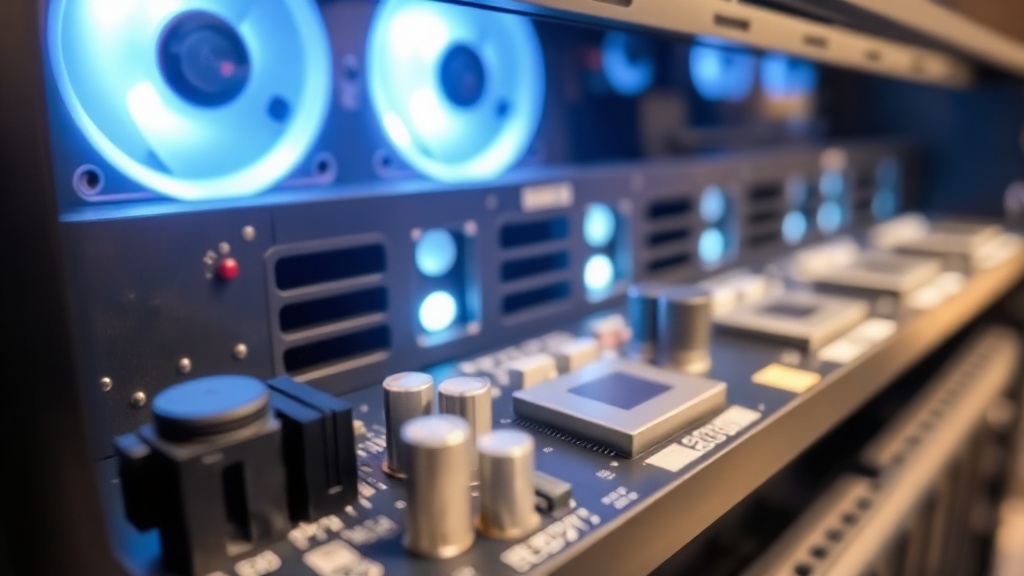
Consider the setup: a powerful GPU, designed to crunch numbers at high speeds, is housed within a machine. This machine is then placed in a room. If that room is warm, poorly ventilated, or if the machine itself is in a confined space with limited airflow, the heat generated by the GPU has nowhere efficient to go. Instead of dissipating into cooler ambient air, it recirculates, raising the internal temperature of the GPU. This is akin to trying to cool down a hot engine in a sealed garage – it's far less effective than doing so in an open, breezy area.
The Fix and Its Implications
The developer's solution was straightforward yet revelatory: improving the room's ventilation and ensuring better airflow around the computer. By lowering the ambient temperature and facilitating heat dissipation, the GPU was able to operate at its intended speeds without triggering thermal throttling. The result was a dramatic reduction in training times, bringing the project back on track. This experience underscores the importance of holistic performance analysis, extending beyond the software layer to encompass the physical environment.
This situation raises a broader question for the AI and machine learning community: how much performance is being lost due to suboptimal environmental conditions in data centers, server rooms, and even home development setups? While high-performance computing environments are typically engineered with sophisticated cooling systems, smaller-scale operations or even larger ones with aging infrastructure might be unknowingly sacrificing efficiency. The cost of electricity for cooling is a significant factor in data center operations, and inefficient cooling due to poor airflow can inflate these costs unnecessarily.
For developers and researchers, this serves as a crucial reminder. Before diving deep into code optimization or contemplating expensive hardware upgrades, take a moment to consider the physical environment. Is the machine adequately cooled? Is the room temperature stable and within the hardware's recommended operating range? Simple measures like ensuring proper placement of equipment, using external fans, or improving general room ventilation can sometimes yield significant performance gains, often at minimal cost. It’s a testament to the fact that sometimes, the most complex technical problems have surprisingly simple, physical solutions.
Broader Context and Future Considerations
The trend towards larger and more complex AI models, such as those in natural language processing and advanced computer vision, places ever-increasing demands on computational resources. These models require extensive training periods, often running for days or weeks on end. During these prolonged periods of high utilization, the thermal management of the underlying hardware becomes critical. Failure to address it can lead to not only slower training but also increased wear and tear on components, potentially shortening their lifespan.
Furthermore, the energy consumption associated with AI training is a growing concern. Inefficient cooling due to poor airflow means the systems are working harder than necessary to dissipate heat, leading to higher energy bills and a larger carbon footprint. Optimizing the physical environment for better thermal management is therefore not just a performance issue but also an economic and environmental one.
This anecdote highlights a gap in the typical developer's toolkit – a more explicit consideration of environmental engineering principles in relation to computational performance. While hardware specifications often list operating temperature ranges, the practical implications of these ranges and how they are affected by ambient conditions are frequently an afterthought. As AI workloads continue to scale, a more integrated approach to performance optimization, one that bridges software, hardware, and environmental factors, will become increasingly necessary.
The developer's experience, though perhaps initially sounding like a quirky anecdote, points to a fundamental truth: technology doesn't exist in isolation. The physical world, with its ambient temperatures and air currents, plays a tangible role in the performance and efficiency of our digital endeavors. It's a simple yet profound insight that can help developers and system administrators alike to diagnose and resolve performance issues more effectively, ensuring that the only bottleneck is the one actively being worked on, not the air we breathe.