The Siren Song of New AI Tools
Every week, a new AI tool emerges, promising to be the ultimate coding assistant, the next ChatGPT killer, or a revolutionary agent that will fundamentally change how we build software. For developers and AI enthusiasts, the temptation to integrate every shiny new offering into their workflow is powerful. It feels proactive, like staying ahead of the curve. I've been there, installing every promising tool that surfaces on GitHub or Product Hunt, believing that more tools equate to more capability.
However, after extensive experience building AI systems and experimenting with dozens of these tools across various projects, a counterintuitive truth emerged. The primary obstacle to productivity isn't a scarcity of AI tools; it's an overwhelming abundance. The real hidden cost isn't measured in subscription fees or licensing, but in the intricate web of complexity introduced into our daily workflows.
The Complexity Tax on Productivity
Consider the typical developer's journey with a new AI tool. Initial excitement leads to integration. This might involve setting up API keys, configuring environments, learning new syntax or paradigms, and potentially modifying existing codebases to accommodate the tool's input and output formats. If the tool is an AI agent designed to automate tasks, it often requires careful prompt engineering, state management, and error handling to function reliably.
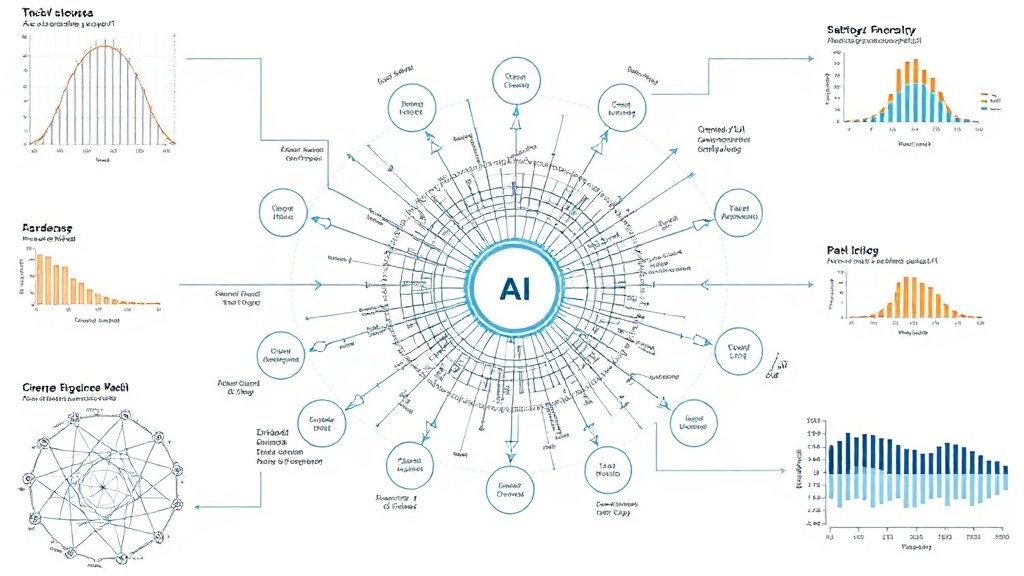
Now, multiply this integration effort by five, ten, or even twenty tools. Each tool comes with its own learning curve, its own set of dependencies, and its own unique way of interacting with your project. The time spent learning, configuring, debugging, and maintaining these disparate tools quickly eclipses any perceived productivity gains. This is the complexity tax. It's the invisible overhead that drains cognitive resources and slows down development velocity.
Think of it less like a well-organized toolbox with specialized, high-quality instruments, and more like a chaotic garage where every tool ever acquired is thrown in. Finding the right screwdriver takes longer than the actual repair. Similarly, navigating the intricacies of multiple AI assistants, code generators, debugging agents, and specialized data analysis tools can become a monumental task in itself. The developer's focus shifts from solving the core problem to managing the tools designed to help solve it.
Workflow Fragmentation and Context Switching
One of the most significant contributors to this complexity tax is workflow fragmentation. Each AI tool often demands a specific context. An AI for code generation might require a specific IDE plugin and a particular code structure. An AI for testing might need access to a separate testing environment and specific data schemas. An AI for documentation might need to parse code repositories and commit histories.
When developers must constantly switch between these disparate contexts, their cognitive load increases dramatically. This context switching is a well-documented productivity killer. Every time a developer shifts focus from debugging an AI agent's output to writing a new prompt for a code generation tool, or from configuring an AI deployment pipeline to analyzing AI-generated test results, a portion of their mental energy is lost. This fragmentation prevents deep work and fosters a reactive, rather than proactive, development environment.
The promise of AI was to augment human capabilities, to handle the tedious, repetitive, or computationally intensive tasks, freeing up developers for more creative and strategic work. However, when the management and orchestration of these AI tools become the primary task, the intended benefit is lost. Instead of augmenting, the tools begin to demand augmentation themselves, requiring developers to become AI system integrators and managers rather than pure builders.
The Illusion of Specialization
The proliferation of AI tools is often driven by a desire for specialization. We see tools claiming to be the best at specific tasks: code completion, bug detection, natural language processing, image generation, and so on. While specialization can be beneficial, the hyper-specialization seen in the current AI tool market often leads to an over-reliance on integrating many narrow-purpose tools. This creates a brittle ecosystem where the failure or inefficiency of one tool can cascade through the entire workflow.
Furthermore, many of these specialized tools overlap in functionality. A sophisticated AI coding assistant might already incorporate advanced code completion, basic debugging suggestions, and even rudimentary refactoring capabilities. Adding another specialized code completion tool on top of this might offer marginal improvements, if any, but significantly increases integration overhead and potential conflicts. The marginal gains from adding yet another tool rarely justify the substantial increase in complexity.
The development landscape is also rapidly evolving. A tool that is cutting-edge today might be obsolete or superseded by a more integrated solution in six months. This rapid obsolescence encourages a constant cycle of adoption and abandonment, further contributing to workflow instability and the accumulation of technical debt related to tool integration.
Finding the Right Balance
The solution is not to abandon AI tools altogether, but to adopt a more discerning and strategic approach. Instead of chasing every new viral tool, developers and teams should focus on a curated set of AI tools that offer genuine, significant value and integrate seamlessly into their existing workflows. This involves:
- Prioritizing Integration: Choose tools that offer robust APIs, clear documentation, and are designed for easy integration with common development environments and CI/CD pipelines. Tools that are more platform-agnostic and configurable are often less disruptive.
- Evaluating True Value: Rigorously assess whether a new tool provides a substantial improvement over existing methods or tools. Does it solve a problem that cannot be addressed efficiently otherwise? Is the time saved in task execution greater than the time spent integrating and learning?
- Consolidating Functionality: Favor comprehensive AI platforms or agents that offer multiple functionalities over a collection of single-purpose tools. A single, well-integrated AI agent that can handle code generation, debugging, and testing might be far more efficient than three separate tools.
- Focusing on Core Problems: Remember that AI tools are enablers, not solutions in themselves. The ultimate goal is to build better products, faster. Tools should serve this goal, not become the goal.
The allure of the latest AI innovation is undeniable. But as developers navigate this rapidly expanding ecosystem, a critical re-evaluation of tool adoption is necessary. The hidden cost of AI tool overload is not financial, but cognitive and operational. By focusing on strategic integration, genuine value, and workflow coherence, we can harness the power of AI without succumbing to its complexity.