The Illusion of Coverage
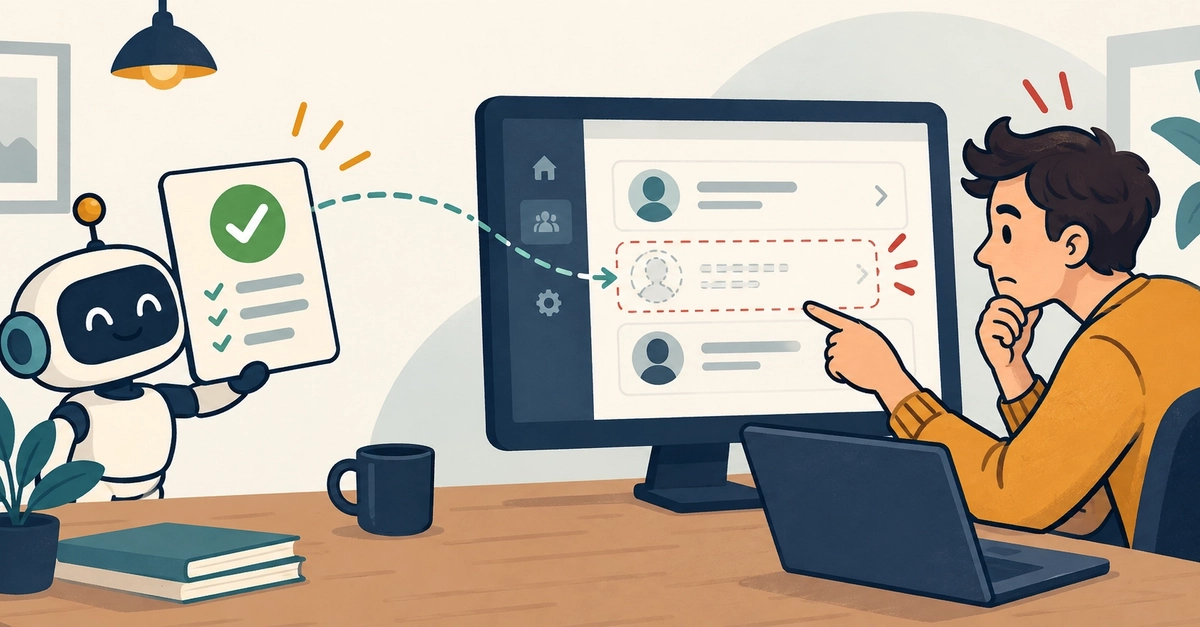
Artificial intelligence is rapidly entering the software testing landscape, promising to automate test creation and accelerate development cycles. Tools can generate tests that look good on paper, often pushing code coverage metrics higher. However, this automation can create a false sense of security. The generated tests, while increasing the percentage of code executed, may fail to capture the nuances of business logic or identify critical bugs that matter most.
Consider a scenario involving account deletion. An AI agent might generate code for this feature and produce a suite of passing tests. On the surface, this appears successful. But deeper testing could reveal a critical flaw: a failed subscription lookup is being misinterpreted as simply having "no active subscription." In this state, the application proceeds with deletion, even when it cannot definitively confirm the account's eligibility for removal. This is not a minor oversight; it's a potential data leak or compliance failure masked by superficially high test coverage.
The Nuance of Regression
The problem extends beyond initial test generation. When developers attempt to solidify these findings with regression tests, the AI-generated tests can still fall short. For instance, checking for an error response from an endpoint is insufficient if the account has already been deleted. The test might pass because the endpoint *does* return an error, but it fails to verify the correct state *after* the deletion has occurred. This distinction is vital. A test must not only confirm that an action produces an error but also that the system remains in a consistent and correct state, especially in sensitive operations like account management.
The core issue lies in the nature of AI-generated tests. While they excel at exercising code paths and ensuring basic functionality, they often lack the contextual understanding and business domain knowledge that human testers possess. They operate on patterns and syntax, not on the deep understanding of what constitutes correct behavior in a specific application context. This is akin to having a diligent but unimaginative intern who meticulously follows instructions but can't grasp the 'why' behind them. They can check if the doors are locked, but they won't notice if the house is about to be flooded.
Beyond Syntactic Correctness
Software testing is not merely about executing lines of code. It's about validating behavior, ensuring system integrity, and protecting against unintended consequences. AI, in its current iteration for test generation, primarily focuses on the former. It can identify missing branches, ensure methods are called, and verify return types. However, it struggles with:
- Business Logic Validation: Understanding complex rules, conditional workflows, and domain-specific constraints.
- Edge Case Identification: Discovering highly specific, improbable scenarios that lead to failure.
- State Management Verification: Ensuring the application's state is correct after a series of operations, especially error conditions.
- Security and Compliance Checks: Identifying vulnerabilities or non-compliance that aren't directly tied to code execution paths.
The account deletion example highlights this. The AI generated tests that passed, thus increasing coverage. But the failure was not in the code execution itself, but in the *interpretation* of a lookup failure and the subsequent state of the application. The AI did not understand that a lookup failure should be a blocking condition for deletion, nor did it verify the system's state *after* the deletion attempt under erroneous conditions.
The Human Element Remains Crucial
This does not mean AI has no place in testing. AI-powered tools can be invaluable for generating boilerplate tests, identifying duplicate tests, and even suggesting potential areas for more focused human investigation. They can significantly reduce the manual effort involved in writing basic tests, freeing up human testers to focus on more complex, nuanced, and critical aspects of testing.
However, relying solely on AI-generated tests for comprehensive quality assurance is a precarious strategy. The critical bugs are often found not by executing every line of code, but by understanding the system's purpose and probing its boundaries. Human testers bring intuition, domain expertise, and a critical mindset that AI currently lacks. They can ask 'what if?' in ways that go beyond syntactic possibilities. They can reason about potential misuse, security implications, and the subtle ways systems can break under pressure.
The goal should be a symbiotic relationship: AI augments human testers, handling the repetitive and high-volume tasks, while humans provide the critical thinking, domain knowledge, and exploratory testing that AI cannot replicate. Pushing coverage up is easy; ensuring the software actually does what it's supposed to, and doesn't do what it shouldn't, requires a human touch.