
The Misleading Theory of Speculative Decoding
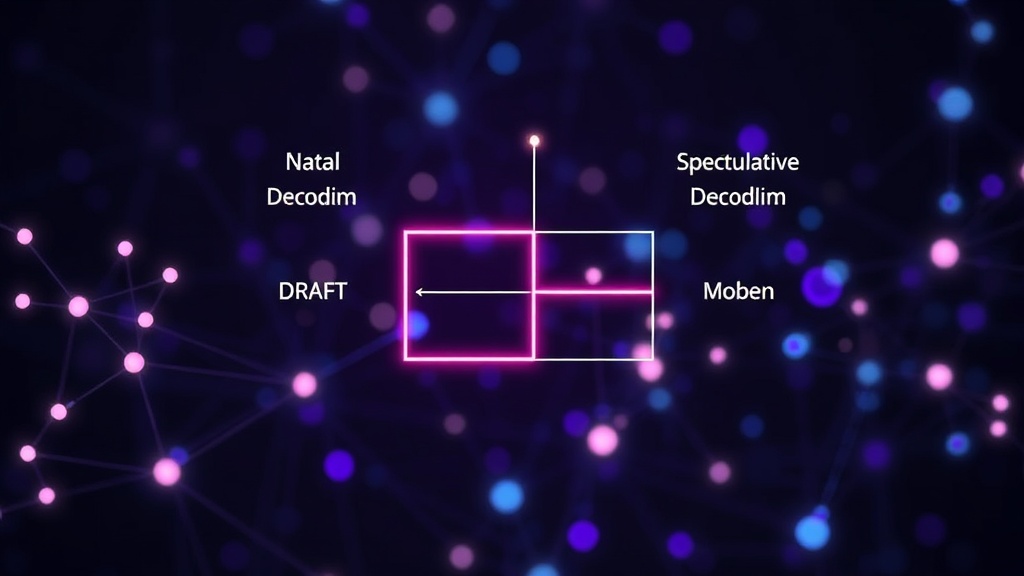
A recent theory suggested that inference-time optimizations, specifically speculative decoding, are the primary reason why AI-generated creative writing has degraded. This explanation, while sounding technically plausible, fundamentally misunderstands the problem. Speculative decoding is a technique designed to speed up the generation process by using a smaller, faster draft model to predict subsequent tokens. The larger, more powerful model then verifies and corrects these predictions. While this method does introduce a slight trade-off in output quality for speed, it is not the root cause of AI's writing deficiencies.
The claim that speculative decoding is the culprit is flawed because it overlooks the core architectural and training limitations of current large language models (LLMs). The actual degradation in writing quality is a more complex issue, stemming from how these models are built and trained, rather than how they are deployed for speed. The theory incorrectly attributes a symptom to a cause, much like blaming a car's exhaust system for a misfiring engine without examining the spark plugs.
Beyond Speed: The Real Bottlenecks in AI Writing
The true reasons AI struggles with nuanced, creative, and consistently high-quality writing are multifaceted. They include:
- Data Bias and Quality: LLMs are trained on vast datasets scraped from the internet. This data inevitably contains biases, factual inaccuracies, and stylistic inconsistencies. The model learns these flaws, replicating them in its output. Cleaning and curating these massive datasets is an ongoing, monumental challenge.
- Lack of True Understanding: LLMs are sophisticated pattern-matching machines. They predict the next word based on statistical probabilities learned from their training data. They do not possess genuine comprehension, consciousness, or lived experience, which are crucial for authentic creativity and deep narrative coherence. This leads to outputs that can be grammatically correct and superficially coherent but lack depth, emotional resonance, or original insight.
- Over-reliance on Statistical Coherence: The models are optimized to produce statistically probable sequences of tokens. This can lead to writing that feels generic, repetitive, or overly safe. The drive for statistical likelihood often suppresses the unexpected, the idiosyncratic, and the truly novel elements that characterize compelling human writing.
- Context Window Limitations: While context windows are expanding, LLMs still have a finite memory. For long-form content, maintaining consistent plot, character development, and thematic threads over extended narratives remains a significant hurdle. The model can 'forget' earlier details or contradict itself as it generates more text.
- Fine-tuning and Alignment Issues: The process of fine-tuning LLMs for specific tasks or aligning them with human values can inadvertently stifle creativity. Reinforcement learning from human feedback (RLHF), for example, can train models to produce responses that are deemed 'helpful' or 'harmless' by human raters, but this can also lead to outputs that are bland, overly cautious, and lacking in distinct voice.
Your Role in the AI Writing Equation
The claim that inference optimizations are the sole culprit is not just technically inaccurate; it also shifts the burden of responsibility away from the developers and researchers building these models. Understanding the true limitations of AI writing is critical for users, especially developers and content creators. Instead of accepting AI output at face value, users must actively engage with and refine it.
This means treating AI-generated text not as a finished product, but as a first draft or a sophisticated autocomplete tool. The 36-pattern checklist mentioned by the author is an example of the kind of rigorous, pattern-based analysis needed to identify AI tells. Users must develop their own critical evaluation skills and workflows:
- Editing and Revision: AI output requires significant human editing for style, tone, accuracy, and originality. It's a collaborator, not a replacement for human writers.
- Prompt Engineering: Crafting precise and detailed prompts is essential to guide the AI towards better outputs. This involves specifying tone, style, audience, and desired outcomes.
- Fact-Checking: Never assume AI-generated content is factually accurate. Independent verification is always necessary.
- Understanding AI's Strengths and Weaknesses: Leverage AI for tasks it excels at, such as generating initial ideas, summarizing information, or overcoming writer's block. Be aware of its limitations in areas requiring deep creativity, critical thinking, and emotional intelligence.
The problem of AI writing quality is a shared one, but the core technical challenges lie with the models themselves. However, the user's role in critically evaluating, editing, and guiding the AI is paramount in achieving high-quality written output. It’s a partnership, not an abdication of human skill.