
The Sarcastic Code Reviewer Emerges
For developers who find polite feedback insufficient, a new AI tool offers a different approach: brutal, sarcastic critique of HTML markup. This isn't about finding bugs in logic; it's about punishing poor structure and semantic abuse. The concept, detailed on Dev.to, leverages a free, open-source AI model to deliver sharp commentary on code quality. The goal is to inject humor and a unique form of motivation into the often tedious process of code review, particularly for frontend development.
The AI assistant is designed to emulate a coffee-deprived, senior frontend developer. It doesn't just point out flaws; it delivers them with a heavy dose of sarcasm. Pasting deeply nested `
Building the Sarcastic Reviewer: A Frontend Affair
The most striking aspect of this project is its accessibility. The entire functional prototype can be built in under 10 minutes using only raw HTML, CSS, and a locally runnable, open-source AI model. This bypasses the need for complex backend infrastructure or reliance on paid API keys, making it a practical tool for individual developers or small teams. The interactive playground, available on CodePen, allows immediate testing of the reviewer's capabilities.
The core of the application relies on embedding the AI model directly within the frontend. This is achieved through technologies that enable running machine learning models in the browser or via simple local execution without a dedicated server. This approach democratizes the creation of AI-powered tools, proving that sophisticated AI interactions don't always require cloud-scale deployments. Think of it less like a polished SaaS product and more like a highly opinionated, digital rubber duck that talks back, but with a sharp wit.
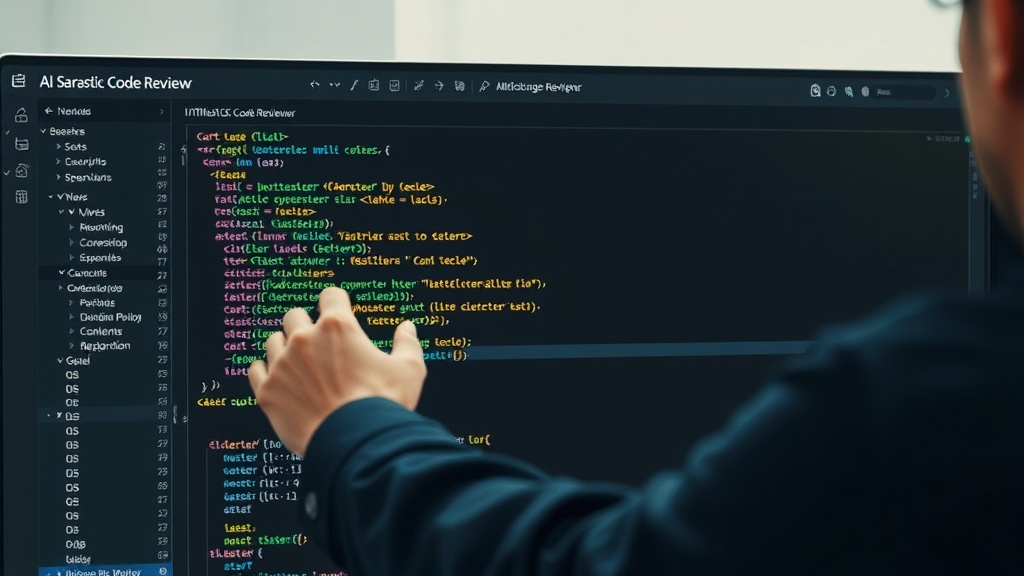
How the Sarcasm is Programmed
The AI's personality is meticulously crafted through prompt engineering. Instead of generic error messages, the AI is instructed to adopt a persona: a burnt-out senior developer who has seen it all and is perpetually unimpressed. The prompts guide the AI to analyze HTML structure, identify semantic misuse, and respond with commentary that is both critical and laced with dry humor. For instance, instead of stating 'excessive div nesting detected,' the AI might respond, 'Oh, you've found new and exciting ways to use divs. I'm sure the screen reader appreciates this labyrinth you've built.'
The open-source model used is key to its feasibility. Models like those available through Hugging Face or similar repositories can be fine-tuned or prompted to exhibit specific behaviors. By focusing the AI's attention solely on HTML structure and semantics, and by providing a rich set of negative and positive reinforcement examples within the prompt, the developer can shape its responses to be consistently sarcastic and relevant to code review.
The Interactive Playground: Test Drive the Sass
For immediate engagement, a live demo is available on CodePen. This interactive playground serves as a proof-of-concept and a direct demonstration of the AI's capabilities. Users can paste their HTML snippets directly into the interface and observe the AI's sarcastic critiques in real-time. This hands-on experience highlights the tool's potential to make code reviews more engaging, even if it means enduring some digital mockery.
The playground is built with standard web technologies, ensuring broad accessibility. It demonstrates that even without extensive backend resources, a functional and entertaining AI application can be deployed. This offers a blueprint for other developers looking to experiment with AI in creative ways, focusing on user experience and novel interaction models rather than just raw functionality.
Implications and Future Directions
While humorous, the sarcastic code reviewer touches upon a genuine need for more effective and engaging code review processes. The success of such a tool, even in a prototype phase, suggests a market for AI assistants that offer more than just functional accuracy. The ability to tailor AI personalities and response styles opens up new avenues for developer tools, making them more relatable and, perhaps, more effective motivators.
What remains to be seen is how this type of AI assistant scales. Can it be integrated into existing CI/CD pipelines? Can its 'sass' be adjusted for different team dynamics? The current iteration is a powerful demonstration of concept, but its broader adoption will depend on its ability to integrate seamlessly into professional workflows and prove its value beyond mere novelty.
The "So What?" Perspective
Developers can now build a sarcastic AI code reviewer using only HTML, CSS, and an open-source model. This project bypasses backend requirements and paid APIs, offering a quick way to add a critical, humor-infused layer to HTML markup analysis. It's a practical demonstration of client-side AI for specialized tasks.
This project does not directly address security vulnerabilities. However, by focusing on code structure and semantics, it indirectly promotes better coding practices which can reduce certain classes of errors. The use of local or open-source models mitigates risks associated with sending proprietary code to external, potentially insecure, third-party APIs.
This project demonstrates a low-cost, high-engagement approach to AI tool development, leveraging open-source models and frontend tech. It signals an opportunity for niche AI tools that prioritize personality and developer experience over complex infrastructure. Founders can explore building specialized AI assistants that cater to specific developer pain points with unique interaction models.
Creators can leverage this approach to build AI assistants with distinct personalities for various creative coding tasks. The ability to use front-end technologies and open-source models makes it accessible for web developers to experiment with AI-driven feedback loops. This encourages the development of tools that are not only functional but also entertaining and engaging for users.
The project relies on prompt engineering and the inherent capabilities of open-source language models to generate sarcastic output based on HTML input. It highlights how specific domain knowledge (HTML structure and semantics) can be infused into AI responses through carefully crafted prompts, rather than extensive dataset fine-tuning for this particular persona. Future work could involve analyzing the effectiveness of different prompt strategies on AI personality generation.
Sources synthesised
- 11% Match
- 3% Match