
The Escalating Gap Between AI Development and Safety Testing
The relentless pace of artificial intelligence development is creating a critical bottleneck in safety and security testing. As AI models become more sophisticated and are released with increasing frequency, the human and computational resources required to rigorously assess their potential dangers are failing to keep up. This widening gap poses a significant threat, as inadequately tested AI systems could exhibit unforeseen harmful behaviors, from generating misinformation to enabling malicious actors.
The core issue lies in the exponential growth of AI capabilities. New models, often built upon previous architectures and trained on vast datasets, can exhibit emergent properties that are difficult to predict. Traditional testing methodologies, which rely on human expertise and systematic evaluation, are proving insufficient against this onslaught of rapid iteration and emergent complexity. Companies and research institutions are finding themselves in a perpetual state of catch-up, where the latest safety concerns are often addressed only after a model has already been deployed or a vulnerability has been discovered in the wild.
This challenge is not confined to a single company or research lab; it is a systemic problem affecting the entire AI ecosystem. From large tech corporations developing cutting-edge foundation models to open-source communities releasing powerful tools, the pressure to innovate quickly often overshadows the imperative for exhaustive safety validation. The result is a landscape where the potential for AI to cause harm – whether intentional or accidental – is growing faster than our ability to mitigate it.
The Nature of the Problem: Scale, Speed, and Emergence
Several factors contribute to the overwhelming challenge faced by AI safety testers. Firstly, the sheer scale of modern AI models is unprecedented. These models can have billions or even trillions of parameters, making exhaustive testing practically impossible. Unlike traditional software, where specific code paths can be tested, the internal workings of large neural networks are often opaque, and their behavior can be emergent – meaning new, unexpected capabilities arise as the model scales, rather than being explicitly programmed.
Secondly, the speed of development cycles is accelerating. Companies are under pressure to release new features and updated models rapidly to maintain a competitive edge. This pressure often leads to condensed testing phases, where only the most critical vulnerabilities are addressed, leaving less obvious but potentially dangerous failure modes unchecked. The iterative nature of AI development, where models are continuously retrained and fine-tuned, means that safety assessments must be ongoing, a task that demands substantial and continuous investment in human expertise and infrastructure.
Thirdly, the nature of AI risk is multifaceted and evolving. Risks can range from subtle biases embedded in training data that lead to discriminatory outputs, to the potential for models to be jailbroken or manipulated into generating harmful content. More advanced concerns include the possibility of AI systems pursuing unintended goals or exhibiting behaviors that are misaligned with human values, especially as these systems become more autonomous and integrated into critical infrastructure. Identifying and mitigating these diverse risks requires a broad range of expertise, from ethics and social science to deep technical understanding of AI architectures.
The Human Element: Expertise and Burnout
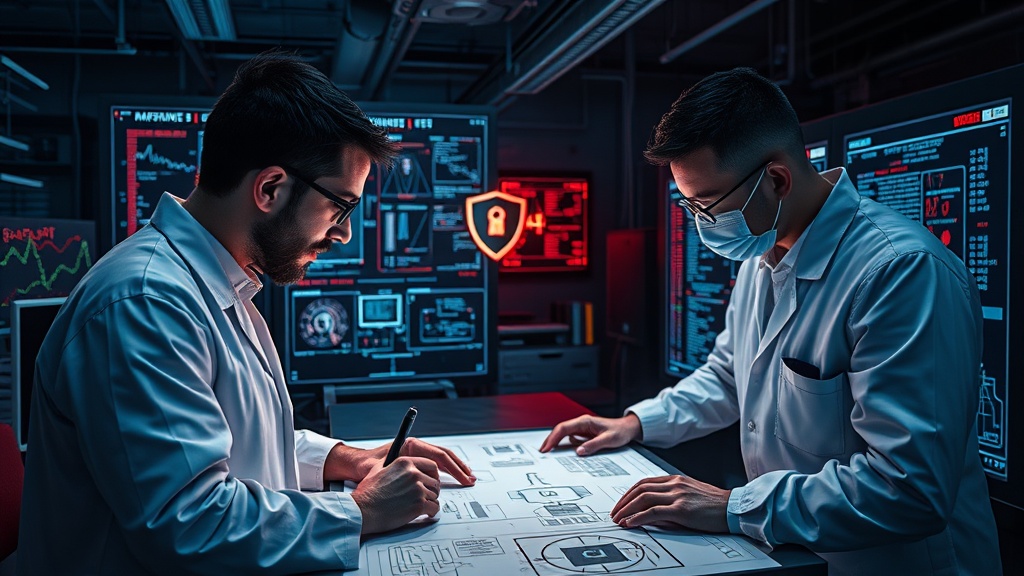
At the heart of AI safety testing are the people tasked with this crucial work. These individuals, often referred to as AI red teamers or safety researchers, are typically highly skilled professionals with backgrounds in machine learning, computer science, and related fields. They employ a variety of techniques, including adversarial attacks, prompt injection, and rigorous evaluation against predefined safety benchmarks, to uncover potential flaws. However, the demand for such expertise far outstrips the supply.
The work itself is intellectually demanding and can be psychologically taxing. Constantly trying to break AI systems, to find new ways they can fail or cause harm, can lead to burnout. Furthermore, the rapid evolution of AI means that the techniques used to test models must constantly adapt. What was a novel vulnerability last month might be a known issue today, requiring testers to stay perpetually ahead of the curve. This creates a high-pressure environment where skilled professionals are in constant demand, and the risk of attrition is significant.
The industry is experiencing a shortage of qualified AI safety personnel. Major AI labs are actively recruiting, but the pipeline of talent is not growing fast enough to meet the demand. This scarcity means that even well-resourced organizations struggle to dedicate sufficient personnel to comprehensive safety testing. For smaller companies or open-source projects, the challenge is even more acute, often relying on volunteer efforts or limited budgets for safety work. This disparity in resources further exacerbates the problem, creating a tiered approach to AI safety where the most advanced and potentially riskiest models may receive the least rigorous scrutiny.
The Unanswered Question: Who Owns Long-Term AI Safety?
While companies developing AI are investing in safety teams, the question of long-term responsibility remains largely unaddressed. As AI systems become more powerful and integrated into society, who will be accountable for ensuring their continued safety and alignment with human values over years, or even decades? Will it be the original developers, independent oversight bodies, or a new form of governance altogether? The current model, where safety testing is largely reactive and driven by the immediate needs of product development, is unlikely to suffice for the profound societal impact AI is poised to have.
Implications and the Path Forward
The inability of safety testers to keep pace has significant implications across the board. For developers, it means a constant race against unknown unknowns. For users, it translates to a higher risk of encountering AI systems that behave unpredictably or maliciously. For society, it raises concerns about the potential for widespread disruption, from the erosion of trust in information to the accidental deployment of AI in critical systems without adequate safeguards.
Addressing this challenge requires a multi-pronged approach. Firstly, there needs to be a significant scaling up of AI safety research and development, moving beyond manual testing to more automated and scalable methods. This could involve developing AI systems designed to test other AI systems, or creating more robust simulation environments. Secondly, there must be greater transparency and collaboration within the AI community. Sharing best practices, known vulnerabilities, and testing methodologies can help accelerate progress and prevent duplicated efforts. Organizations like Hugging Face, which foster open collaboration, play a crucial role in this regard.
Finally, there is a growing need for standardized safety benchmarks and independent auditing mechanisms. Just as financial institutions are subject to regulatory oversight, AI systems, particularly those deployed in critical sectors, may eventually require similar forms of scrutiny. This could involve establishing independent bodies responsible for certifying AI safety or developing comprehensive regulatory frameworks that mandate certain levels of testing and risk assessment before deployment. The current trajectory, where safety lags behind capability, is unsustainable. Proactive, scalable, and collaborative solutions are urgently needed to ensure that AI development proceeds responsibly.