
The Limits of Traditional Software Audits for AI
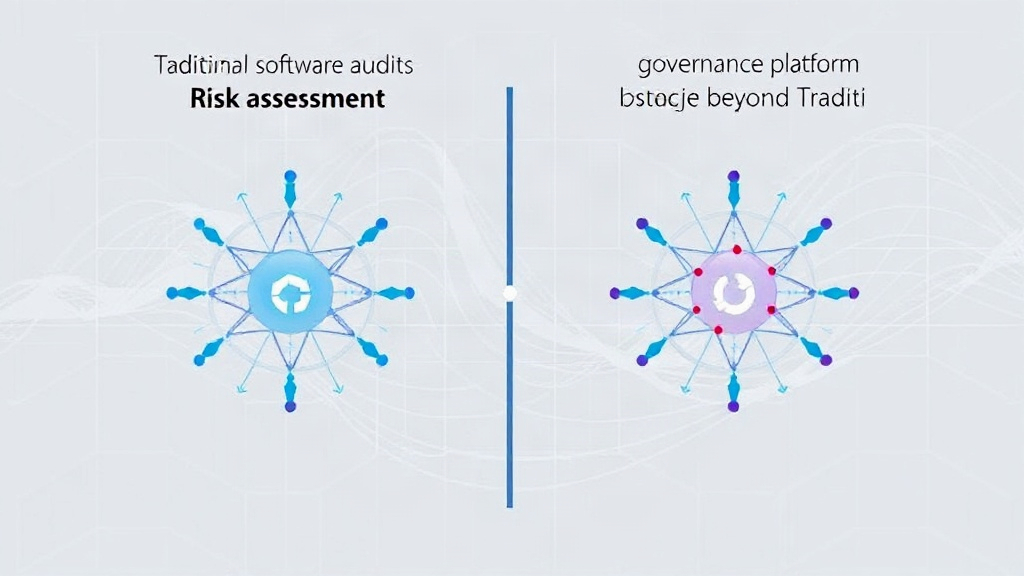
Traditional software security audits, honed over decades for deterministic code, fundamentally miss the mark when applied to modern AI systems, particularly large language models (LLMs). The non-deterministic nature of LLMs means that the same input can yield different outputs, a characteristic that defies the predictable behavior expected in conventional security assessments. This inherent variability introduces new attack vectors and failure modes that static analysis or traditional penetration testing simply cannot capture.
Key AI-specific risks that fall through the cracks of old-school audits include prompt injection attacks, where malicious prompts can manipulate an LLM into unintended actions or revealing sensitive information. Another critical blind spot is "shadow AI" operating at the endpoint, meaning AI components or models deployed on user devices or edge infrastructure without centralized oversight or security vetting. These unmanaged AI instances can pose significant data privacy, security, and compliance risks.
The excerpt highlights a critical shift: the need to move beyond reactive, point-in-time audits to a continuous, integrated approach to AI risk management. This involves embedding governance principles directly into the operational fabric of AI systems.
Operationalizing AI Governance Frameworks
To address these challenges, an effective AI risk assessment strategy requires operationalizing established governance frameworks into concrete, runtime technical controls. This means translating abstract principles from standards and regulations into actionable mechanisms that monitor, manage, and mitigate AI risks in real-time. The article points to several key frameworks that provide the necessary structure:
- NIST AI Risk Management Framework (AI RMF): This framework provides a flexible and iterative process to identify, measure, and manage AI risks. Operationalizing it means implementing continuous monitoring for bias, drift, and security vulnerabilities, and establishing automated response mechanisms.
- ISO/IEC 42001: This standard provides requirements for an AI management system. Its operationalization involves integrating AI risk controls into existing organizational processes, ensuring clear roles and responsibilities for AI governance, and establishing metrics for AI system performance and risk posture.
- The EU AI Act: This landmark regulation categorizes AI systems by risk level and imposes specific obligations on providers and deployers. Operationalizing the Act means implementing conformity assessment procedures, risk management systems, and post-market monitoring tailored to the AI system's intended use and risk classification.
The common thread across these frameworks is the need for technical controls that are not just documentation exercises but are actively enforced throughout the AI lifecycle. This includes continuous validation of model behavior, robust access controls for AI models and data, and mechanisms for detecting and responding to adversarial attacks or performance degradation.
The Role of AI Governance Platforms
This is where AI governance platforms become indispensable. These specialized tools are designed to bridge the gap between governance frameworks and technical implementation. They provide the infrastructure to:
- Discover and Inventory AI Assets: Identify all AI models and systems in use, including shadow AI, across the organization.
- Assess and Monitor Risks: Continuously evaluate AI models for bias, fairness, robustness, security vulnerabilities, and compliance with regulations. This often involves automated testing, drift detection, and performance monitoring.
- Implement Controls: Enforce policies and guardrails, such as input validation, output moderation, access restrictions, and data provenance tracking.
- Manage Compliance: Automate evidence collection for audits and provide dashboards for regulatory reporting.
- Facilitate Collaboration: Enable cross-functional teams (data scientists, security, legal, compliance) to collaborate on AI risk management.
Think of an AI governance platform less like a traditional firewall and more like an AI system's internal compliance officer and quality assurance engineer rolled into one, working 24/7. It doesn't just block bad traffic; it actively monitors the AI's behavior against predefined policies and flags deviations for immediate attention.
Building Trust Through Continuous Assessment
The ultimate goal of running AI risk assessments with these platforms is to build trust. Trust in the AI systems themselves, trust in the processes governing them, and trust from stakeholders – customers, regulators, and the public. By embedding governance into the runtime, organizations can move from a posture of periodic, often insufficient, audits to one of continuous assurance.
This continuous assessment is crucial for several reasons:
- Dynamic Threat Landscape: AI threats evolve rapidly. Continuous monitoring allows for swift detection and response to new vulnerabilities and attack vectors.
- Model Drift: AI models can degrade over time as the data they interact with changes. Continuous assessment identifies this drift, enabling timely retraining or intervention.
- Regulatory Scrutiny: Regulators increasingly expect demonstrable, ongoing risk management, not just a one-time compliance check.
- Reputational Risk: AI failures, particularly those involving bias or security breaches, can cause significant reputational damage. Proactive, continuous management mitigates this risk.
The integration of AI governance platforms into the operational workflow transforms AI risk assessment from a burdensome compliance task into a strategic imperative for responsible AI development and deployment. It allows organizations to harness the power of AI while proactively managing its inherent complexities and potential pitfalls.