
The Patchwork Problem in AI Governance
The current landscape of AI regulation is not a unified, coherent framework. Instead, it resembles a patchwork quilt, stitched together from disparate efforts addressing specific issues without a guiding, overarching strategy. This emerging state framework for AI companions and chatbots is characterized by overlapping, partially compatible answers to different questions. These efforts are unfolding concurrently with significant developments in industry practices, technical standards, regulatory initiatives, and federal legislation. The result is a complex, often contradictory, environment that poses significant challenges for those developing and deploying AI technologies.
This fragmentation means that a company operating across different jurisdictions or developing diverse AI applications faces a daunting array of requirements. A rule designed for data privacy in one region might conflict with a safety standard in another. A technical best practice adopted by an industry consortium could be at odds with a legal mandate from a government agency. This lack of interoperability between different regulatory components creates friction, increases compliance costs, and slows down innovation. It’s less a cohesive regulatory regime and more a collection of independent, sometimes clashing, responses to the rapid advancement of AI.
The analogy of Kintsugi, the Japanese art of repairing broken pottery with lacquer dusted or mixed with powdered gold, silver, or platinum, is particularly apt here. While Kintsugi celebrates the imperfections and repairs, making the object more beautiful for having been broken, the current AI regulatory landscape is not about beautifying breakage. It’s about trying to mend a complex, rapidly evolving system with a multitude of tools that don’t quite fit together, leading to gaps, overlaps, and potential structural weaknesses. The "gold" in this analogy is the aspiration for responsible AI, but the "lacquer" is proving difficult to apply consistently and effectively across the entire "pottery" of the AI ecosystem.
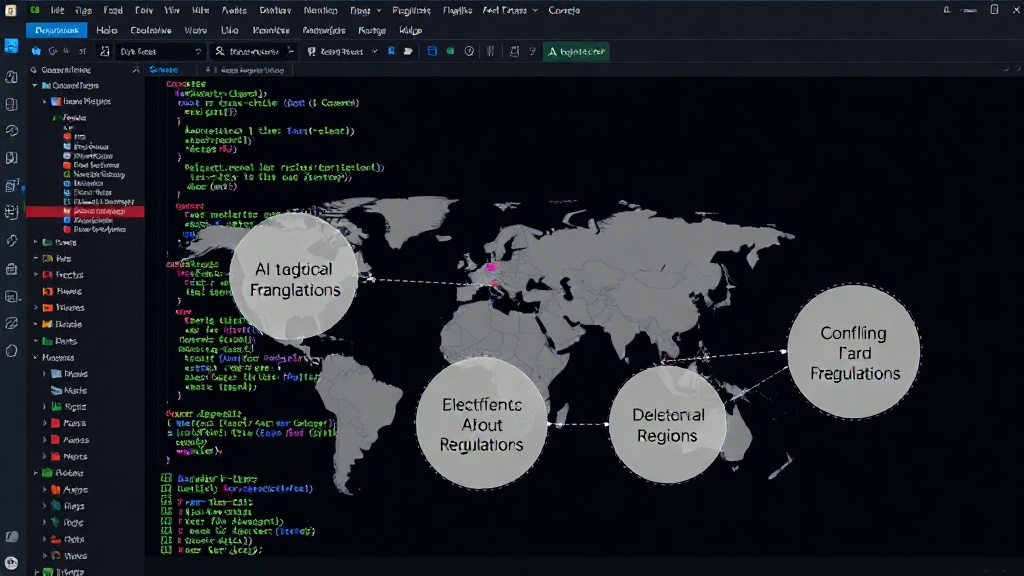
Industry vs. Government Efforts
The fragmentation is evident in the distinct approaches taken by various stakeholders. Industry self-regulation, driven by ethical considerations and market pressures, often focuses on practical implementation details and voluntary standards. Think of a company developing a new AI model; they might implement internal bias detection protocols and transparency measures based on industry best practices. Simultaneously, technical bodies are developing standards for AI safety, explainability, and robustness. These are crucial for building trustworthy AI systems.
On the other hand, governmental bodies at federal and state levels are enacting legislation and issuing guidelines. These can range from broad principles of AI ethics to specific rules governing data usage, algorithmic accountability, and the deployment of high-risk AI systems. For example, a state might pass a law requiring explicit consent for AI-driven personalization, while a federal agency might issue guidance on the use of AI in critical infrastructure. These governmental actions, while necessary, often lag behind the pace of technological development and can be slow to adapt to new challenges. The challenge lies in ensuring these different layers of governance, from internal company policies to international standards and national laws, can coexist and reinforce each other rather than create a Gordian knot of compliance.
The core issue is that these different sources of guidance and regulation are often developed in silos. A team building an AI chatbot might find themselves navigating a maze of requirements: EU AI Act provisions, NIST AI Risk Management Framework recommendations, California's privacy laws, and internal corporate AI ethics guidelines. Each has its own definitions, compliance mechanisms, and enforcement strategies. Without a coordinated effort to harmonize these components, the entire system becomes unwieldy. What nobody has adequately addressed yet is a clear roadmap for how these different regulatory "pieces" can be integrated into a functional, interoperable whole without stifling innovation or creating undue burdens on developers.
The Challenge of Interoperability and Compliance
For businesses, particularly startups and smaller companies, navigating this patchwork is a significant hurdle. The cost of understanding, implementing, and maintaining compliance across multiple, often conflicting, regulatory regimes can be prohibitive. This can lead to a situation where only the largest corporations, with dedicated legal and compliance teams, can effectively manage the regulatory landscape, potentially creating a barrier to entry and consolidation of power within the industry.
Consider a developer building an AI-powered medical diagnostic tool. They must comply with healthcare data privacy laws (like HIPAA in the U.S.), AI-specific regulations concerning high-risk applications, and potentially sector-specific safety standards. If their product is used globally, the complexity multiplies, requiring adherence to GDPR in Europe, and various emerging AI laws in Asia and South America. Each jurisdiction might have different thresholds for what constitutes "high-risk," different requirements for risk assessments, and different avenues for redress if an AI system causes harm. This is not merely an administrative burden; it directly impacts product design, development timelines, and the very feasibility of launching certain AI applications.
The technical implications are also profound. Developers might need to build systems that are not only functional but also adaptable to a wide range of regulatory requirements. This could mean incorporating modular compliance features, ensuring data lineage is meticulously tracked for auditability, and designing algorithms that can be more easily explained or justified under different legal standards. The surprising detail here is not the complexity of AI itself, but how the human-made regulatory structures are failing to keep pace, creating a system where the "rules of the road" are constantly changing and often contradictory, making it difficult to even agree on the basic principles of safe and ethical AI deployment.
Looking Ahead: Towards Cohesion?
The current state of AI regulation can be compared to trying to build a single, reliable bridge using materials sourced from different construction sites, each with its own specifications and quality standards. Some pieces might be steel beams from one site, wooden planks from another, and concrete blocks from a third. While each material might serve its intended purpose in its original context, fitting them together to form a stable, load-bearing structure requires significant engineering, adaptation, and potentially, compromise. The risk is that the bridge, when finally assembled, is wobbly, has weak points, and requires constant, costly maintenance.
The path forward likely involves greater international cooperation and a concerted effort to harmonize regulatory approaches. This could include developing shared definitions for key AI concepts, establishing common risk assessment methodologies, and creating mechanisms for cross-border regulatory deference where possible. Industry leaders, policymakers, and technical experts must collaborate more closely to ensure that regulatory frameworks are not only comprehensive but also practical, interoperable, and adaptable to the dynamic nature of AI technology. Without such efforts, the "patchwork problem" will continue to hinder the responsible development and deployment of AI, creating a landscape of legal uncertainty and operational inefficiency.