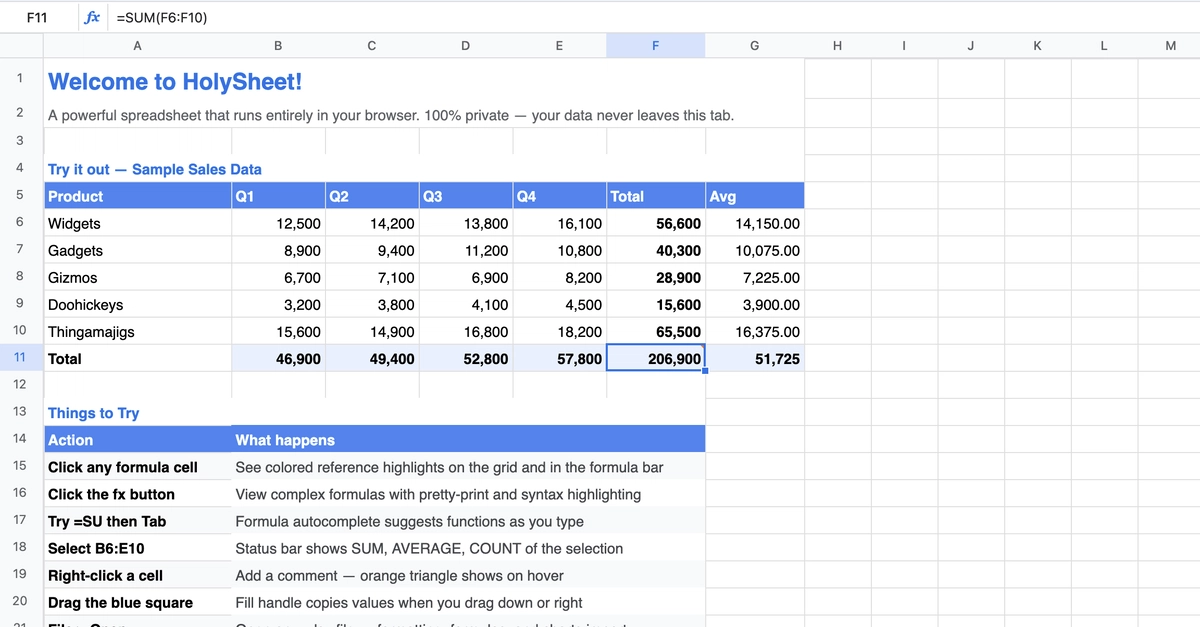
The Ambitious Goal: HolySheet Under $100
The quest to build complex software applications using artificial intelligence tools has reached a new milestone. Developer Michael Kennedy, operating under the handle HighDesertApps, recently embarked on an ambitious challenge: to recreate a significant portion of a complex business application, specifically Microsoft Excel, within a single week and for less than $100. This wasn't merely an exercise in coding; it was a deliberate probe into the current limits of AI in software development, seeking to identify precisely where these tools begin to falter.
Kennedy's goal was intentionally audacious. Excel, a ubiquitous tool for data manipulation and analysis, boasts a vast array of features, complex formula parsing, and intricate user interface elements. Replicating even a fraction of its core functionality is a non-trivial task for human developers, let alone an AI operating under severe budgetary constraints. The project, christened "HolySheet," aimed to answer the critical question: how far can AI get us in building sophisticated software when resources are severely limited?
The process began with meticulous planning, leveraging the capabilities of Claude, an advanced AI model, for initial architecture and feature brainstorming. Beyond core spreadsheet functionality, Kennedy pushed the AI to conceptualize and integrate enhanced features. These included the generation of plain-English explanations for complex formulas, a feature that would significantly improve user accessibility, and sophisticated error diagnostics to help users troubleshoot issues within their spreadsheets. This pre-implementation phase was crucial, setting a clear roadmap and defining the scope of the AI's involvement.

Implementation and AI's Role
With a solid plan in place, Kennedy initiated the implementation phase, primarily utilizing the most recent Opus model. The AI was tasked with generating code, structuring the application, and even suggesting UI components. The bulk of the coding and architectural work was completed in an astonishingly short period – just a few days. This rapid development cycle is a testament to the AI's ability to accelerate the initial stages of software creation, particularly for well-defined components and functionalities.
However, the AI's contribution wasn't just about raw code generation. Kennedy integrated AI for specific, complex tasks. For instance, the plain-English formula explanation feature required the AI to parse intricate Excel formulas, understand their mathematical and logical operations, and then translate them into easily digestible language. Similarly, the error diagnostic system relied on the AI's ability to analyze spreadsheet states and user inputs to pinpoint potential problems and suggest solutions. These were not boilerplate code snippets but required a deeper understanding of the application's domain and user context.
Following the initial implementation, an additional few days were dedicated to rigorous testing and polishing. This phase is critical in any software development lifecycle, and even with AI-generated code, human oversight and refinement are indispensable. Kennedy's role shifted from pure developer to that of an architect, project manager, and quality assurance engineer, guiding the AI, debugging its output, and ensuring the final product met the intended specifications. The name "HolySheet" itself emerged during this process, a fittingly informal yet descriptive moniker for an AI-built Excel clone.
The Results: What AI Achieved
The outcome of this challenge is significant. Kennedy reported being "pretty happy with the results," indicating that a substantial portion of a complex business application was indeed recreated. While the exact feature set of "HolySheet" isn't fully detailed in the initial report, the ability to construct core spreadsheet functionality, including formula parsing and error handling, within a week and under a strict budget, demonstrates a leap forward.
The success hinges on the AI's ability to handle structured data and logical operations, areas where it has shown considerable strength. Recreating the visual interface and ensuring a seamless user experience likely involved more manual effort or simpler AI-assisted UI generation. The true value, however, lies not just in the functional code but in the integrated AI features that enhance usability and accessibility – aspects that would traditionally require dedicated feature development time.
The budget constraint of under $100 was also a critical factor. This implies that the primary costs were associated with API calls to the AI models (such as OpenAI's Opus model) and potentially minimal hosting or development tool expenses. The low cost underscores the potential for individuals and small teams to leverage powerful AI tools for complex software projects without incurring prohibitive expenses. It democratizes the ability to build sophisticated applications, shifting the barrier to entry from capital investment to technical direction and prompt engineering skill.
Limitations and Future Implications
Despite the impressive results, the challenge also highlighted the inherent limitations of current AI in software development. The prompt implies that the AI began to