The Illusion of Simplicity
Integrating with large AI providers like OpenAI, Anthropic, and Google's Gemini might seem straightforward. On the surface, calling their APIs appears to be a manageable task, perhaps taking an afternoon per provider. Developers often anticipate the complexity lying in the core functionality: data formatting, prompt engineering, and managing API rate limits. However, the true challenge emerges not during the initial integration, but when things inevitably go wrong.
My own experience building an API gateway that routes requests between OpenAI, Anthropic, and Gemini revealed this stark reality. The initial assumption was that orchestrating requests across different models would be the primary hurdle. This proved to be a misconception. The actual difficulty surfaced when the systems encountered errors, exposing a fundamental lack of standardization across these seemingly advanced services.
When Error Handling Crumbles
Early attempts at error handling were rudimentary, relying on a basic strategy: catch whatever error the provider returned, forward its status code, and proceed. This approach is common when dealing with well-defined APIs, where status codes like 400 (Bad Request), 401 (Unauthorized), or 500 (Internal Server Error) provide clear signals. However, AI provider APIs are not consistently built with this level of developer-centric clarity.
The problem is that AI providers, despite their sophisticated underlying models, often expose their operational issues through inconsistent and opaque error messages. A 500 error from one provider might signify a temporary overload, while the same code from another could indicate a model failure, a data corruption issue, or even a bug in their own internal routing. Catching a generic `error.status` and passing it along is insufficient when the underlying causes are so varied and the implications for the application can range from a minor hiccup to a complete service outage.
This lack of standardization means that a simple `try-catch` block with a generic status code forwarding mechanism quickly becomes a liability. Developers are left guessing the root cause, unable to implement targeted recovery strategies or provide meaningful feedback to users. The illusion of a simple API call shatters when the error payloads are a mix of technical jargon, incomplete information, and provider-specific codes that require deep dives into their respective documentation – documentation that may not even cover every edge case.
Building a Unified Error Model
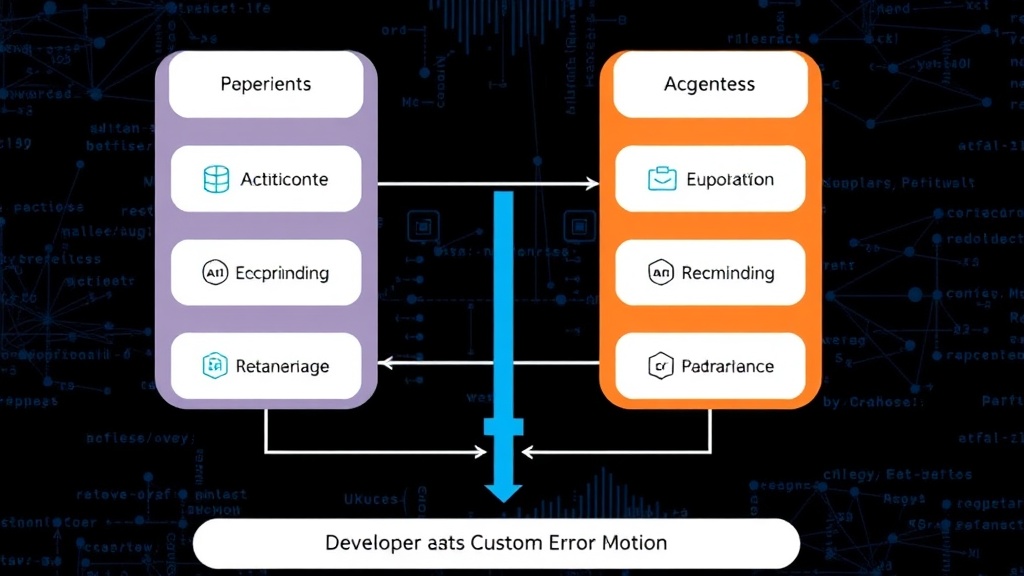
Recognizing this fragmentation, the solution became clear: abstract away the provider-specific chaos into a unified, developer-friendly error model. Instead of treating each provider's errors as unique snowflakes, the goal is to categorize them into a consistent taxonomy that reflects the *impact* on the application, rather than the *source* of the failure.
This involved creating a layer of abstraction. When an error occurs from OpenAI, Anthropic, or Gemini, it is intercepted. This layer then inspects the error details—status codes, error messages, response bodies, and any other available metadata—and maps it to a predefined set of error types within the gateway's own error schema. This schema might include categories like:
RATE_LIMIT_EXCEEDED: The user or application has hit an API rate limit.PROVIDER_UNAVAILABLE: The AI service itself is down or experiencing significant downtime.INVALID_REQUEST: The input provided to the AI model was malformed or violated API constraints.MODEL_ERROR: An internal issue occurred within the AI model's processing pipeline.AUTH_FAILURE: Authentication credentials are invalid or expired.TIMEOUT: The request took too long to complete and was terminated.UNKNOWN_PROVIDER_ERROR: A catch-all for errors that cannot be clearly categorized but are originating from the provider.
This systematic mapping allows the API gateway to present a consistent error interface to the applications consuming it. Developers building on top of this gateway no longer need to write separate error handling logic for each AI provider. They interact with a single, predictable error structure. For instance, if their application needs to retry a request due to a temporary issue, it can simply check for `RATE_LIMIT_EXCEEDED` or `PROVIDER_UNAVAILABLE` errors, regardless of whether the underlying call was to OpenAI or Gemini.
The Unforeseen Benefits
The benefits of this approach extend beyond simplified error handling. By creating a unified error model, the gateway gains several advantages:
- Improved Resilience: The gateway can implement more intelligent retry mechanisms. For example, it can automatically retry `PROVIDER_UNAVAILABLE` errors but not `INVALID_REQUEST` errors.
- Better User Feedback: Applications can provide more specific and helpful error messages to end-users. Instead of a generic "API Error," users might see "Our AI assistant is currently busy. Please try again in a moment."
- Simplified Monitoring and Alerting: Centralized error types make it easier to monitor the health of the AI services and set up alerts for critical issues. Developers can track the frequency of `MODEL_ERROR` across all providers, identifying systemic problems.
- Facilitates Provider Swapping: If one provider becomes consistently problematic or more expensive, swapping it out becomes significantly easier. The consuming applications remain unaware of the change, as the error interface remains constant.
The surprising detail here is not the complexity of the AI models themselves, but the primitive and inconsistent nature of their operational error reporting. It’s akin to having a brilliant chef who communicates their kitchen mishaps through a series of grunts and hand gestures, rather than a clear, concise report.
Looking Ahead
As more developers build applications that rely on multiple AI services, the need for robust and standardized error handling will only grow. Providers may eventually converge on better error reporting standards, but until then, building an abstraction layer with a unified error model is not just a best practice—it's a necessity for anyone serious about production-ready AI integrations. This approach transforms unpredictable failures into manageable signals, allowing developers to focus on innovation rather than debugging the quirks of underlying AI infrastructure.