
The End of Manual Prompting
The era of typing "What now?" into an AI chat interface is rapidly fading for many developers. A significant shift is underway, moving from iterative, human-driven prompting to designing autonomous AI loops. This evolution, termed "Loop engineering" by Addy Osmani, redefines how we interact with artificial intelligence, replacing the human prompt writer with a sophisticated system. Instead of constantly guiding the AI, developers are now building frameworks that allow AI agents to operate independently, specifying their own triggers, conditions, and fallback mechanisms.
This paradigm shift is supported by emerging evidence and definitions within the AI community. Boris Cherny of Anthropic, a prominent figure in AI development, has publicly stated that he no longer writes prompts but instead constructs loops that prompt the agent. This signifies a fundamental change in workflow, where the developer's role transforms from an immediate taskmaster to a system architect. The goal is to create AI systems that can execute tasks autonomously, reducing the need for constant human oversight and intervention.
The concept of Loop Engineering, as defined by Osmani, encapsulates this transition. It's about abstracting the prompting process and embedding it within a system that manages the AI's execution. This approach allows for more complex, multi-step operations that can run without continuous human input, making AI integration into applications more robust and efficient. This move towards automation is critical for scaling AI capabilities beyond simple query-response interactions.
Designing the Autonomous AI Loop
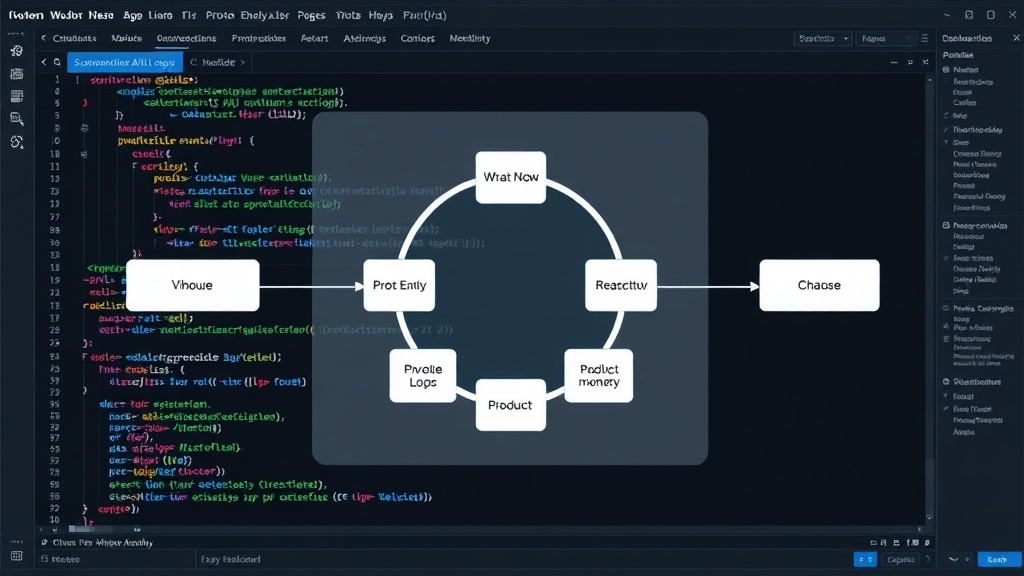
The core of this new approach lies in designing intelligent loops that specify key operational parameters. A well-designed loop includes an activation trigger, an observable numeric stop condition, an independent evaluator, and a default failure action. This blueprint, tested in both Japanese and English, provides a concrete, ready-to-use structure that developers can adopt and deploy. The activation trigger initiates the AI's process, whether it's a time-based event, a data influx, or a specific user action. The observable numeric stop condition provides a quantifiable measure for determining when the task is complete or has reached a defined threshold.
An independent evaluator acts as a quality control mechanism, assessing the AI's output against predefined criteria. This layer ensures that the AI's results meet the required standards without human intervention for every step. Finally, a default failure action outlines what the system should do if the AI encounters an error, fails to meet the stop condition, or produces unsatisfactory results. This might involve retrying the task, escalating to a human operator, or logging the failure for later analysis. This structured approach ensures that AI agents can operate reliably and predictably in various scenarios.
This structured design is further elaborated by Suwash's three-layer model, which elegantly separates prompt writing, context design, and loop design. This taxonomy helps developers understand the distinct responsibilities within an AI system. Prompt writing focuses on the specific instructions for the AI's core task. Context design involves curating the information and data the AI will access. Loop design, the highest level, orchestrates the execution, monitoring, and evaluation of the AI's performance over time.
The Taxonomy of AI Execution Modes
Understanding the different ways an AI loop can be initiated and terminated is crucial for effective design. Delba Oliveira's taxonomy offers valuable insights into these start and stop modes. These include goal-driven execution, where the AI runs until a specific objective is met; time-driven execution, which operates on a schedule; and event-driven execution, where the AI responds to external occurrences. Other modes might involve user-driven initiation or system-initiated processes based on internal states.
The practical implications of this are vast. For instance, a customer support AI could be designed to run in a goal-driven loop, continuously processing incoming tickets until all are resolved or escalated. A data analysis AI might operate on a time-driven schedule, generating daily reports without human prompting. An anomaly detection system could be event-driven, activating only when unusual patterns are detected in network traffic. This flexibility allows developers to tailor AI behavior to specific application needs and operational contexts.
The Future of AI Interaction: Self-Supervision at Scale
The ultimate vision for this evolution is AI systems capable of a high degree of self-supervision. Anthropic's extensive 800-hour experiment, achieving 97% self-supervision, hints at the potential for AI agents to learn and adapt with minimal human guidance. This level of autonomy is not about replacing developers but about empowering them to build more sophisticated and capable AI-driven products and services. By designing robust loops, developers can unlock new levels of AI performance and reliability.
This transition represents a significant leap forward in how we engineer AI. It moves beyond simple prompt-response interactions to creating intelligent agents that can manage complex tasks autonomously. The focus shifts from the art of prompt crafting to the science of system design, enabling AI to become a more integrated and reliable component of software applications. The ability to specify activation triggers, stop conditions, evaluators, and failure actions means AI can be deployed in scenarios demanding continuous operation and high reliability, such as real-time monitoring, automated content generation, and complex decision support systems.