The Developer Documentation Dilemma
Writing and maintaining comprehensive documentation for software projects is a perennial challenge for developers. Often perceived as a tedious afterthought, it’s frequently skipped, deferred, or done with minimal effort, leading to codebases that are difficult to understand, onboard new contributors to, or maintain over time. This gap between code and its explanation creates friction in development workflows, slows down collaboration, and increases the long-term cost of software ownership. The core problem is not a lack of awareness regarding documentation's importance, but the significant time investment and perceived drudgery involved in its creation and upkeep.
Recognizing this pain point, a new concept is emerging: an AI-powered tool designed to automatically generate documentation directly from code hosted on platforms like GitHub. The proposal is straightforward: connect the tool to a repository, or even a single file, and let artificial intelligence analyze the functions, modules, parameters, and usage patterns to produce descriptive documentation. The stated goal is to reclaim developer time currently spent on manual documentation tasks.
Bridging the Gap with AI
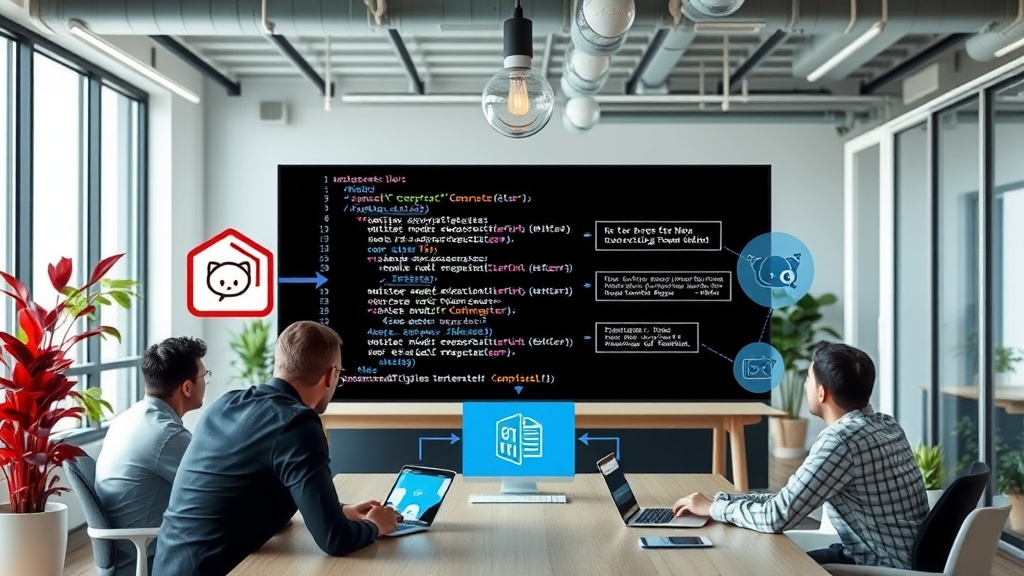
The proposed AI tool operates by ingesting code from a specified source, such as a GitHub repository or a specific file. Using natural language processing and code analysis techniques, it aims to understand the structure and intent of the code. For each function or module, it would identify its purpose, its inputs (parameters with their types and expected values), and its outputs. The output would be a human-readable explanation, detailing what the code does, how to invoke it, and any prerequisites or side effects. This approach seeks to alleviate the burden of manual documentation, transforming a time-consuming chore into an automated process. The promise is that developers can focus on writing code, while the AI handles the explanation, ensuring that projects remain well-documented without demanding extra hours from the development team.
The critical questions surrounding such a tool revolve around its effectiveness and trustworthiness. Developers are accustomed to the precision of code and the nuanced understanding that comes from human authorship. Relying on AI-generated documentation raises concerns about accuracy. Will the AI truly grasp the complex logic and edge cases that a human developer would document? Can developers trust the output enough to use it as their primary source of documentation, or will it always require a layer of manual review and correction? This trust deficit is a significant hurdle. If the generated documentation is inaccurate, incomplete, or misleading, it could be worse than no documentation at all, leading to misunderstandings, bugs, and wasted debugging time. The value proposition hinges on the AI's ability to produce documentation that is not only verbose but also accurate and genuinely helpful.
The Trust Factor and Developer Workflow
The success of an AI-driven documentation generator hinges on overcoming a fundamental challenge: developer trust. Many developers view documentation as a critical, albeit often neglected, aspect of software development. They understand that well-written documentation is key to maintainability, collaboration, and knowledge transfer. However, the process of writing it is often seen as repetitive and less engaging than the act of coding itself. This is precisely where the proposed AI tool aims to intervene.
The core questions for developers are whether this AI can genuinely save them time and whether they can rely on its output. If the AI-generated documentation requires significant manual editing to ensure accuracy and clarity, the time saved might be minimal, or worse, the process of correcting the AI's mistakes could be more time-consuming than writing the documentation from scratch. Developers might also question the AI's ability to capture the 'why' behind certain design decisions, which is often as important as the 'what' and 'how' in robust documentation. The context and rationale behind code can be subtle and deeply tied to the project's history and strategic goals, elements that AI might struggle to interpret accurately from code alone.
Existing tools for documentation generation, such as Javadoc for Java, Docstrings for Python, or JSDoc for JavaScript, are template-based and require developers to write the descriptive text following specific formats. These tools automate the rendering and organization of documentation but do not generate the content itself. More advanced static analysis tools can infer some information about functions and parameters, but they typically lack the natural language generation capabilities to produce explanatory prose. The proposed AI tool aims to go beyond these by not just formatting but actually creating the textual explanations, bridging a significant gap in current developer tooling. The ultimate test will be whether this AI can produce documentation that feels authored, rather than merely generated, and whether it can integrate seamlessly into existing development workflows without introducing new complexities or trust issues.
Market Landscape and Future Potential
The market for developer tools is vast and competitive, with a constant demand for solutions that enhance productivity and streamline workflows. Tools that promise to automate or simplify complex, time-consuming tasks like documentation are always of interest. If this AI tool can deliver on its promise of accurate, time-saving documentation, it could find a significant user base among individual developers, open-source projects, and even enterprise teams struggling with technical debt related to poor documentation. The key differentiator would be the quality and reliability of the AI's output. Competitors might include existing documentation generators that could potentially integrate AI capabilities, or entirely new players entering the space with similar AI-driven solutions.
The broader implication for the AI and developer tool landscape is the increasing trend towards AI augmentation of traditionally human-centric tasks. As AI models become more sophisticated in understanding code and generating natural language, we can expect to see more tools that assist developers in areas beyond code completion or bug detection. This could range from automated test case generation to AI-assisted code refactoring and, as explored here, comprehensive documentation creation. The success of such tools will depend not only on their technical capabilities but also on their ability to integrate smoothly into developer environments and build the necessary trust to become indispensable assets rather than just novelties. The potential exists for AI to fundamentally reshape how software is documented and maintained, making projects more accessible and sustainable in the long run.