The Chatbot Trap: Surface-Level AI
The tech industry is awash with products claiming to be "AI-native." Open any product changelog from the past year, and you'll likely see the familiar additions: a chat bubble in the corner, a subtle sparkle icon, or a launch announcement prominently featuring the word "AI." These additions typically function as a chatbot, designed to answer questions about the product or, at best, draft an email. While seemingly innovative, this approach often represents a misunderstanding of what "AI-native" truly means. Companies are shipping these features, calling them AI-native, but in most cases, they are solving the wrong layer of the problem.
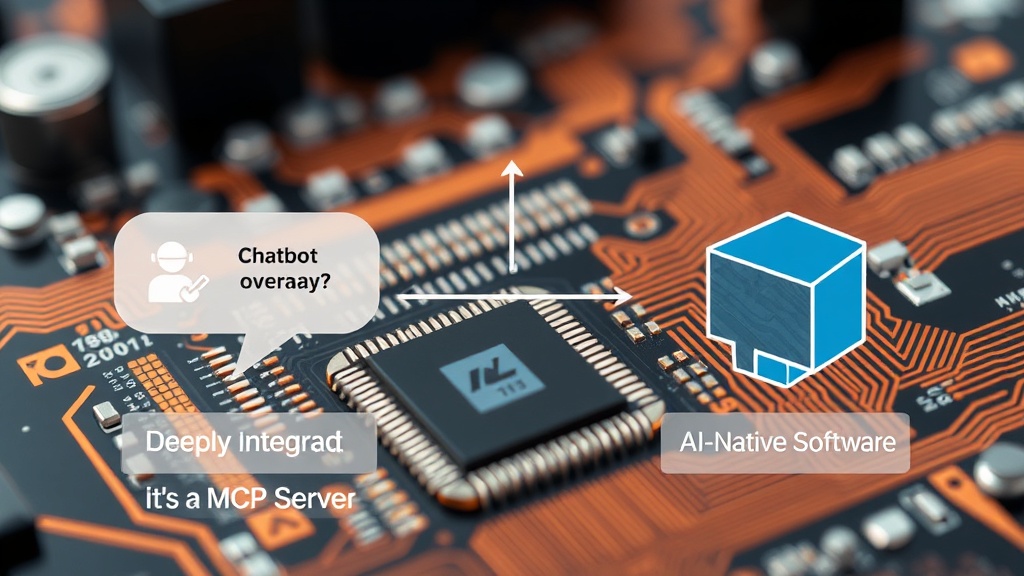
A chat widget, in essence, is a conversation about your product. It typically sits on top of the existing user interface, paraphrasing existing documentation or knowledge bases. The underlying AI model never truly touches or operates within the core domain of your product. Ask it to perform a critical function – to issue a credit note, reconcile a bank transaction, or file a quarterly tax return – and its response is usually to provide a link to the relevant section of the documentation or a polite disclaimer of its limitations. This is not an AI-native product; it is a traditional CRUD application with a support bot bolted on. The true test is simple: if you were to remove the chat widget entirely, would the core functionality and operability of the software change in any meaningful way? If the answer is no, the AI is merely decorative, an add-on rather than an integral component.
The Real Question: AI as a Core Operational Component
The fundamental error lies in mistaking a conversational interface for true AI integration. The goal of an AI-native product should not be to talk about the product, but to be the product, or at least a critical, operational part of it. This requires shifting the focus from a chat interface to the underlying operational logic and decision-making processes. Instead of asking, "Can this AI answer questions about my product?" the question should be, "Can this AI perform the core tasks of my product?"
Consider a financial management system. A chatbot might help a user find out how to generate a report. An AI-native system, however, would be able to analyze transactions, identify anomalies, predict cash flow, and even initiate automated reconciliation processes based on learned patterns and real-time data. The AI isn't just providing information; it's actively managing and executing core business functions. This shift transforms the software from a tool that requires human instruction for every action into a system that intelligently operates and optimizes itself, with humans acting as overseers or strategic directors.
The MCP Server Analogy: Beyond Chat
The concept of an "MCP server" provides a useful analogy here. In many complex systems, particularly in older computing paradigms or specialized industrial applications, an MCP (Master Control Program) server is responsible for the core operational control and management of a system. It's not about conversation; it's about execution, orchestration, and decision-making. An AI-native product should function like this MCP server – deeply embedded within the system's architecture, driving its primary functions, and making intelligent operational decisions.
Think of a logistics platform. A chatbot might tell you the status of a shipment. An AI-native system, functioning as an MCP server, would dynamically reroute shipments based on real-time traffic, weather, and demand forecasts. It would optimize delivery routes, manage fleet allocation, and predict potential delays before they occur, all without explicit user commands for each adjustment. The AI becomes the central nervous system of the operation, not just a helpful assistant in the lobby.
This requires a fundamental architectural shift. Instead of building a traditional application and then layering a chatbot on top, AI-native development means designing the application *around* the AI. The AI models are not add-ons; they are the foundational components responsible for processing data, making predictions, and executing actions. This means training models on proprietary data, integrating them directly into business workflows, and empowering them to make decisions that drive business outcomes.
The Architectural Shift: Data, Models, and Action
Achieving true AI-native status involves several key architectural considerations:
- Data Integration: The AI must have direct, real-time access to the relevant data streams that power the product's core functions. This goes beyond simply querying a database; it involves continuous ingestion and processing of operational data.
- Model Embeddings: AI models should be embedded directly into the application's logic, not accessed via a separate API endpoint that a chatbot queries. This allows for immediate execution and responsiveness.
- Actionable Outputs: The AI's primary outputs should be actions or intelligent recommendations that directly impact the product's operations, rather than just text-based responses.
- Feedback Loops: Robust feedback mechanisms are crucial. The AI needs to learn from the outcomes of its actions and the subsequent user interactions to continuously improve its performance.
When a company claims its product is AI-native, users should look beyond the chat bubble. Ask: Does the AI perform the core tasks? Does it drive operations? Does it make decisions that fundamentally change how the product works? If the answer is yes, then the company is likely on the right track. If the AI's primary function is to explain the product to you, it's likely just a chatbot, and the product is still operating on older principles.
The current trend of bolting on chatbots risks creating a generation of software that is superficially "intelligent" but fundamentally unchanged in its operational capabilities. True AI-native development requires a deeper integration, where AI becomes the engine driving the software, not merely the voice explaining it. The MCP server analogy serves as a potent reminder: the future of AI in software lies in its ability to command and control, not just to converse.