The Limits of Traditional Chat Moderation
Managing a large Telegram group or gaming server community often involves a constant battle against toxic behavior. Traditional moderation bots, relying on simple keyword blacklists, are fundamentally incapable of handling nuanced issues like sarcasm, subtle insults, or coordinated harassment campaigns. They scan for explicit banned words, missing the underlying intent and context of conversations. This leaves community managers overwhelmed and the chat environment degraded. The need for a more sophisticated approach is clear: a system that understands language like a human does.
Introducing Context-Aware AI Moderation
A new solution, designed by Thr0n38, leverages the power of large language models to provide real-time, context-aware moderation. This asynchronous Python bot integrates with the OpenAI API, specifically using ChatGPT, to analyze the actual meaning behind messages. Instead of just looking for forbidden words, it evaluates the sentiment, intent, and potential for harm within the broader conversation. The bot acts as a silent guardian, intercepting every message. It sends the text to the AI for analysis and then processes the AI's output to take immediate action, typically by enforcing short cool-down periods on users exhibiting disruptive behavior.
Technical Architecture and Setup
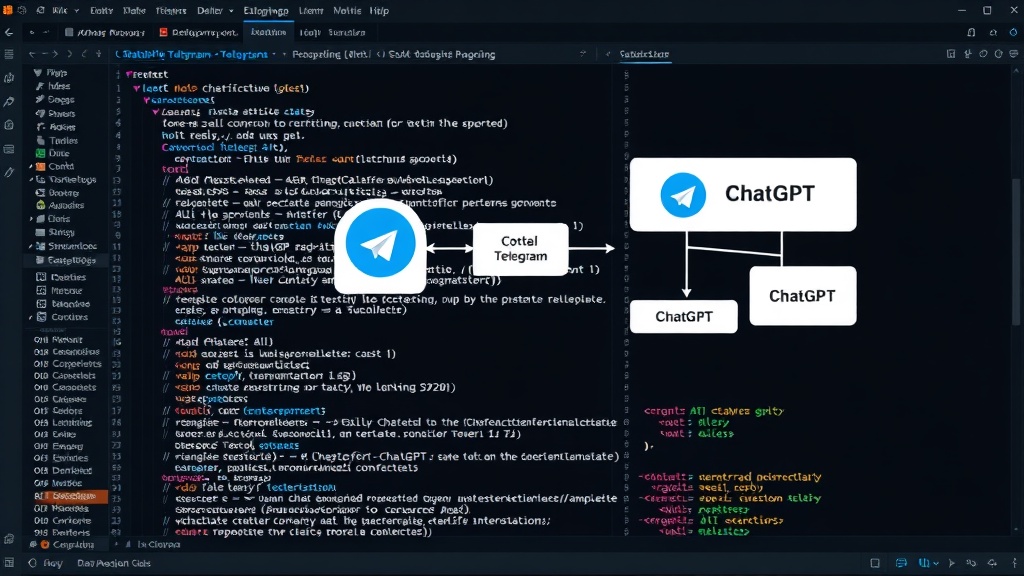
Building this system requires setting up a standard Python project environment. Key dependencies include libraries for handling asynchronous operations, interacting with the Telegram Bot API, and making requests to the OpenAI API. The asynchronous nature is crucial for performance; it allows the bot to handle multiple incoming messages and API calls concurrently without blocking the main thread, ensuring a responsive user experience even under heavy chat load.
The core logic involves several steps:
- Webhook Setup: The bot needs to be configured to receive updates from Telegram via webhooks. This means setting up a web server that Telegram can send message events to.
- Message Interception: Upon receiving a message, the bot first checks if it's from a user or a potential bot command. For user messages intended for moderation, it proceeds to the next step.
- AI Analysis: The message content, along with some conversational context (e.g., the last few messages), is sent to the ChatGPT API. A carefully crafted prompt guides the AI to identify specific types of toxic behavior, such as insults, threats, hate speech, or coordinated attacks.
- Decision Logic: Based on ChatGPT's evaluation, the bot determines the severity and type of violation. It might classify a message as mildly inappropriate, moderately toxic, or severely harmful.
- Enforcement: For violations, the bot uses the Telegram Bot API to enforce penalties. This typically involves temporarily restricting the offending user's ability to send messages for a set duration. The duration can be dynamically adjusted based on the severity of the offense and the user's history.
- Logging and Reporting: All moderation actions and AI evaluations should be logged for auditing and potential review by human moderators.
The setup involves obtaining API keys for both Telegram and OpenAI. For Telegram, you create a bot via BotFather and get an API token. For OpenAI, you sign up and obtain an API key. Environment variables are the recommended way to manage these sensitive credentials securely.
Crafting Effective AI Prompts
The effectiveness of the bot hinges on the quality of the prompts sent to ChatGPT. A good prompt should clearly define the task, provide necessary context, and specify the desired output format. For example, a prompt might include instructions like:
"You are a vigilant chat moderator for a large online community. Analyze the following message in the context of the preceding messages. Identify if it contains any of the following: personal insults, hate speech, threats, harassment, or attempts to incite conflict. Respond with a JSON object indicating the type of violation (if any) and a confidence score. If no violation is detected, return 'none'. Focus on the intent and context, not just keywords."
The bot then parses this JSON response to decide on the appropriate action. This structured output from the AI makes automated decision-making more reliable.
Handling Edge Cases and False Positives
No AI system is perfect. ChatGPT can sometimes misinterpret sarcasm or cultural nuances, leading to false positives where a harmless message is flagged. Conversely, sophisticated users might find ways to circumvent the AI, leading to false negatives. To mitigate this:
- Confidence Thresholds: Implement adjustable confidence thresholds for AI judgments. Only take action if the AI's confidence score for a violation exceeds a certain level.
- User Feedback Loop: Allow users to appeal moderation decisions. This feedback can be used to fine-tune prompts and improve the AI's accuracy over time. Human review of appealed cases is critical.
- Contextual Window: Expand the contextual window of messages sent to the AI. Analyzing more of the conversation history can help disambiguate potentially problematic messages.
- Rate Limiting: Implement rate limiting for message sending at the bot level to prevent rapid-fire abuse even if individual messages aren't perfectly caught.
This iterative refinement process is essential for building a robust and fair moderation system.
The Future of Community Management
This approach moves beyond the limitations of static rule sets. By harnessing AI, community managers can create safer, more engaging online spaces. The ability to understand context allows for more nuanced enforcement, reducing the burden on human moderators and improving the overall health of online communities. As AI models continue to evolve, expect even more sophisticated and adaptive moderation tools to emerge, making the internet a more civil place, one chat at a time.