
The Unchecked AI Write: A Critical Flaw in Application Design
A recent incident highlights a fundamental flaw in how some applications integrate AI model responses: treating them as infallible commands rather than data requiring validation. When a support console initiated a rewrite request at 4:11 p.m., the system’s widget processed the model’s output as a direct instruction, akin to a database grant. The browser, holding a provider key in local storage, accepted the model’s completion and then patched the invoice with the generated text. This workflow completely bypassed a crucial check: whether the tenant still possessed sufficient inference budget for such operations. The potential for abuse or accidental overspending is significant, especially when considering scenarios where a user might retry a click in a second tab, inadvertently persisting a slightly different, potentially incorrect version of critical data like legal text.
The prevailing approach of relying on a browser-based agent for direct data mutation is, frankly, a demonstrably poor architectural choice for production systems. It prioritizes perceived latency over system integrity and cost control. The model itself might return perfectly usable prose, but the failure occurs in the subsequent layers of the application that fail to perform essential checks. The missing budget row, the gatekeeper for such operations, should have refused the write. The cascade of unvalidated actions enabled by the browser agent’s unchecked authority is a clear indicator of a flawed system design.
Free Tokens: A Subsidy, Not a Blank Check
Many AI-powered applications offer a certain allocation of free inference, often presented as a user benefit or a way to encourage adoption. However, it’s critical to understand that these “free tokens” are, at best, a prototype subsidy. They are not a blanket permission to indiscriminately mutate core application data. Treating free inference as an unrestricted right to alter invoices, comments, or stored schemas is a dangerous misconception that can lead to uncontrolled costs and data corruption. This misunderstanding can manifest in several ways:
- Uncontrolled Budget Burn: Users may trigger AI operations repeatedly, assuming they are free, without realizing they are depleting a finite, albeit subsidized, resource. This can lead to unexpected charges when the free tier is exhausted.
- Data Integrity Issues: AI models can generate plausible but incorrect or undesirable content. If these outputs are directly applied to critical data fields without human review or system validation, it can corrupt the application’s state. Imagine an AI rewriting a legal clause or a financial transaction detail with a subtle but significant error.
- Security Vulnerabilities: An unchecked AI agent in the browser could be exploited to perform malicious actions under the guise of legitimate AI use, especially if it bypasses necessary authentication or authorization checks that would typically accompany direct data manipulation.
The distinction between a subsidy and permission is fundamental. A subsidy implies a limited benefit, often with strings attached or subject to specific conditions. Permission, in this context, would mean an explicit authorization to perform an action, typically involving checks against defined rules and constraints. The current model of relying on a browser agent to directly interface with data mutation functions fundamentally misunderstands this distinction.
Architectural Best Practices for AI-Driven Mutations
To avoid the pitfalls of unchecked AI writes, applications must adopt more robust architectural patterns. The core principle is to ensure that any action that mutates data, especially critical data, is subject to validation and authorization, regardless of whether the prompt originated from a human user or an AI model.
1. Server-Side Validation and Budget Management
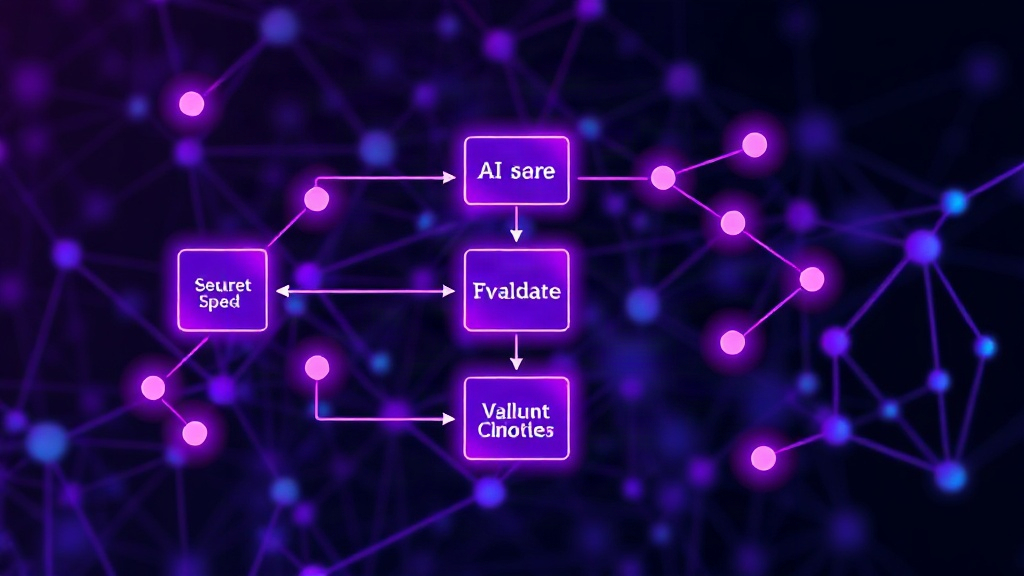
The most critical layer of defense is server-side validation. Instead of the browser agent directly patching invoices or invoices, it should send a request to a backend service. This service is then responsible for:
- Authenticating the Request: Verifying the user’s identity and permissions.
- Checking Inference Budgets: Querying the tenant’s remaining budget before allowing the AI model to process the request. If the budget is insufficient, the request should be rejected with a clear message to the user.
- Validating Model Output: Even if the budget is available, the model’s output should be validated against predefined rules or schemas. This could involve checking for inappropriate content, ensuring data format compliance, or confirming that the changes align with business logic. For instance, an AI-generated invoice amendment should still adhere to company invoicing standards.
- Orchestrating Data Mutations: Only after successful budget checks and output validation should the backend service proceed to mutate the data. This ensures that all changes are intentional, authorized, and within budgetary and operational constraints.
2. Decoupling AI Generation from Data Mutation
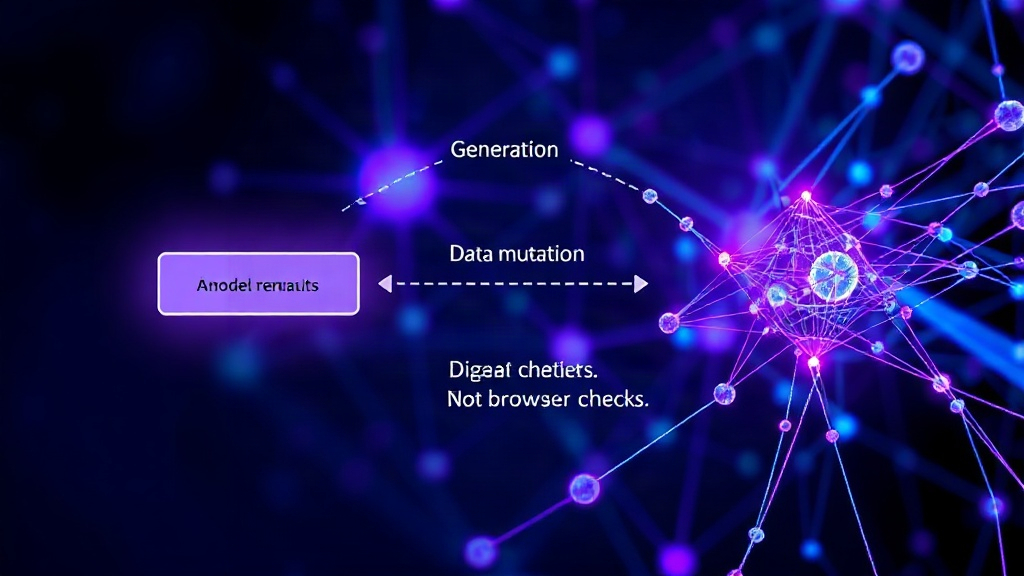
Applications should decouple the AI model’s generation capabilities from the direct mutation of application state. The AI model’s role should be to produce content or suggest actions. The application logic then takes this output and decides, based on business rules and system state, whether and how to apply it. This is akin to a human assistant drafting an email (AI generation) versus a manager approving and sending it (application logic and mutation).
3. Clear User Feedback and Control
Users need to be informed about AI-driven actions and have the ability to control them. When an AI generates content that will be applied to data, the user should be explicitly prompted for confirmation. This feedback loop is essential for maintaining trust and preventing accidental data changes. The system should clearly indicate when AI is being used to modify data and provide an easy way to review and approve or reject the changes. For example, before an AI rewrites a legal clause on an invoice, the user should see the proposed rewrite and have a button to accept or discard it.
The Broader Implications for AI Integration
This architectural oversight is not isolated. As AI models become more integrated into workflows, particularly those involving sensitive data or financial transactions, the need for robust validation and control mechanisms becomes paramount. Relying on client-side agents or assuming free inference means unlimited write access is a direct path to operational failure and financial loss. The success of AI integration hinges not just on the model’s performance, but on the surrounding system’s ability to manage, validate, and control its outputs. Developers must prioritize building these guardrails from the outset, treating AI-generated content as input for a decision-making process, not as an executable command. The failure to implement proper budget checks and data validation behind AI model writes is a critical flaw that needs immediate architectural attention.