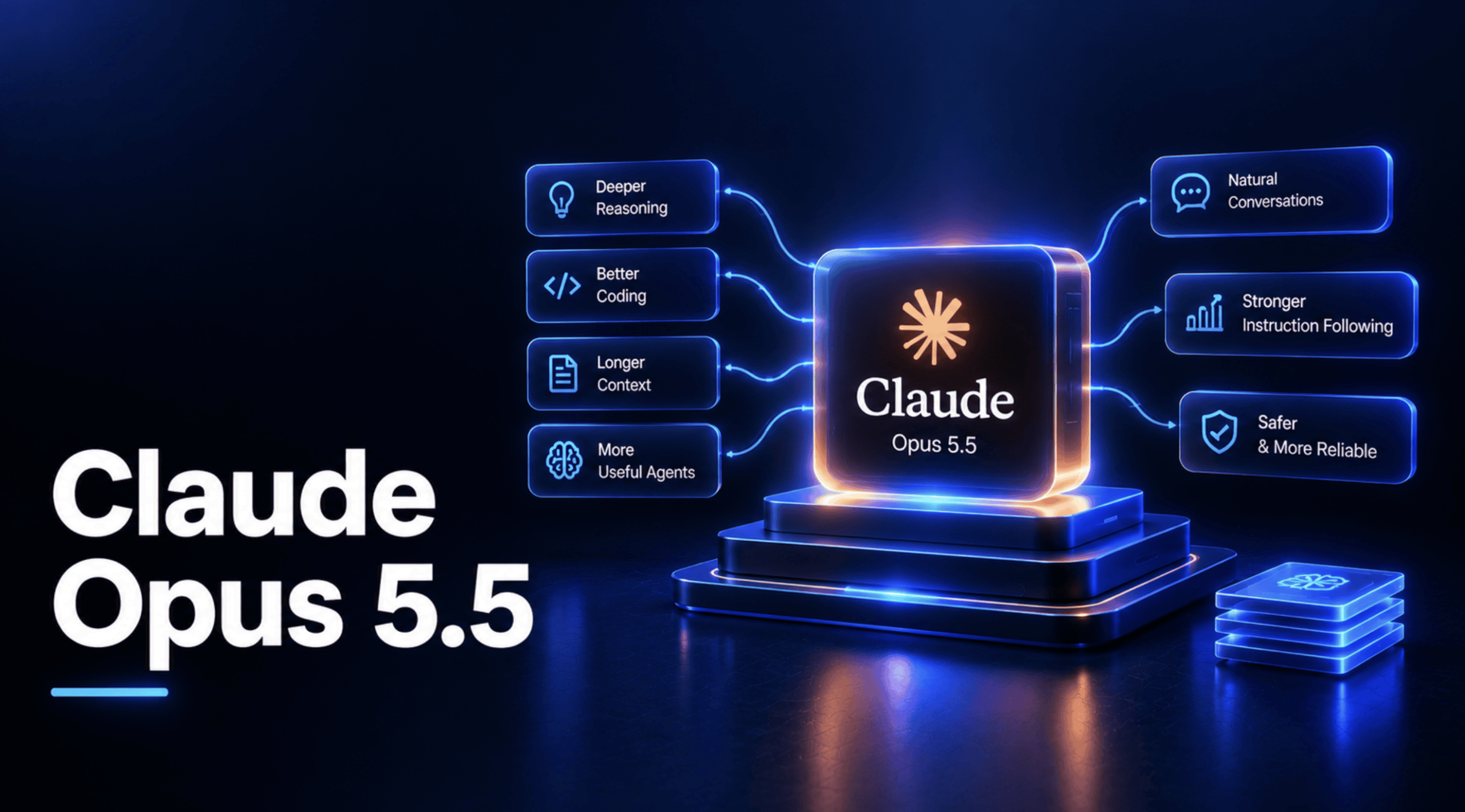
Claude 3.5 Sonnet: The New King of the Hill
Anthropic has launched Claude 3.5 Sonnet, and the results are immediately striking. Contrary to typical tiered releases where the largest model reigns supreme, Sonnet is outperforming its predecessor, Claude 3 Opus, across a range of benchmarks. This isn't just an incremental update; it's a significant leap that redefines Anthropic's model hierarchy and sets a new standard for AI performance in key areas.
The most significant achievement of Claude 3.5 Sonnet is its remarkable speed and cost-effectiveness, coupled with enhanced accuracy. Anthropic states Sonnet is 2x faster than Claude 3 Opus and 50% cheaper. This combination of speed and affordability, without sacrificing quality, makes it a compelling choice for a wide array of applications. Developers and businesses can now leverage a more powerful AI at a lower operational cost, a critical factor for scaling AI deployments.
Initial benchmark data reveals Claude 3.5 Sonnet's prowess. It scores higher than Claude 3 Opus on benchmarks like MMLU (Massive Multitask Language Understanding), GPQA (Graduate-Level Google-Proof Q&A), and HumanEval (coding). Specifically, it achieves a score of 82.1 on MMLU, surpassing Opus's 81.9. On GPQA, it hits 90.8, beating Opus's 90.7. The coding benchmark HumanEval sees Sonnet at 71.2, compared to Opus's 65.4. These numbers, while seemingly small, represent meaningful gains in complex reasoning and code generation capabilities.
Under the Hood: What Powers 3.5 Sonnet?
While Anthropic hasn't detailed the exact architectural changes, the performance leap suggests significant advancements in training methodologies, data curation, and possibly model architecture itself. The focus on real-time vision capabilities is another key differentiator. Claude 3.5 Sonnet can process and analyze images with exceptional speed and accuracy, making it ideal for tasks involving visual content, such as analyzing charts, transcribing text from images, and moderating visual content.
The model's improved vision capabilities are not just about speed; they are about nuanced understanding. This means it can interpret complex visual data, understand context, and provide relevant textual descriptions or analyses. For example, a user could upload a screenshot of a complex dashboard and ask Sonnet to summarize the key trends, and it would likely provide a more accurate and insightful response than previous models.
Claude 3.5 Opus: A New Role?
With Claude 3.5 Sonnet now leading in many performance metrics, the role of Claude 3 Opus is being re-evaluated. Opus remains a powerful model, particularly for highly complex, nuanced, or long-form tasks that require deep reasoning and extensive context windows. However, for the majority of use cases that demand speed, efficiency, and strong performance, Sonnet is the clear winner. Anthropic positions Opus as suitable for highly sophisticated tasks like advanced scientific research, complex legal analysis, or intricate strategic planning where its extensive knowledge base and reasoning depth are paramount.
The introduction of the 3.5 Sonnet effectively bridges the gap between the highly capable but slower Claude 3 Haiku and the top-tier, albeit slower, Claude 3 Opus. This creates a more practical and accessible performance tier for a wider range of users and applications. The strategy appears to be offering a tiered approach that prioritizes specific user needs: Haiku for speed and cost, Sonnet for balanced performance and value, and Opus for ultimate complexity and depth.
Claude 3.5 Orbax: A Significant Step Forward
Anthropic also introduced Claude 3.5 Orbax, a significant advancement in its open-source model family. Orbax is designed to offer competitive performance while adhering to Anthropic's safety and ethical guidelines. This release signals a continued commitment to the open-source community, providing developers with powerful, customizable tools that can be fine-tuned for specific needs without the constraints of proprietary APIs. The availability of Orbax allows for greater transparency and broader adoption of Anthropic's AI technology.
The focus with Orbax is on providing a robust foundation for developers to build upon. While not explicitly stated, it's reasonable to assume Orbax incorporates many of the architectural and training improvements seen in the Sonnet release, adapted for an open-source context. This means developers can expect enhanced reasoning, better coding capabilities, and improved safety features compared to previous open-source offerings.
Implications for the AI Landscape
The release of Claude 3.5 Sonnet has several key implications. Firstly, it intensifies competition in the LLM market. Companies that rely on AI for their core products or services will scrutinize these new benchmarks closely. The improved speed and cost-effectiveness of Sonnet make it a more attractive alternative to existing models, potentially drawing users away from competitors.
Secondly, it raises the bar for AI performance. Developers will now expect similar leaps in speed and accuracy from other model providers. The market is increasingly demanding not just powerful AI, but accessible and efficient AI. Anthropic's move forces other players to accelerate their own development cycles and optimize their offerings.
Finally, the strategic repositioning of Claude 3 Opus highlights the dynamic nature of AI development. What was once the top-tier model is now positioned for highly specialized use cases, demonstrating the rapid pace of innovation. This suggests that users should continually reassess their AI toolchains to ensure they are leveraging the most efficient and effective models for their specific needs.
The introduction of Claude 3.5 Sonnet is more than just a new model release; it's a strategic recalibration of Anthropic's AI offerings. It demonstrates a commitment to delivering cutting-edge performance that is both accessible and efficient, potentially reshaping how businesses and developers integrate AI into their workflows.