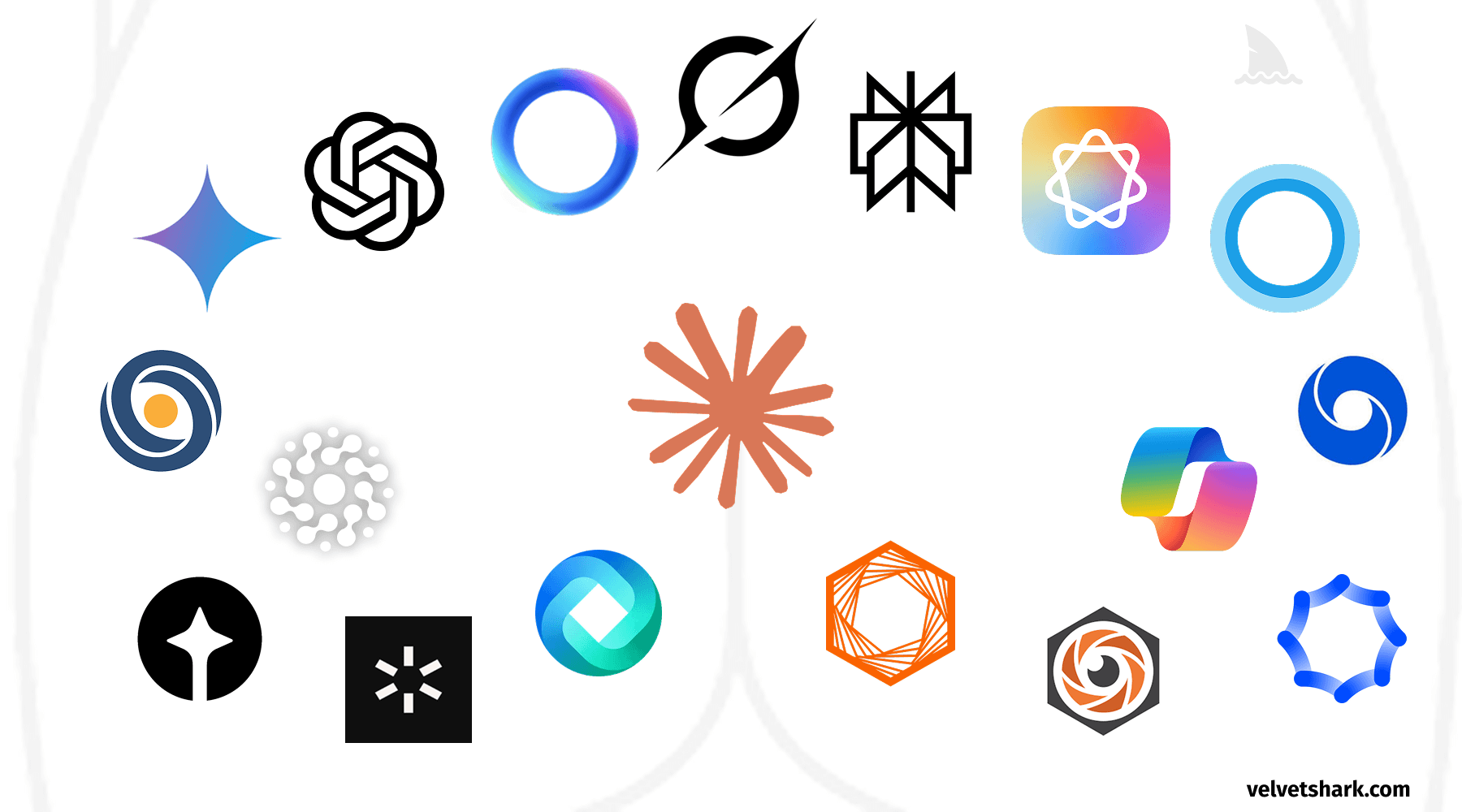
The Anus Motif: A Visual Anomaly in AI Branding
A peculiar trend has emerged in the world of artificial intelligence startups: a surprising number of company logos feature abstract shapes that bear a striking resemblance to human anuses. This visual phenomenon, widely discussed on platforms like Hacker News, spans a range of companies, from those in machine learning to broader AI services. The question on many minds is whether this is a deliberate design choice, a subconscious aesthetic preference, or simply a case of pareidolia – our brains seeing familiar patterns where none are intended.
The logos in question often employ swirling, circular, or layered forms. They are abstract, to be sure, but the human brain is wired to find patterns, and for many, these specific patterns evoke a strong, if uncomfortable, association. It’s a phenomenon that’s hard to ignore once pointed out, leading to a cascade of discussions about the psychology of branding, the nature of abstract art, and the collective unconscious of the tech industry.

Decoding the Design: Intent vs. Subconscious
Designers tasked with creating logos for AI companies face a unique challenge. They need to convey innovation, intelligence, complexity, and often, a sense of the abstract or futuristic. Many turn to geometric shapes, gradients, and organic forms to achieve this. The argument for intentionality suggests that some designers might be playing with provocative imagery, aiming for shock value or a memorable, albeit controversial, brand identity. Alternatively, it could be that certain abstract forms are inherently pleasing or suggestive of interconnectedness, growth, or data flow – concepts central to AI. The recurring shape might simply be an emergent property of designers independently exploring a limited set of aesthetically successful abstract forms that happen to align with this particular human anatomy.
The counter-argument, and perhaps the more likely scenario for many, is that this is purely a subconscious phenomenon. The human mind is adept at finding meaning and recognition in abstract patterns. What one observer sees as an anus, another might see as a vortex, a blooming flower, a neural network node, or a galaxy. The prevalence of such interpretations could be a testament to the power of suggestion and the tendency to project familiar forms onto ambiguous visuals. It’s akin to seeing faces in clouds; the pattern is in the observer’s perception as much as in the cloud itself.
The Psychology of Shape and Association
Psychology offers insights into why certain shapes might trigger such specific associations. Circular and swirling forms can evoke a sense of movement, depth, and infinity. Layered or opening shapes can suggest complexity, evolution, or access. When these abstract elements are combined, they can inadvertently create forms that trigger primal or deeply ingrained visual associations. The human form, and its constituent parts, are fundamental to our perception of the world. It’s not entirely surprising that abstract designs, when they touch upon certain universal visual cues, might land on forms that resonate with our most basic biological understandings.
Furthermore, the tech industry, and AI in particular, often deals with abstract concepts like intelligence, consciousness, and the very nature of existence. It’s possible that the abstract logos are a visual metaphor for these intangible ideas, and the anus-like appearance is an unintended, yet potent, byproduct of this abstract exploration. The association might also be amplified by the internet’s tendency to latch onto and viralize unusual or humorous observations, creating a feedback loop where more people start noticing and discussing the trend, thus reinforcing the perception.
A Trend or a Typo in the Collective Unconscious?
The question remains: is this a deliberate trend, a widespread subconscious aesthetic, or just a funny coincidence amplified by online discourse? Without direct admission from the designers or founders of these AI companies, it’s difficult to say definitively. However, the sheer number of logos that elicit this reaction suggests it’s more than a random occurrence. It highlights the fascinating interplay between design, psychology, and the collective cultural imagination.
What nobody has addressed yet is the long-term impact of such logo associations on brand perception. Will these companies eventually rebrand to shed the controversial imagery, or will they lean into it, perhaps even using the notoriety to their advantage? The continued evolution of AI branding will undoubtedly be a subject worth watching, offering a unique window into how abstract concepts are translated into visual identities in the digital age.