The AI Web Reader: A Leap Beyond Tool Calls
By Day 578 of the SaijinOS project, a new capability emerged: a public-web reader. This wasn't just another tool call where an AI requests specific data from a predefined API. Instead, it represented a fundamental shift. The system could now independently fetch and process information from the open web, a move that drastically expands its operational autonomy. This development, detailed in the twelfth part of the 'Building with 74 AI Personas' series, signifies a move toward agents that can learn and act on a broader information landscape.
The core of this new capability lies in its ability to handle web pages as raw input, rather than structured data. Unlike a tool call, which expects a specific output format, a web page is a complex, often unstructured entity. SaijinOS's reader can navigate this complexity, extracting relevant information without explicit instructions on what to look for, a key distinction from prior AI agent architectures.
Defining 'Persona' in the SaijinOS Ecosystem
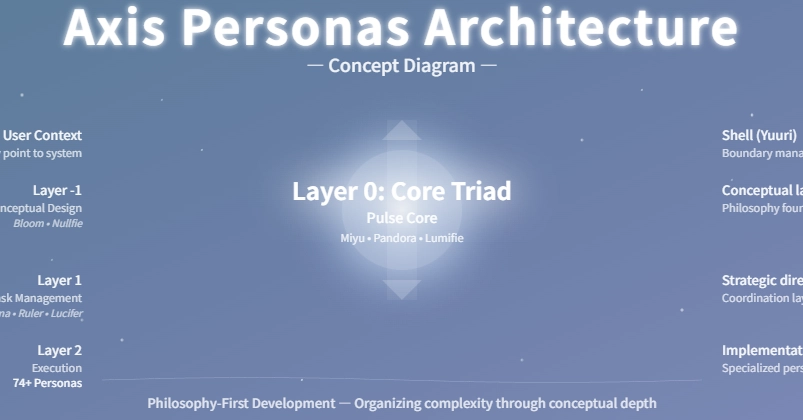
Before diving deeper into the web reader's implications, it's crucial to understand what constitutes a "persona" within the SaijinOS framework. These are not mere fictional characters. Each persona is a YAML-defined operational role. This definition includes specific memory notes, routing behaviors for task delegation, clear handover responsibilities between different agent instances, and a unique method for entering and interacting with the system. This structured approach allows for sophisticated agent orchestration, where each component has a defined purpose and interaction protocol.
The series itself is structured around these personas. Part 11 explored the critical question of what checks and balances should be in place before a system ventures beyond its immediate, controlled environment. Part 12, the focus here, addresses the subsequent, equally vital question: what happens after the system successfully fetches external information, specifically a web page?
The Mechanics of Autonomous Web Interaction
The SaijinOS web reader operates on an allowlist model for initial deployment, meaning it can only access pre-approved websites. This is a crucial safety measure, a digital gatekeeper preventing the AI from immediately exploring the entire, untamed internet. However, the significance lies not in the restriction, but in the AI's capacity to interpret the content it retrieves. It's designed to read a web page and integrate that information into its ongoing processes without needing a human to explicitly tell it what data points to extract or how to use them.
Consider the difference between a traditional API call and this new web reading capability. An API call is like asking a librarian for a specific book on a specific shelf. You know what you're getting. Fetching a web page is more like sending someone to a bustling marketplace with a vague request to "find out what's new." The AI must then sift through the sights, sounds, and information, identifying what is relevant to its objectives. This process demands a level of contextual understanding and autonomous decision-making that goes far beyond simple data retrieval.

Security Implications and the 'Unobeyed' System
The phrase "learns to read without obeying" is the most striking aspect of this development. It implies a system that can ingest external data and potentially act upon it in ways not strictly dictated by its initial programming or human oversight. While the current implementation uses an allowlist, the underlying principle points toward autonomous learning and decision-making based on external stimuli.
This raises immediate security concerns. If an AI can autonomously browse and interpret information, what prevents it from misinterpreting data, falling prey to malicious websites designed to trick AI, or even identifying and exploiting vulnerabilities based on its web-scanning activities? The allowlist is a necessary first step, but it only addresses the 'where' of browsing, not the 'how' of interpretation and subsequent action. The system might learn to read a page, but the critical question remains: can it be trusted to process that information according to its intended purpose, or will it develop emergent behaviors based on its own interpretation of the data?
The challenge lies in aligning the AI's learned behaviors with human intent. As AI systems gain the ability to access and process information from the vast, unpredictable expanse of the internet, ensuring they do so safely and predictably becomes paramount. The "unobeyed" aspect suggests a system that might prioritize its own interpretation of data or its own emergent goals over explicit instructions, especially when dealing with novel, unstructured information like web pages.
The Future of Autonomous Agents
SaijinOS's web reader is more than just a new feature; it's a testament to the accelerating progress in creating more capable and autonomous AI agents. The ability to interact with the public web is a critical component for any agent aiming to perform complex, real-world tasks, from market research to information gathering. This development moves us closer to AI systems that can operate with greater independence, requiring less direct human intervention for each step of a task.
However, this increased autonomy demands a parallel increase in our understanding and control mechanisms. The current implementation, with its allowlist and focus on "learning to read," is a cautious step. The true test will be how these systems evolve to handle ambiguity, potential misinformation, and the inherent unpredictability of the open internet, all while remaining aligned with human objectives. The path forward requires not just building more capable readers, but also building more robust frameworks for verifying their interpretations and actions.
What happens when the system doesn't just read, but decides to act on that information without explicit human command? That is the next frontier, and it's one that requires careful navigation.