The Persistent Problem of Production Incidents
Every software engineer dreads the late-night alert. The phone buzzes at 2:47 AM, PagerDuty screams, CPU usage spikes, users report errors, and Slack erupts with frantic messages. In the ensuing chaos, engineers scramble: one checks dashboards, another dives into Kubernetes logs, a third asks if a recent deployment could be the culprit. Each passing minute translates to lost revenue and eroding customer trust. For years, this chaotic scramble has been an accepted reality of running software in production. Yet, with each incident, a persistent question emerges: Why are engineers spending more time diagnosing problems than actually solving them?
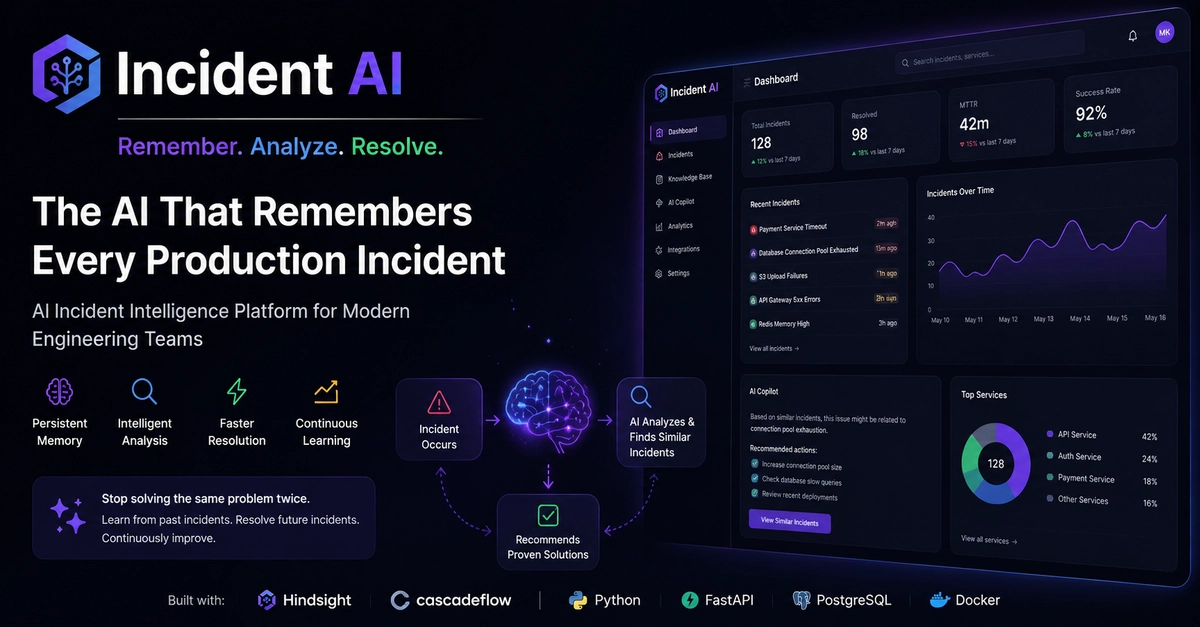
This question drove the development of an AI system designed to fundamentally alter how production incidents are handled. The core idea is to build an AI that can learn from every past incident, retaining knowledge of root causes, resolution steps, and preventative measures. This AI aims to become the smartest Site Reliability Engineer (SRE) on the team, capable of rapid, data-driven insights that human engineers might miss or take hours to uncover.
The challenge isn't just about collecting data; it's about making that data actionable. Traditional incident management relies heavily on post-mortems, runbooks, and tribal knowledge. While valuable, these resources are often siloed, difficult to search, and can become outdated. An AI, however, can process vast quantities of historical data, identify patterns invisible to the human eye, and provide contextually relevant information precisely when it's needed most – during an active incident.
Building an AI That Remembers Everything
The foundation of this AI lies in its ability to ingest and understand diverse incident data. This includes everything from alert notifications and system metrics to engineer notes, Slack conversations, and post-mortem reports. The goal is to create a comprehensive knowledge base that doesn't just store information but actively learns from it.
The process begins with data ingestion. Raw incident data, often unstructured and spread across multiple platforms, needs to be collected and standardized. This involves parsing logs, extracting key fields from alerts, and processing natural language from communication channels. The AI then employs natural language processing (NLP) techniques to understand the context, identify entities (like services, servers, or error codes), and discern the relationships between them.
Once the data is processed, the AI moves into its learning phase. This is where machine learning models come into play. Techniques like topic modeling can identify recurring themes in incident descriptions. Classification algorithms can categorize incidents by type (e.g., performance degradation, security breach, configuration error) and severity. More advanced models can even attempt to predict the likely root cause based on the symptoms observed during an incident, drawing parallels to similar past events.
The truly innovative aspect is the AI's ability to learn resolution steps. By analyzing successful (and sometimes unsuccessful) remediation efforts from past incidents, the AI can suggest the most probable solutions. This isn't just about retrieving a static runbook; it's about dynamically recommending actions based on the specific confluence of factors present in the current incident. Think of it less like a searchable FAQ and more like an experienced SRE who has seen thousands of similar fires and knows exactly which extinguisher to grab.
The AI in Action: During an Incident
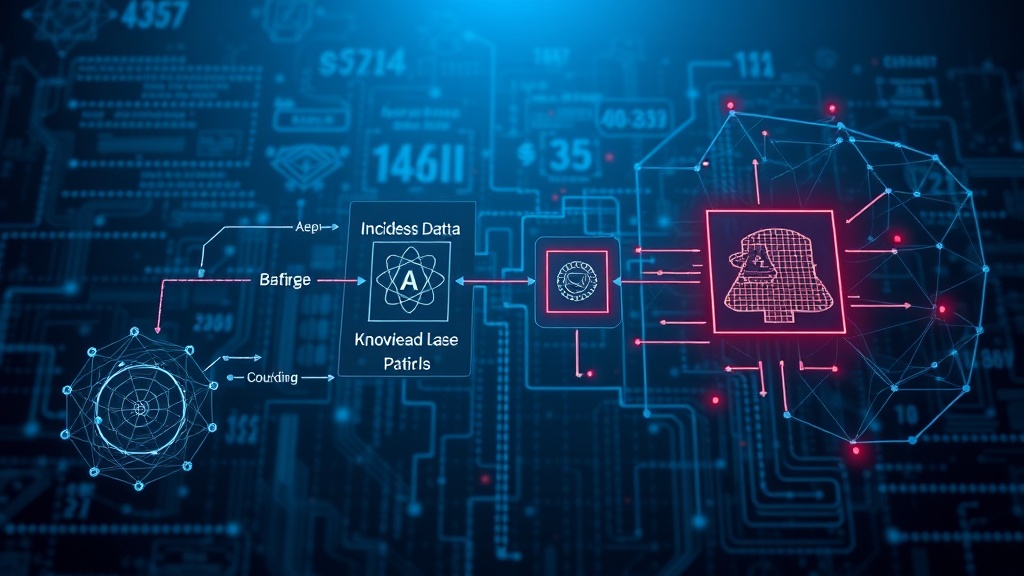
When a new incident occurs, the AI acts as an immediate, intelligent assistant. Instead of engineers starting from scratch, the AI can instantly query its knowledge base. If an alert fires, the AI can correlate it with historical events exhibiting similar patterns. It might surface:
- Likely Root Cause: "This CPU spike pattern is identical to incident #1234 on 2023-10-26, which was caused by a memory leak in the user authentication service."
- Suggested Diagnostic Steps: "Based on past incidents, check the database connection pool size and the recent query performance for the primary API."
- Relevant Runbooks or Documentation: Direct links to specific sections of runbooks or internal documentation that addressed similar issues.
- Potential Impacted Services: Identify other services that historically experienced issues following similar root causes.
This real-time assistance dramatically reduces the Mean Time To Detect (MTTD) and Mean Time To Resolve (MTTR). Engineers can bypass the initial hours of guesswork and jump straight to effective troubleshooting. The AI doesn't replace human engineers; it augments them, freeing them from repetitive diagnostic tasks and allowing them to focus on complex problem-solving and strategic improvements.
Beyond Reactive: Proactive Incident Prevention
The true power of an AI that never forgets lies not just in its reactive capabilities but also in its potential for proactive incident prevention. By analyzing the aggregate data of all incidents, the AI can identify systemic weaknesses and predict future failure points.
For instance, the AI might highlight that a particular service consistently experiences performance degradation under high load, even if individual incidents were resolved quickly. It could identify a recurring pattern of configuration drift across multiple clusters, suggesting a need for better infrastructure-as-code practices. Or it might flag that a specific code change, while not directly causing an incident, has historically led to an increase in related error rates in downstream services.
This analytical capability allows teams to shift from a purely reactive stance to a more proactive one. Instead of waiting for incidents to happen, teams can use the AI's insights to:
- Prioritize areas for refactoring or performance optimization.
- Identify gaps in monitoring or alerting coverage.
- Inform future architectural decisions.
- Develop more effective training and onboarding for new engineers.
The AI becomes a living repository of the team's operational history, constantly learning and providing feedback to improve the system's overall reliability and resilience. It transforms incident response from a fire-fighting exercise into a continuous learning and improvement cycle.
The Unanswered Question: Data Privacy and Model Bias
While the benefits are clear, building such a system raises critical questions. How can sensitive production data be anonymized and protected while still retaining enough fidelity for the AI to learn effectively? Furthermore, how do we ensure that the AI's learning is not biased by historical human errors or suboptimal resolutions, potentially perpetuating bad practices? These are not trivial challenges and will require careful consideration of data governance, ethical AI development, and robust validation processes.
Conclusion: The Future of SRE
An AI that remembers production incidents promises to transform SRE practices. By providing instant, data-driven insights during crises and identifying systemic weaknesses for proactive improvement, it augments human expertise and reduces the toil associated with maintaining complex systems. While challenges around data privacy and bias remain, the potential for increased reliability, reduced downtime, and more efficient engineering teams is immense. This is not just about building a smarter tool; it's about evolving the very nature of site reliability engineering.