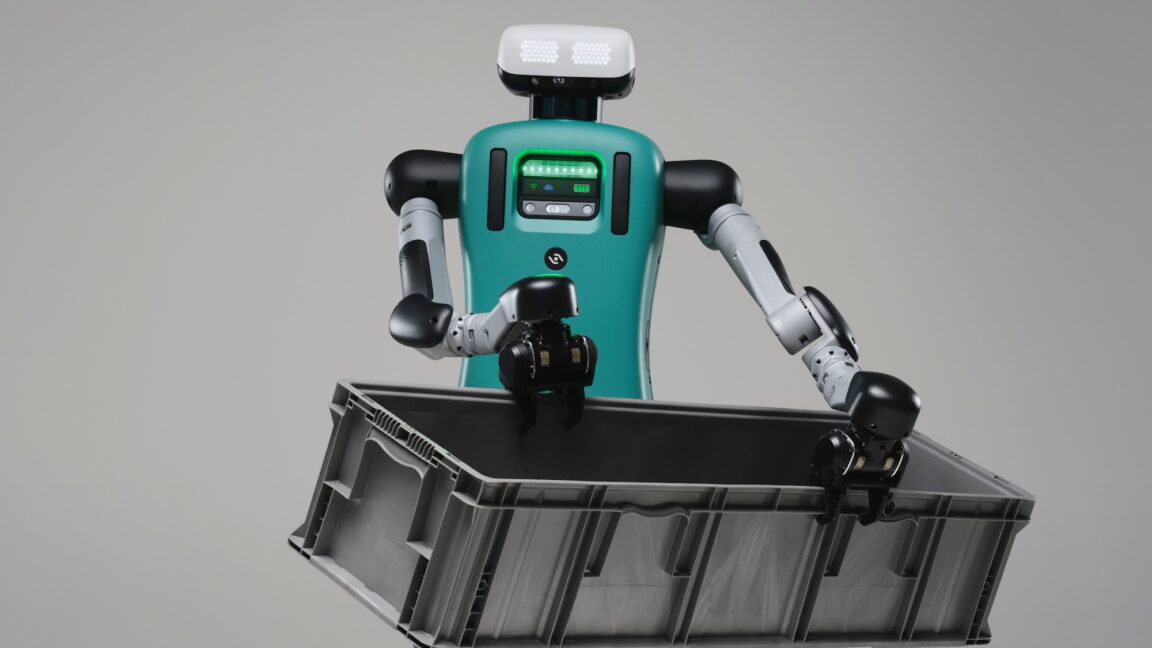
The Dawn of General-Purpose Robot Autonomy
For decades, robots have been fixtures in factories, performing repetitive, highly specialized tasks with precision. However, the vision of robots that can intelligently navigate, learn, and adapt to dynamic environments—much like humans—has remained largely in the realm of science fiction. That is changing rapidly, driven by significant advancements in artificial intelligence. Top robotics researchers and founders are now explaining how AI is enabling a new generation of general-purpose autonomous robots, capable of operating not just in controlled industrial settings but also in the unpredictable complexities of homes and diverse workplaces.
The key shift is from robots programmed for specific, narrow tasks to those powered by AI that can understand context, reason about their environment, and perform a wide range of actions. This evolution is not about incremental improvements in motor control or sensor technology alone; it’s fundamentally about the cognitive capabilities that AI bestows upon these machines. These systems are moving beyond simply executing pre-defined sequences to truly understanding and interacting with the world around them.
Bridging the Gap: From Specialized to Generalist Robots
The current generation of robots excels at tasks like welding car doors or picking identical items from a conveyor belt. These are often referred to as narrow AI or task-specific robots. Their autonomy is limited to a very defined operational space. The breakthrough enabling general-purpose autonomy lies in AI models that can generalize learning across different tasks and environments. Think of it less like a highly specialized tool and more like a capable apprentice who can learn new skills on the job.
Researchers are leveraging large language models (LLMs) and other forms of foundation models, originally developed for natural language processing, and adapting them for robotic control. These models allow robots to understand human instructions, interpret complex scenes, and plan sequences of actions to achieve goals that were not explicitly programmed. For instance, a robot could be instructed to "clean up the kitchen," and through its AI, it would understand what constitutes a kitchen, identify items needing cleaning, and execute the necessary steps—loading the dishwasher, wiping counters, or sweeping the floor. This is a monumental leap from robots that can only perform a single, pre-programmed cleaning function.
The Role of Advanced AI in Robotic Cognition
Several key AI advancements are powering this transition. Firstly, sophisticated perception systems, driven by deep learning, allow robots to see and interpret their surroundings with human-like (and sometimes superhuman) accuracy. This includes object recognition, scene understanding, and even inferring the intentions of people. Secondly, reinforcement learning and imitation learning techniques enable robots to learn from trial and error, or by observing human demonstrations, without needing explicit, step-by-step programming for every possible scenario. This is crucial for adapting to the messiness of real-world environments.
Furthermore, the integration of LLMs is proving transformative. LLMs can process natural language commands, break them down into actionable sub-tasks, and generate plans for the robot to execute. This allows for a more intuitive human-robot interaction, where users can communicate complex goals in plain English. This is akin to giving a human assistant a complex project brief; the AI then translates that into a series of manageable steps for the robot’s physical actuators.
Applications: From Warehouses to Living Rooms
The implications are vast. In workplaces, these autonomous robots could revolutionize logistics and manufacturing. Instead of fixed assembly lines, robots could dynamically reconfigure themselves to handle different products or tasks. They could manage inventory in warehouses with greater flexibility, perform maintenance in hazardous environments, or assist in complex surgical procedures. The ability to understand and adapt means robots can work alongside humans more effectively, taking on dangerous or tedious jobs, thereby increasing overall productivity and safety.
The potential for home use is equally profound. Imagine robots that can assist the elderly with daily tasks, perform household chores like laundry and cooking, or even provide companionship. This level of autonomy could significantly improve quality of life, especially for those with mobility issues or in areas with labor shortages for domestic help. The transition to home use, however, presents unique challenges, including navigating cluttered, unstructured, and highly personal environments, as well as ensuring safety and privacy.
Challenges and the Road Ahead
Despite the rapid progress, significant hurdles remain. The primary challenge is achieving true robustness and reliability in unpredictable, real-world conditions. While AI models can perform remarkably well in simulations or controlled environments, unexpected situations—a pet darting across a room, an unusual spill, or a power fluctuation—can still challenge even the most advanced systems. Ensuring the safety of humans interacting with these robots is paramount, requiring sophisticated fail-safe mechanisms and ethical considerations.
Another challenge is the sheer cost and complexity of developing and deploying these advanced robotic systems. The computational power required for real-time AI processing, the sophisticated hardware, and the ongoing need for software updates and maintenance all contribute to high barriers to entry. Furthermore, public perception and acceptance will play a crucial role, especially in domestic settings, where trust and understanding are key.
The Unanswered Question: Scalability and Affordability
What remains to be seen is how quickly and affordably these general-purpose autonomous robots can be scaled for widespread adoption. While the research is promising, the path from a laboratory demonstration to a mass-produced, reliable, and cost-effective robot for everyday use is long and arduous. The economic viability for both businesses and consumers will ultimately determine the pace of this AI-driven robotic revolution. Will these become ubiquitous tools within the next decade, or will they remain high-end solutions for specialized industries for longer?
The convergence of AI and robotics is undeniably creating a new era of intelligent machines. As AI continues to advance, robots will become increasingly capable of understanding, adapting, and acting autonomously in our workplaces and homes, reshaping industries and our daily lives in ways we are only beginning to comprehend.