
The Conversational AI Trap
We are witnessing a widespread default to chat-based interfaces for nearly every AI capability. This trend, driven by the success and ubiquity of Large Language Models (LLMs) trained on dialogue data, is a critical UX misstep. The current obsession with conversation risks creating interfaces that serve the AI’s training data rather than the user’s actual needs. Great user experience hinges on aligning the AI’s modality—how it interacts and presents information—with the user’s context, intent, and cognitive load. The interface must adapt to the user, not force the user into the AI’s preferred conversational mold.
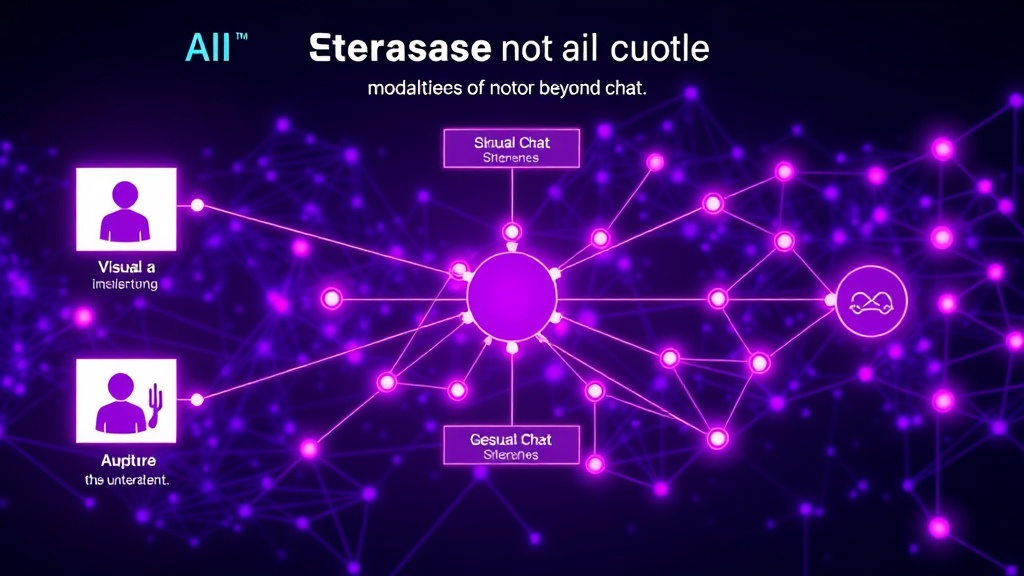
Matching Modality to Intent
The fundamental principle is that different user intents and tasks demand different interaction paradigms. Forcing a complex data analysis task into a back-and-forth chat can be inefficient, error-prone, and cognitively taxing. Imagine trying to explain a intricate financial spreadsheet solely through text prompts. It’s like trying to describe a complex architectural blueprint using only spoken words without any diagrams. The result is often a frustrating experience, requiring excessive clarification and leading to misunderstandings.
Consider the spectrum of AI capabilities and their ideal interfaces:
- Information Retrieval & Summarization: Chat interfaces can excel here, offering quick answers and concise summaries. A user asking “What are the latest market trends in renewable energy?” benefits from a direct, conversational response.
- Data Visualization & Exploration: For tasks involving complex datasets, direct manipulation, filtering, and visual analysis are paramount. A graphical interface, perhaps with AI-assisted query building, is far more effective than a purely conversational approach. Users need to see relationships, outliers, and patterns, which chat alone cannot easily convey.
- Content Creation & Editing: While LLMs are powerful for drafting text, refining and editing often requires more than just conversational commands. Visual editors with AI-powered suggestions, real-time feedback on tone or style, and direct manipulation tools offer a richer, more controlled experience. Think of AI assisting a graphic designer by suggesting color palettes or layout options, presented visually, not described in text.
- Task Automation & Workflow Management: For routine or multi-step processes, a structured interface, possibly with AI-driven automation triggers, is superior. Users might need to set up recurring tasks, define conditional logic, or monitor progress visually. A chatbot asking “Do you want to automate this?” is less effective than a dashboard displaying automated workflows and their status.
The key is to empower users with the most efficient and intuitive way to achieve their goal. This requires a shift from a modality-agnostic approach to a modality-aware design philosophy. Developers and product teams must analyze the core user intent and cognitive load associated with a task and then select or design the AI’s interaction modality accordingly. This might mean a multimodal interface that combines chat with visual elements, direct manipulation, or even voice commands tailored to specific actions.
Designing With Uncertainty: The Probabilistic Mindset
AI, especially generative AI, operates on probabilities. Its outputs are not absolute truths but the most likely sequences based on its training data. This inherent uncertainty is often masked by the AI’s confident-sounding language. As designers and builders, we must resist the urge to treat AI predictions as certainties. This is where the concept of Probabilistic Design becomes crucial.
Probabilistic Design is a mindset that acknowledges and embraces uncertainty. It encourages UX and product teams to:
- Accept Uncertainty: Recognize that AI outputs are often estimations, not facts.
- Decipher Outputs with Nuance: Develop strategies to help users understand the probabilistic nature of AI responses. This might involve providing confidence scores, alternative suggestions, or explanations for how an answer was derived.
- Make Adaptive Decisions: Build systems that can adapt based on new information or user feedback, rather than relying on a single, potentially flawed, AI output.
Consider an AI recommending a product. Instead of presenting it as “This is the product you need,” a probabilistic approach might say, “Based on your past purchases and browsing history, this product is a strong match (85% confidence). Users who bought this also liked X and Y.” This framing empowers the user by providing context and acknowledging the inherent uncertainty in the recommendation engine.
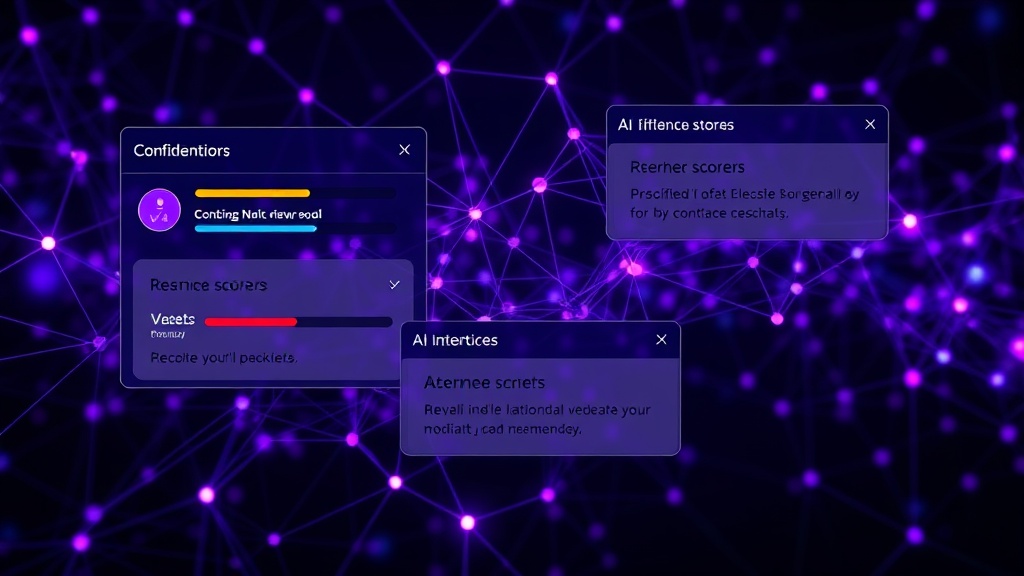
This probabilistic approach is not limited to recommendations. It applies to content generation, data analysis, and even user support. When an AI assists in writing code, for instance, it should highlight potential issues or suggest alternatives with varying probabilities of correctness or efficiency. This allows developers to critically evaluate the suggestions, rather than blindly accepting them. It’s akin to a skilled editor providing feedback on a manuscript—they point out potential weaknesses and offer suggestions, but the author retains final control and judgment.
The Future: Integrated and Context-Aware AI Interfaces
The most effective AI interfaces will move beyond single modalities and embrace integration. Users will interact with AI seamlessly across different channels and contexts. A mobile app might use voice for quick commands, a desktop application might leverage visual interfaces for complex data manipulation, and a smartwatch could provide glanceable, probabilistic updates.
Designing for this future requires a deep understanding of user workflows and a commitment to flexibility. It means building AI systems that can:
- Sense Context: Understand where the user is, what they are doing, and what their likely intent is.
- Adapt Modality: Switch between or combine interaction modes (text, voice, visual, haptic) as needed.
- Communicate Uncertainty: Transparently convey the probabilistic nature of their outputs.
- Learn and Evolve: Continuously improve based on user interactions and feedback.
The danger of conversational tunnel vision is real. By focusing on matching AI modality to user intent and by embracing a probabilistic design mindset, we can build AI-powered experiences that are not only more efficient and effective but also more trustworthy and empowering for users.