The Shifting AI Compute Landscape
The monolithic approach to AI compute is giving way. As AI infrastructure fragments into specialized tiers, the Central Processing Unit (CPU) is undergoing a significant transformation. Once the undisputed king of general-purpose computation, the CPU is now evolving into a critical orchestration layer, particularly for agentic workloads. This shift is driven by the increasing demand for specialized hardware accelerators, such as GPUs, TPUs, and custom ASICs, each optimized for distinct AI tasks like training, inference, or specific data preprocessing.
Traditionally, CPUs handled a broad spectrum of tasks, from operating system management to complex calculations. However, the insatiable appetite of modern AI models, especially large language models (LLMs) and sophisticated generative AI, has pushed the boundaries of what general-purpose CPUs can efficiently handle. Training these massive models requires immense parallel processing power, a domain where GPUs have excelled. Similarly, real-time inference at scale demands highly specialized silicon tuned for low latency and high throughput. This specialization means that while GPUs and other accelerators handle the heavy lifting of AI computations, the CPU's role is becoming increasingly about intelligent management and coordination.
Think of it less like a general contractor building an entire house, and more like a highly skilled conductor leading a diverse orchestra. The conductor doesn't play every instrument, but they ensure each section – the strings (GPUs), the brass (TPUs), the percussion (custom ASICs) – plays its part at the right time, in harmony, to produce the final symphony (the AI application's output). The CPU, in this analogy, is the conductor. It needs to understand the capabilities of each specialized unit, schedule tasks efficiently, manage data flow, and orchestrate the entire process to achieve optimal performance and resource utilization.
The Rise of Agentic Workloads and CPU Orchestration
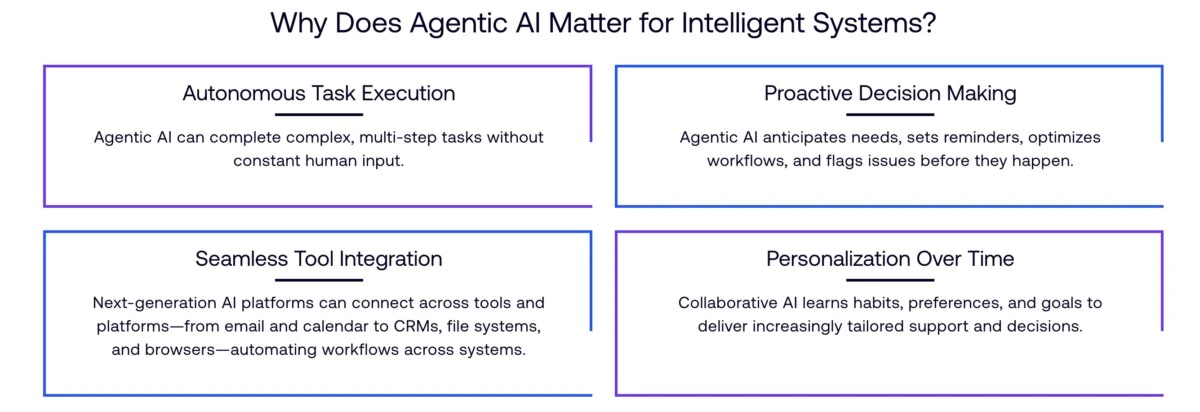
Agentic workloads, characterized by autonomous agents that can perceive their environment, make decisions, and take actions, represent a new frontier in AI. These agents often comprise multiple interconnected AI models and require dynamic task allocation, continuous monitoring, and complex decision-making logic. This is where the CPU's new role as an orchestration layer becomes paramount. It must manage the communication between different AI modules, often residing on different types of accelerators, and ensure seamless execution of multi-step processes.
For instance, an agent tasked with complex research might involve an LLM for understanding queries, a vision model for analyzing images, a reasoning engine for synthesizing information, and a planning module for outlining next steps. The CPU orchestrates the flow: it feeds the query to the LLM, passes the LLM's output to the reasoning engine, directs the vision model to process relevant images, and then compiles the findings to inform the planning module. Each of these steps might leverage different hardware, but the CPU is the central nervous system making it all happen.
This requires CPUs to possess advanced capabilities in areas such as multi-threading, inter-process communication, and efficient memory management. Furthermore, the CPU must be capable of dynamic resource provisioning, allocating tasks to the most suitable accelerator on the fly based on availability, workload requirements, and power constraints. This is a far cry from simply executing sequential code; it's about sophisticated, real-time workload management in a highly dynamic and heterogeneous environment.
Implications for CPU Architecture and Design
The evolving role of the CPU in AI infrastructure has profound implications for its architecture and design. While raw single-core performance remains important, there is an increasing emphasis on features that facilitate orchestration and parallel execution of AI-related tasks. This includes:
- Enhanced I/O and Interconnects: Faster and more efficient communication between the CPU and accelerators is critical. Technologies like PCIe Gen 5/6, CXL (Compute Express Link), and advanced network interfaces are becoming essential to minimize data transfer bottlenecks.
- Increased Core Counts and Heterogeneous Cores: While high-performance cores are necessary, the integration of specialized cores within the CPU package itself – such as AI-optimized cores or efficiency cores – could further enhance its orchestration capabilities. This allows for localized processing of control logic or lightweight AI tasks without offloading to external accelerators.
- Advanced Memory Technologies: Larger, faster, and more intelligent memory subsystems are needed to feed the data-hungry AI models and manage the complex data flows orchestrated by the CPU. Caching hierarchies and memory controllers need to be optimized for AI workloads.
- Software and Firmware Support: The hardware evolution must be matched by advancements in software. Operating systems, hypervisors, and AI frameworks need to be designed to effectively leverage these heterogeneous architectures, providing developers with intuitive tools to manage and deploy AI workloads.
The trend towards heterogeneous racks, where compute, memory, and storage are disaggregated and composed dynamically, further amplifies the CPU's role as the central orchestrator. In such an environment, the CPU is responsible for discovering available resources, composing them into virtualized compute units, and managing their lifecycle throughout the AI workload execution. This requires sophisticated control plane software running on the CPU.
The Future: CPUs as the AI Control Plane
The fragmentation of AI infrastructure is not a temporary trend but a fundamental shift. As AI applications become more pervasive and complex, the need for specialized hardware will only grow. This doesn't relegate the CPU to obsolescence; rather, it elevates its strategic importance. The CPU is becoming the essential control plane for the entire AI ecosystem, ensuring that specialized accelerators can be utilized to their full potential.
This evolution presents both challenges and opportunities. For CPU designers, it means rethinking architectures to prioritize orchestration, connectivity, and efficient management of heterogeneous resources. For developers and system architects, it requires a deeper understanding of how to leverage these heterogeneous systems, moving beyond traditional programming models to embrace dynamic resource management and agent-based architectures. The CPU, once the engine of computation, is now becoming the brain of the AI operation.