
The Context Conundrum: Why AI Fails in Operations
Many teams discover a universal truth when integrating AI coding or operations assistants: the artificial intelligence model itself is rarely the limiting factor. The true bottleneck lies in the context provided to the AI. A powerful model fed with irrelevant or insufficient context will invariably produce generic, unhelpful responses, even if delivered with supreme confidence. Conversely, the same model, armed with precise, relevant context, can generate actionable insights that engineers can readily implement.
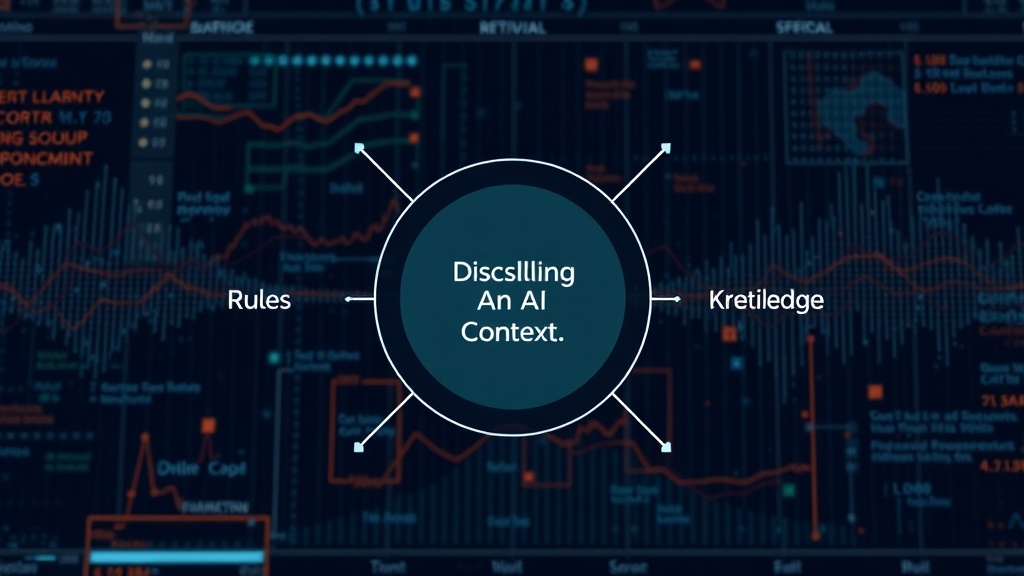
This shifts the critical question from merely selecting the best AI model to understanding what that context should encompass and how to construct it effectively. A useful context transcends a lengthy prompt or a disorganized repository of documents. It requires a structured approach, comprising three distinct, yet interconnected, components: Rules, Knowledge, and Retrieval.
1. Rules: Defining AI Behavior and Expectations
The 'Rules' component establishes the specific parameters and expectations for how the AI should operate and perform tasks. These are not general guidelines but precise instructions tailored to your team’s unique workflows and standards. For instance, rules might dictate the preferred coding style, the required format for incident reports, or the escalation procedures for critical alerts. They act as guardrails, ensuring the AI’s output aligns with established best practices and organizational policies.
Consider an AI assistant tasked with triaging incoming alerts. Without clear rules, the AI might flag every minor deviation as a critical incident, overwhelming the operations team. However, with rules defining severity thresholds, acceptable error margins, and specific conditions that warrant immediate attention, the AI can accurately prioritize alerts. This prevents alert fatigue and ensures that human operators focus on genuinely pressing issues. Effectively, rules translate organizational SOPs into machine-understandable directives.
2. Knowledge: Providing the AI with Necessary Information
The 'Knowledge' component is the AI’s informational backbone. It comprises all the data the AI needs to understand the operational environment, system architecture, past incidents, and relevant documentation. This is more than just a collection of files; it’s a curated and structured repository of information. Think of it less like a digital library and more like an experienced senior engineer who has intimate knowledge of the system’s history, quirks, and common failure modes.
This knowledge base should include:
- System Architecture Diagrams: Visual representations and textual descriptions of how different components interact.
- Runbooks and Playbooks: Step-by-step guides for handling common operational scenarios and incidents.
- Past Incident Reports: Detailed records of previous outages, their causes, resolutions, and post-mortems. This is invaluable for pattern recognition.
- Configuration Files: Current and historical system configurations.
- Monitoring Dashboards and Metrics: Key performance indicators and alert thresholds.
- API Documentation: Information on how services interact.
- Team Contact Information: Who to involve for specific issues.
The quality and comprehensiveness of this knowledge base directly impact the AI’s ability to provide accurate and contextually relevant solutions. A gap in knowledge about a specific service’s dependencies, for example, could lead the AI to suggest an incorrect fix that exacerbates the problem.
3. Retrieval: Efficiently Accessing and Presenting Context
The 'Retrieval' component is the mechanism by which the AI accesses and utilizes the Rules and Knowledge components. This is where the practical application of context takes shape. Simply dumping all available information into the AI’s prompt is inefficient and often counterproductive. Effective retrieval involves intelligently identifying and presenting only the most relevant pieces of information at the moment they are needed.
This can be achieved through several techniques:
- Vector Databases and Embeddings: Converting text and data into numerical representations (embeddings) allows for semantic search. The AI can query these databases to find information conceptually similar to the current problem, rather than relying on exact keyword matches.
- Contextual Window Management: AI models have a limited context window. The retrieval system must select the most pertinent information to fit within this window, prioritizing recent, relevant data and high-priority rules.
- Hybrid Search: Combining keyword-based search with semantic search often yields the best results, ensuring both precision and recall.
- Graph Databases: For complex interdependencies between services or components, graph databases can help retrieve relational context efficiently.
The retrieval system acts as an intelligent agent, sifting through the vast sea of knowledge and rules to present the AI with the critical details needed to solve a specific incident. Without efficient retrieval, even a perfectly curated knowledge base remains inaccessible and useless.
Building and Maintaining Effective Context
Constructing this robust context framework is an ongoing process. It requires continuous refinement and updates as systems evolve, new incidents occur, and team procedures change. Establishing clear ownership for maintaining each component is crucial. Rules might be managed by operations leads or SREs, knowledge bases by documentation teams or subject matter experts, and retrieval mechanisms by platform engineers or AI specialists.
The journey to efficient AI assistance in incident handling is not about finding a more powerful model, but about mastering the art of context. By systematically building and refining Rules, Knowledge, and Retrieval, teams can transform their AI assistants from generic chatbots into indispensable operational partners.