The AI Promise and the Data Reality
The allure of Artificial Intelligence in the semiconductor industry is undeniable. From optimizing chip design processes to predicting manufacturing yields, AI promises unprecedented gains in efficiency and innovation. However, the journey from theoretical potential to tangible results is fraught with challenges. As the industry grapples with the complexities of integrating AI, a critical realization emerges: the most sophisticated AI algorithms are rendered ineffective by foundational issues in data management, governance, and infrastructure. The hype surrounding AI’s transformative power in semiconductors must be grounded in the practical, often unglamorous, work of building robust data ecosystems.
The core problem isn't a lack of AI models or algorithms, but rather the absence of a coherent strategy for the data that fuels them. Semiconductor design and manufacturing generate vast quantities of data across numerous stages: electronic design automation (EDA) tools, intellectual property (IP) blocks, process design kits (PDKs), test results, fabrication logs, and supply chain information. This data is inherently fragmented, often residing in disparate systems, incompatible formats, and isolated silos. Without a unified approach to collecting, cleaning, standardizing, and governing this data, AI initiatives struggle to gain traction, leading to stalled projects and unmet expectations.
Establishing the Pillars: Data Infrastructure and Governance
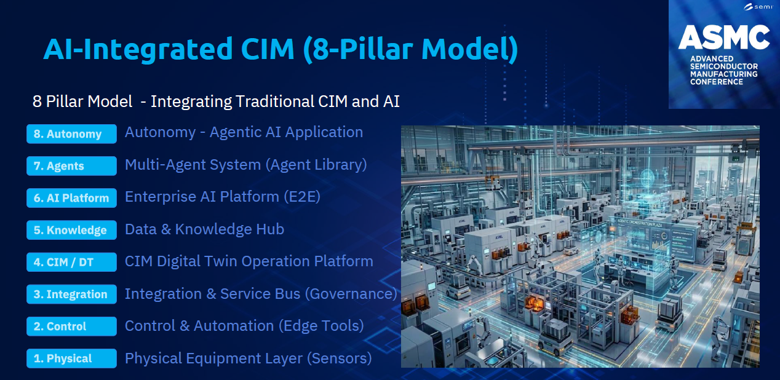
To move from hype to implementation, semiconductor companies must build three core pillars: a unified data infrastructure, robust data governance, and integrated operational systems. The data infrastructure serves as the foundation, enabling seamless access and flow of information. This involves establishing centralized data lakes or warehouses capable of ingesting diverse data types from various sources. Technologies such as cloud-native platforms, distributed databases, and advanced data streaming solutions are crucial for handling the sheer volume, velocity, and variety of semiconductor data.
Data governance is the critical layer that ensures data quality, security, and compliance. This includes defining clear ownership, establishing data dictionaries, implementing access controls, and setting policies for data lifecycle management. Effective governance provides the trust and reliability necessary for AI models to function accurately. Without it, engineers and data scientists risk working with inaccurate, incomplete, or biased data, leading to flawed designs, incorrect predictions, and compromised product quality. Think of data governance as the traffic laws and road signs for your data highway; without them, even the fastest cars will crash.
The integration of AI into operational systems is the final, crucial step. This means embedding AI capabilities directly into the workflows of chip designers, process engineers, and manufacturing operators. It requires moving beyond standalone AI tools to solutions that are context-aware and actionable within existing design and production environments. For instance, AI-driven design tools should seamlessly integrate with EDA platforms, providing real-time feedback and optimization suggestions. Similarly, AI in manufacturing should connect directly to fab automation systems, enabling predictive maintenance and dynamic process adjustments.
Overcoming Silos and Fostering Collaboration
A significant hurdle in building these pillars is the pervasive issue of organizational silos. Different departments—design, verification, manufacturing, test, and supply chain—often operate with their own tools, data formats, and priorities. This fragmentation prevents a holistic view of the product lifecycle and hinders the development of AI solutions that span multiple stages. Breaking down these silos requires a top-down commitment to data standardization and cross-functional collaboration. It necessitates the adoption of common data models and APIs that allow different systems and teams to communicate effectively.
The challenges are particularly acute in the design phase. EDA tools generate complex design data, while verification processes produce vast logs of simulation results. Bringing these together with IP block data and PDK information for AI-driven optimization is a monumental task. Similarly, in manufacturing, integrating real-time sensor data from the fab floor with historical yield data and supply chain logistics presents significant infrastructure and governance challenges. Addressing these requires not just technological solutions but also a cultural shift towards shared data ownership and collaborative problem-solving.
The Path Forward: Incremental Implementation and Strategic Investment
Successfully implementing AI in semiconductors is not an overnight transformation but an evolutionary process. It demands strategic investment in foundational data capabilities. Companies should prioritize building a scalable and flexible data infrastructure that can adapt to evolving AI technologies and data requirements. Simultaneously, establishing a strong data governance framework is paramount. This involves investing in data stewards, defining clear policies, and implementing tools for data cataloging and lineage tracking.
The integration of AI into operational systems should be approached incrementally. Starting with specific, high-impact use cases, such as yield prediction in fabrication or design rule checking optimization, can demonstrate value and build momentum. As these initial projects succeed, the scope can expand to more complex, cross-functional AI applications. The ultimate goal is to create an intelligent, data-driven ecosystem where AI is not an add-on but an intrinsic part of the semiconductor lifecycle, driving continuous improvement and innovation.
What remains unaddressed is the long-term impact of this data-centric AI approach on the skillset required for semiconductor engineers. As AI takes on more complex analytical tasks, the role of the human engineer may shift towards higher-level problem-solving, system architecture, and AI model oversight, demanding new forms of training and expertise.