The Drug Discovery Pipeline: A Decade-Long Marathon
When a company announces that a drug was discovered using AI, it's crucial to understand precisely where in the lengthy and complex drug discovery pipeline that AI intervention occurred. This isn't about a specific medicine or medical advice; it's about demystifying the process. The typical journey from identifying a biological target to a drug reaching patients spans over a decade and involves several distinct, resource-intensive stages. Broadly, these stages include target identification, hit identification (finding molecules that interact with the target), lead optimization (refining those molecules into drug-like candidates), preclinical testing (animal studies and safety assays), and finally, the multi-phase clinical trials in humans. Each phase is fraught with potential failure, and the vast majority of drug candidates never make it to market.
Two fundamental facts shape the landscape of drug discovery and our understanding of AI's role. First, the calendar and the financial investment are overwhelmingly dominated by the clinical trial phases. These stages, particularly Phase II and III, are incredibly expensive, time-consuming, and carry the highest risk of failure. Second, failure is not the exception but the norm. The highest attrition rates occur precisely where the drug candidate first interacts with biological systems in humans, making the early stages of discovery and development critical but not the sole determinants of success or cost.
Where AI Makes Its Mark: Accelerating Early Discovery
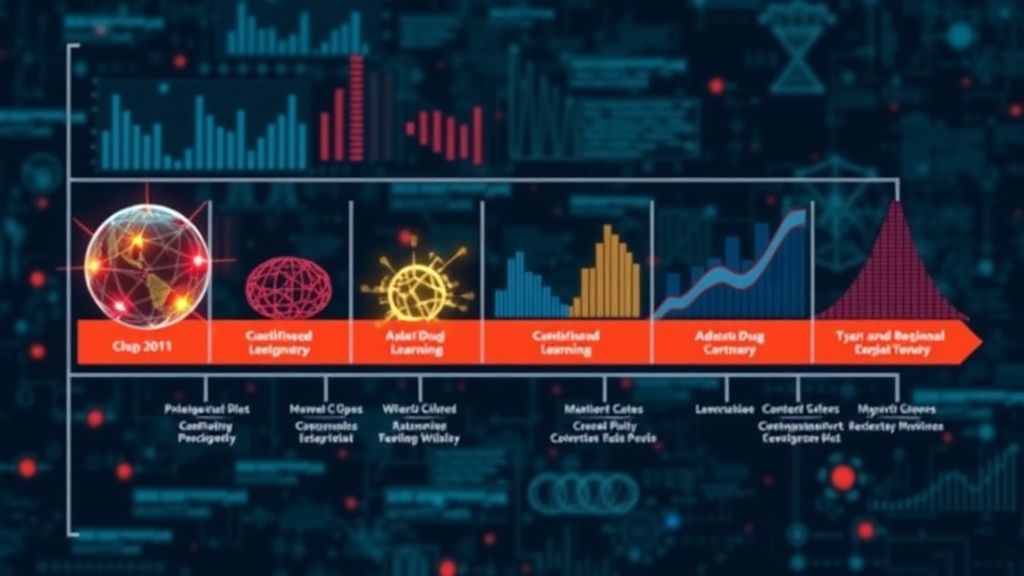
AI's most significant impact is felt in the early, high-throughput stages of drug discovery. These include target identification and, more prominently, hit identification and lead optimization. Traditional methods for screening vast chemical libraries to find molecules that bind to a specific target are laborious and can take years. AI models, particularly machine learning algorithms trained on massive datasets of molecular structures, biological assays, and chemical properties, can sift through millions or even billions of potential compounds at speeds unimaginable just a decade ago. These models can predict molecular interactions, identify promising scaffolds, and even suggest modifications to improve a molecule's efficacy, selectivity, and pharmacokinetic properties.
For instance, generative AI models can design novel molecular structures from scratch that are predicted to have desired properties. Reinforcement learning can guide the iterative process of molecule design, optimizing for multiple parameters simultaneously. This capability dramatically shrinks the time and resources needed to move from a conceptual target to a handful of promising lead compounds. Companies are leveraging AI to explore chemical spaces that were previously inaccessible or too costly to investigate manually, leading to a richer pipeline of potential drug candidates. This acceleration is not just about speed; it's about increasing the probability of finding viable candidates by exploring a wider array of possibilities.
The Unmovable Mountains: Clinical Trials and Biological Complexity
What AI models, no matter how sophisticated, cannot move are the fundamental biological and regulatory realities of drug development. The vast majority of a drug's lifecycle cost and time are consumed by clinical trials. AI can help identify which patients might respond best to a drug or predict potential side effects based on existing data, but it cannot run a human trial. These trials are essential for determining a drug's safety and efficacy in living organisms, a process governed by complex biology, individual patient variability, and stringent regulatory oversight by bodies like the FDA or EMA.
The transition from a promising molecule in a petri dish or a computational model to a safe and effective medicine for humans involves navigating intricate biological pathways, potential off-target effects, and the unpredictable nature of disease in diverse populations. AI can predict, but it cannot replicate the nuanced, real-world performance of a drug in the human body. The sheer scale and complexity of these trials, involving thousands of participants over several years, represent an insurmountable hurdle for current AI capabilities. Failure rates in these later stages remain high, underscoring that AI's predictive power, while valuable, does not eliminate the inherent risks and uncertainties of biological systems.
The Human Element: Validation, Regulation, and Real-World Impact
Beyond the scientific and biological challenges, the human element in drug discovery and regulation remains paramount. AI can identify patterns and correlations, but it cannot provide the human judgment, ethical considerations, and regulatory compliance required at every step. The interpretation of clinical trial data, the design of ethical studies, and the final approval process all rely on human expertise, oversight, and accountability. Regulatory agencies require robust, reproducible evidence generated through carefully controlled experiments and trials, not just AI-generated predictions.
Furthermore, the