The Prompt Box Deception
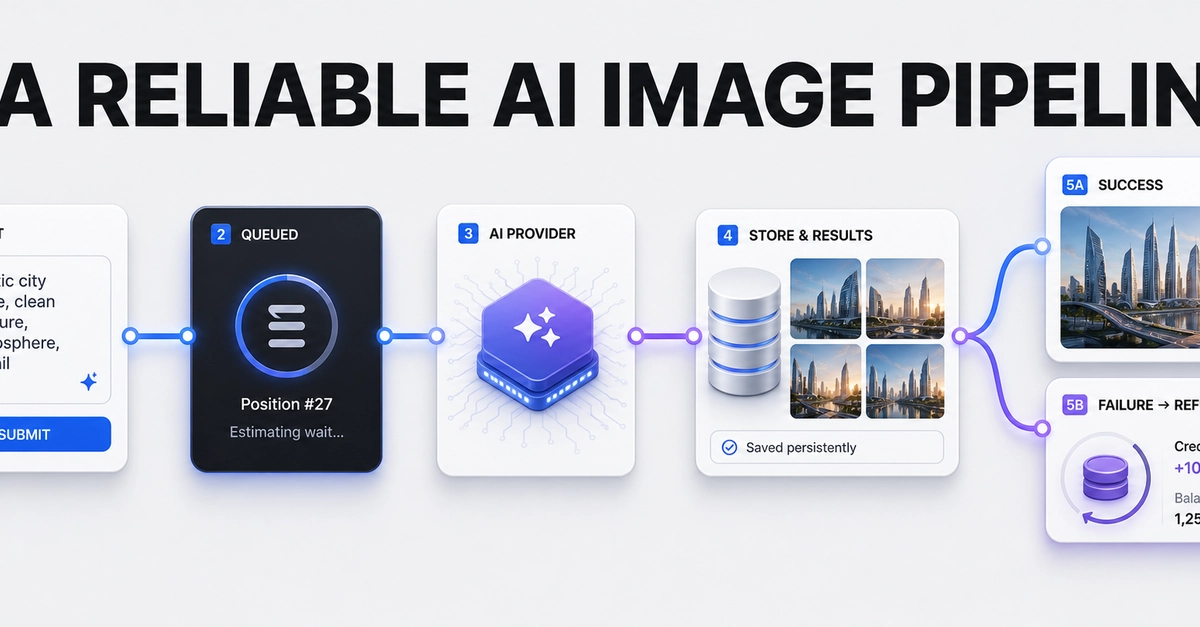
Most AI image generators present a deceptively simple interface: a prompt box and a 'Generate' button. This synchronous, single-step model is easy to prototype. However, the reality of serving real users quickly reveals a more complex system. Issues like browser refreshes, managing external task IDs, handling partial failures, implementing credit refunds, ensuring private asset security, and moderating public artwork transform the process from a simple form submission into a small, distributed job system.
When building Magggic, the development team discovered that a robust AI image pipeline requires a fundamentally different architecture. It's not about sending a request and getting an immediate response. Instead, it necessitates managing asynchronous tasks, tracking their states across various services, and providing mechanisms for error recovery and user compensation. This shift in perspective is crucial for any service aiming for reliability and user satisfaction in the AI image generation space.
From Synchronous to Asynchronous Workflows
The initial approach for many AI image services is a synchronous prototype. A user submits a prompt, the server processes it, and returns an image. This works for basic testing but collapses under load and real-world conditions. The core problem is that AI image generation is an inherently asynchronous process. The generation itself can take seconds to minutes, and external APIs or processing queues introduce further delays and potential points of failure.
To build reliability, the workflow must transition to an asynchronous model. This typically involves:
- Task Queuing: User requests are placed into a queue rather than being processed immediately. This smooths out traffic spikes and prevents system overload.
- External Task IDs: When interacting with third-party AI models or services, a unique external task ID must be stored. This ID is essential for tracking the status of the generation job independently of the user's session.
- Status Polling/Webhooks: The system needs a mechanism to check the status of the external task. This can be done by periodically polling the external service's API using the stored task ID, or by configuring webhooks that notify your system when the job is complete or has failed.
- State Management: A robust backend is required to manage the state of each image generation task (e.g., queued, processing, completed, failed). This state needs to be persisted reliably, often in a database.
This asynchronous architecture is the bedrock of a reliable system. It allows for graceful handling of long-running processes and external dependencies.
Handling Failures Gracefully
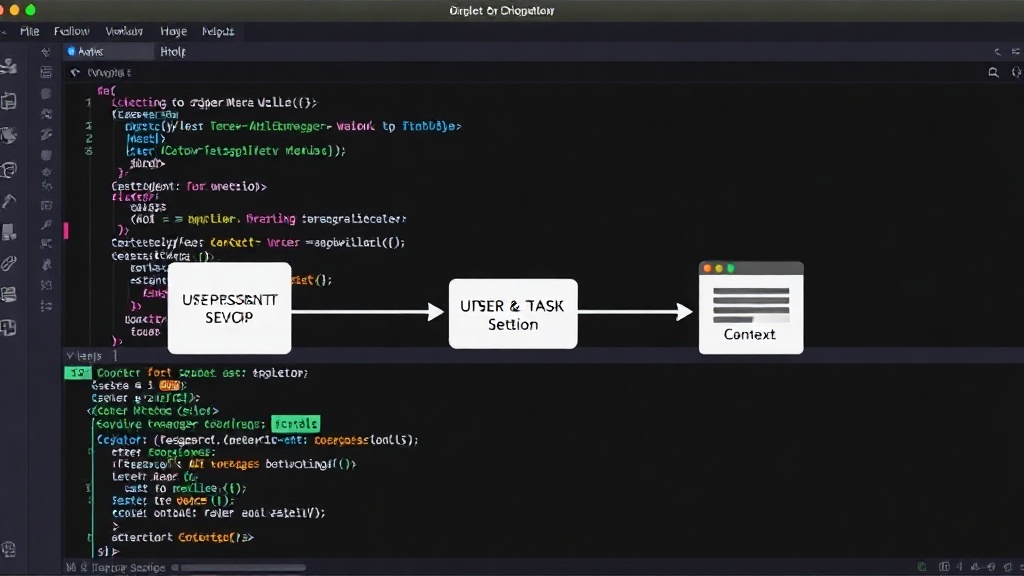
Failures are inevitable in any distributed system, and AI image generation is no exception. External APIs can experience downtime, models can produce corrupted outputs, or resource limits can be hit. A reliable system must anticipate and manage these failures:
- Partial Failures: Sometimes, a generation might produce a partial image or an unusable result. The system needs to detect this and either retry the generation or mark it as failed.
- Error Codes and Messages: External services often provide specific error codes or messages. These should be captured and translated into user-friendly feedback.
- Retry Mechanisms: For transient errors (like network timeouts or temporary API unavailability), an automated retry mechanism with exponential backoff is essential. This prevents the system from failing entirely due to momentary glitches.
- Dead-Letter Queues: After a certain number of retries, failed tasks should be moved to a dead-letter queue for manual inspection. This prevents infinitely failing tasks from consuming resources and helps in diagnosing persistent issues.
The goal is not to eliminate failures, but to minimize their impact on the user experience and to provide clear communication when they do occur.
Credit Refunds and User Trust
For services that operate on a credit system, managing refunds is critical for maintaining user trust. When a generation fails due to a system error or an unusable output, the user should not be charged. This requires tight integration between the task management system and the credit ledger.
- Atomic Operations: When a generation task is initiated, the credits should be reserved or deducted. If the task completes successfully, the deduction is finalized. If it fails, the credits must be refunded. This process should ideally be atomic to prevent race conditions.
- Automated Refunds: The system should automatically trigger refunds for failed tasks. Manual intervention should be a fallback, not the primary method.
- Clear User Communication: Users need to understand the credit system and be informed when a generation fails and why, and that a refund has been processed. Transparency builds confidence.
Implementing an automated, transparent credit refund system is paramount. It directly impacts user retention and the perceived fairness of the service.
Beyond the Prompt: Additional Considerations
A reliable AI image pipeline involves more than just prompt processing and failure handling. Other critical components include:
- Private Assets: Users may want to generate images based on their own uploaded assets (e.g., reference photos, character models). The system must securely store and manage these private assets, ensuring they are only used for the intended user's generations and are never exposed publicly or to other users. Access control and data isolation are key here.
- Public Artwork Moderation: For services that allow users to share their generated images publicly, a moderation system is necessary. This can involve automated content filtering for NSFW or harmful content, followed by human review for edge cases or appeals. This protects the community and maintains the platform's integrity.
- Scalability: The underlying infrastructure must be scalable to handle fluctuating demand. This often involves using cloud-based services, containerization (like Docker), and orchestration tools (like Kubernetes) to automatically scale compute resources up or down.
- Performance Monitoring: Continuous monitoring of task completion times, error rates, and resource utilization is vital for identifying performance bottlenecks and predicting potential issues before they impact users.
Building a successful AI image generation service requires treating it as a distributed systems problem from the outset, rather than a simple web form. The complexity lies not in the user-facing prompt box, but in the robust backend infrastructure that manages asynchronous tasks, handles failures, and maintains user trust.