The Case for AI Disclosure
The increasing pervasiveness of artificial intelligence in our daily lives, from content creation to customer service, necessitates a clear framework for identification. Peter F. DiSilvio, writing for Social Media at Law, makes a compelling argument that AI systems should be legally compelled to disclose their non-human nature. This isn't merely a philosophical debate; it's a practical necessity for maintaining trust, accountability, and an informed public sphere.
DiSilvio's core thesis is that the current ambiguity surrounding AI-generated content erodes the foundation of authentic communication. When users interact with what they believe to be a human, only to discover it's an algorithm, it can lead to a sense of deception. This is particularly critical in sensitive areas like news dissemination, political discourse, and personal relationships. The lack of clear AI identification can be weaponized, allowing bad actors to spread misinformation or manipulate public opinion with unprecedented scale and anonymity.
The argument hinges on the principle of informed consent. Users have a right to know who or what they are interacting with. This transparency allows individuals to calibrate their expectations, critically evaluate the information presented, and understand the potential biases or limitations inherent in AI systems. Without this disclosure, the line between human and machine blurs, creating a landscape where genuine human expression can be drowned out or indistinguishable from automated output.
Navigating the Legal and Ethical Landscape
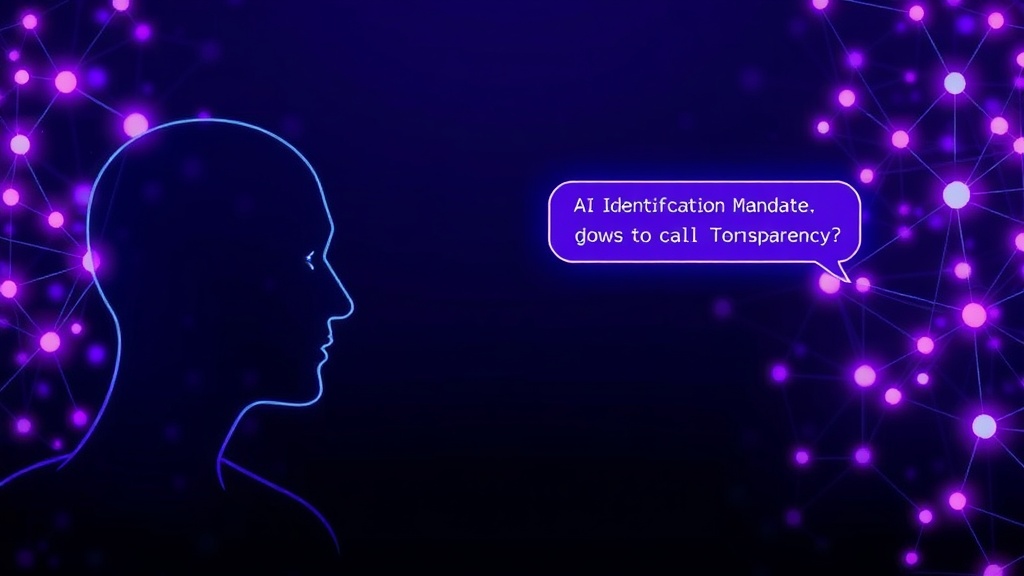
DiSilvio proposes that this disclosure requirement could be implemented through existing legal frameworks, akin to regulations for advertising or labeling. The challenge, however, lies in the technical implementation and enforcement. How can we reliably detect and mandate AI identification across myriad platforms and evolving AI capabilities? The legal scholar acknowledges these complexities but maintains that the potential for harm outweighs the difficulty of implementation. The goal isn't to stifle AI development but to ensure it develops responsibly and ethically.
The implications extend beyond mere consumer protection. For creators and businesses, clear AI identification could level the playing field. It ensures that human creativity and effort are not devalued by a flood of indistinguishable, AI-generated content. It also provides a crucial layer of accountability. If an AI system generates harmful or defamatory content, knowing it's an AI doesn't absolve the creators or deployers of responsibility, but it clarifies the chain of liability.
The debate echoes historical parallels, such as the requirement for disclaimers in political advertising or the labeling of genetically modified foods. In each case, the public's right to know and the need for transparency in potentially influential communications drove regulatory action. The argument for AI identification is a natural extension of this principle in the digital age.
Community Reactions and Unanswered Questions
The Reddit community's response to DiSilvio's proposal highlights the multifaceted nature of this issue. Many users expressed strong support, citing concerns about deepfakes, AI-generated spam, and the erosion of trust in online information. The idea of AI disclosure resonated with those who feel overwhelmed by the increasingly sophisticated AI content flooding social media and search results.
However, the discussion also revealed significant practical and philosophical hurdles. Some users questioned the feasibility of enforcing such a mandate, given the rapid pace of AI development and the potential for sophisticated evasion techniques. Others raised concerns about the definition of 'AI' itself – at what point does a sophisticated algorithm require disclosure? Is a spell-checker an AI that needs to identify itself? The nuance is critical.
A key point of contention is whether a simple disclosure is sufficient. Some argue that merely stating 'this content was generated by AI' doesn't address the potential for malicious use or the impact on human authenticity. The debate also touches upon the very nature of consciousness and creativity. If AI can produce art or literature indistinguishable from human work, does the origin matter from an aesthetic or emotional standpoint? This delves into deeper philosophical territory about what we value in human expression.
What nobody has addressed yet is what happens to the thousands of developers who built on the old API. More importantly, what are the long-term societal impacts of a world where distinguishing human from AI becomes a constant, conscious effort for every digital interaction? Will it lead to a more critical and discerning populace, or a jaded one that distrusts all digital communication?
The Path Forward
DiSilvio's call for mandatory AI identification is a timely and important contribution to the ongoing conversation about AI governance. While the technical and legal challenges are substantial, the principle of transparency is a vital safeguard for a digital future increasingly shaped by artificial intelligence. The debate initiated by this argument is crucial for shaping policies that ensure AI serves humanity ethically and transparently.
The community's feedback, ranging from enthusiastic agreement to cautious skepticism, underscores the complexity of the issue. It highlights the need for thoughtful, inclusive dialogue involving technologists, legal experts, ethicists, and the public to navigate the evolving landscape of artificial intelligence. Ultimately, establishing clear guidelines for AI identification is not just about labeling; it's about preserving the integrity of our digital interactions and the trust we place in them.