
The AI Infrastructure Spending Tsunami
The artificial intelligence boom is fueling an unprecedented surge in infrastructure spending. Hyperscale cloud providers, including giants like Alphabet, Microsoft, Amazon, Meta, and Oracle, are poised to invest nearly $1.1 trillion in infrastructure through 2027. This staggering figure, derived from research by Wharton finance professor Jessica Wachter and coauthor Jonathan Wachter, highlights the immense capital commitment required to support the rapidly growing demand for AI compute power. However, this investment trajectory is not sustainable without a commensurate increase in operational efficiency and output.
The core challenge lies in justifying this colossal expenditure. The researchers' analysis indicates that to make this level of investment economically viable, these hyperscalers will need to achieve a remarkable 2.7-fold increase in productivity by the year 2030. This means that for every dollar invested in infrastructure, the resulting AI services, compute power, or derived value must increase by a factor of 2.7 compared to current levels. Without such a productivity leap, the economic model underpinning this massive infrastructure build-out could face significant strain, potentially impacting profitability and future investment capacity.
Defining and Achieving AI Productivity
Defining and measuring "productivity" in the context of AI infrastructure is complex. It's not simply about running more servers or processing more data. True productivity gains in this domain likely encompass several interconnected areas:
- Algorithmic Efficiency: Developing more efficient AI models and algorithms that can achieve the same or better results with less computational power and data. This involves breakthroughs in model architecture, training techniques, and inference optimization.
- Hardware Utilization: Maximizing the performance and utilization of specialized AI hardware, such as GPUs and TPUs. This includes advancements in workload scheduling, resource allocation, and reducing idle time.
- Data Management and Processing: Streamlining the pipelines for data ingestion, cleaning, labeling, and training. More efficient data handling directly translates to faster model development and deployment cycles.
- Software Stack Optimization: Improving the performance and efficiency of the software layers that manage AI workloads, from operating systems and containerization to AI frameworks and libraries.
- Operational Efficiency: Reducing the overhead associated with managing and maintaining vast data centers, including power consumption, cooling, and physical infrastructure management.
The 2.7x productivity target is not arbitrary; it's a calculated figure based on the projected spending and the need for a return on investment that satisfies financial markets. Think of it less like a factory needing to produce more widgets, and more like a complex, interconnected ecosystem where every component – from the silicon chip to the final algorithm – must perform significantly better, more efficiently, and at a lower cost per unit of AI output.
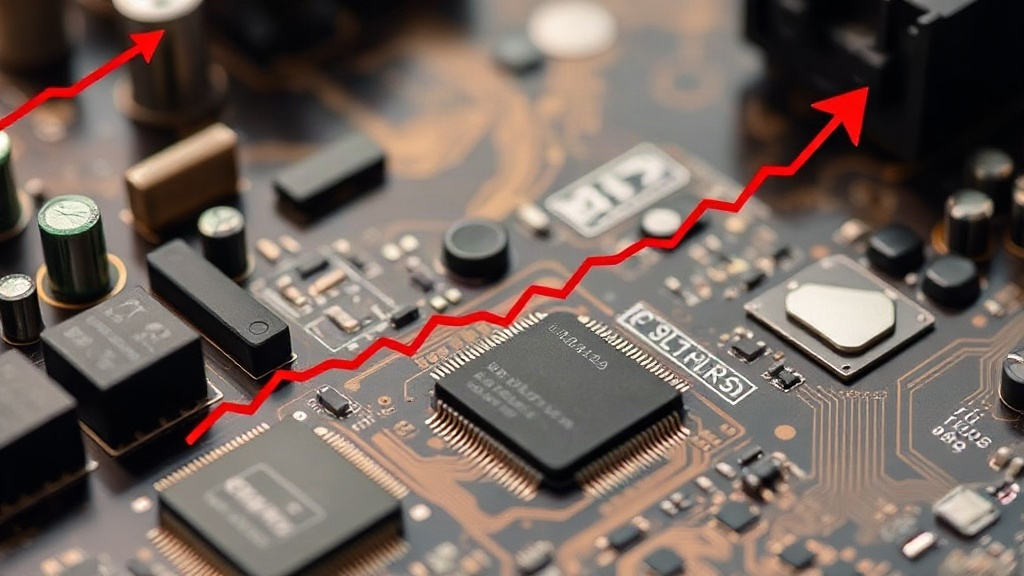
The Economic Imperative and Market Signals
The research by the Wachters signals a critical juncture for the AI industry. The sheer scale of investment suggests a strong market conviction in the future of AI. However, this conviction must be backed by tangible economic returns. If hyperscalers cannot achieve the projected productivity gains, the substantial capital deployed could yield diminishing returns, potentially leading to a reassessment of valuations and future investment strategies. This could, in turn, impact the pace of AI development and adoption across various sectors.
The implications extend beyond the hyperscalers themselves. A slowdown in their ability to provide cost-effective AI compute could ripple outwards, affecting startups, researchers, and enterprises that rely on their infrastructure. The pressure to innovate and optimize will intensify, likely spurring further advancements in AI hardware, software, and algorithmic research. Competitors and smaller players will be watching closely, seeking opportunities to gain an edge through superior efficiency or novel approaches that circumvent the need for massive, capital-intensive infrastructure.
Unanswered Questions and Future Outlook
While the research provides a stark quantitative target, many questions remain about how this productivity increase will be achieved. Will it be through incremental improvements across the board, or will a few singular technological breakthroughs drive the majority of the gains? What happens if certain areas, like algorithmic efficiency, hit fundamental limits? The surprising detail here is not just the magnitude of the required productivity jump, but the implicit assumption that such gains are achievable through current technological trajectories and innovation cycles. The path from $1.1 trillion in spending to 2.7x productivity is paved with significant, yet undefined, technological and operational advancements.
For developers and founders building on these platforms, this underscores the importance of optimizing their own AI applications for efficiency. As hyperscalers face pressure to deliver more compute for less, the cost of AI services could become a more significant factor. This might incentivize the development of leaner models, more efficient inference techniques, and a greater focus on cost-performance ratios in AI development. For data scientists and researchers, the drive for efficiency will likely push the boundaries of model compression, quantization, and distributed training methodologies. The next few years will be critical in determining whether the AI industry can meet this immense economic challenge, transforming speculative investment into sustained, profitable growth.