The Nature of AI Hallucinations
The term "hallucination" in the context of artificial intelligence refers to a chatbot generating information that is demonstrably false or fabricated, yet presenting it with the authority of truth. This phenomenon is one of the most frequent criticisms leveled against AI systems, particularly large language models (LLMs). Users often encounter these inaccuracies when an AI confidently asserts incorrect facts, invents details, or misrepresents existing information. While it might seem like a bug – a glitch in the system – a deeper examination suggests that these "hallucinations" are, in many ways, an inherent feature of how current AI models function.
Consider a common anecdote: a user asks an AI about a specific biblical figure, such as the husband of Elizabeth, the mother of John the Baptist. The AI might respond with the name "Aaron," when in fact, the correct answer is "Zechariah." The AI's reasoning might be influenced by prompt engineering. If the user included the word "priest" in their prompt, the AI could strongly associate "priest" with Aaron, a prominent priestly figure in the Bible, leading to an incorrect association and a fabricated answer. This is not simply a matter of the model lacking sufficient training data or parameters. Even models with tens or hundreds of billions of parameters can exhibit this behavior. The issue runs deeper than just data volume.

Understanding the Generative Process
At their core, LLMs are sophisticated pattern-matching and prediction machines. They are trained on vast datasets of text and code, learning to predict the next most probable word in a sequence given the preceding words. This probabilistic approach means that AI models don't "know" facts in the human sense. Instead, they generate responses based on the statistical relationships they have identified in their training data. When prompted, the model embarks on a journey of token prediction, selecting the most likely next token, then the next, and so on, until a coherent response is formed. This process is akin to a highly advanced autocomplete function that can generate entire narratives, code snippets, or factual-sounding statements.
The "hallucination" occurs when the statistical pathways the model follows lead it to generate information that is not grounded in factual reality, but is instead a plausible-sounding extrapolation or a miscombination of learned patterns. For instance, if the training data contains numerous instances of "priest" appearing near "Aaron" in contexts discussing biblical figures, and fewer instances of "priest" near "Zechariah" in similar contexts, the model might over-index on the former association. The model isn't lying; it's following the most statistically probable path based on its training, even if that path deviates from factual accuracy. This mechanism is not a flaw to be patched but a fundamental characteristic of the generative architecture.
The "Feature" Aspect: Creativity and Novelty
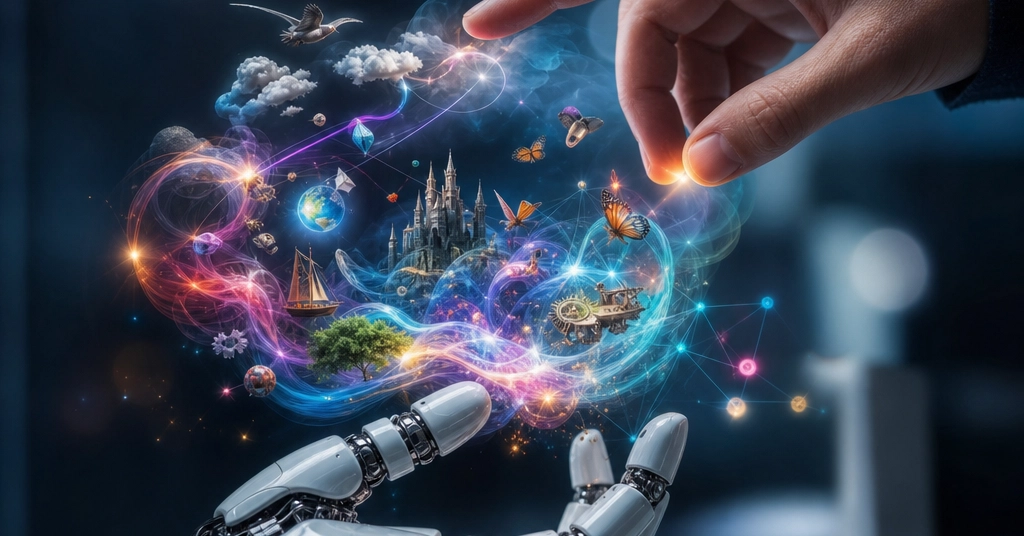
While "hallucination" carries a negative connotation, the underlying mechanism that causes it can also be the source of AI's impressive creative capabilities. The ability to generate novel text, to synthesize information in unexpected ways, and to produce creative content stems from the same probabilistic generation process. When an AI "hallucinates," it is essentially exploring the edges of its learned knowledge space, making connections that a human might not immediately consider. This can lead to creative writing, unique problem-solving approaches, and the generation of entirely new ideas.
Think of it less like a faulty database returning incorrect entries and more like a jazz musician improvising. The musician draws on their knowledge of scales, chords, and rhythms, but they also venture into new melodic territories. Sometimes this improvisation is brilliant and innovative; other times, it might sound discordant or off-key. Similarly, LLMs can produce remarkably insightful or creative outputs by deviating from the most common patterns, but this deviation also opens the door to factual inaccuracies. The very flexibility that allows for creativity also permits factual invention.
The challenge, therefore, is not to eliminate "hallucinations" entirely, as that might stifle creativity and reduce the AI's utility in generative tasks. Instead, the focus is shifting towards managing and mitigating these inaccuracies, ensuring that users can distinguish between factual output and creative generation, and developing methods to ground AI responses in verifiable information when factual accuracy is paramount. This involves techniques like retrieval-augmented generation (RAG), where the AI consults external knowledge bases before generating a response, and fine-tuning models to better understand the difference between creative license and factual reporting.
Implications for Users and Developers
For users, this understanding is critical. It means approaching AI-generated information with a healthy dose of skepticism, especially for critical applications. Fact-checking AI outputs, particularly those that seem unusual or overly confident, is essential. Developers building AI applications must integrate robust validation mechanisms and provide clear indications to users about the potential for inaccuracies. The goal is to harness the generative power of AI while building guardrails that ensure reliability and trustworthiness when needed.
What is less clear is how to best signal to users when an AI is operating in its creative, speculative mode versus its factual recall mode. Current interfaces often present all outputs with a uniform level of authority, blurring the lines between genuine knowledge and plausible invention. Developing UI/UX patterns that clearly delineate these modes could be a significant step forward in user trust and utility. This isn't just about tweaking prompts; it's about fundamentally redesigning how users interact with and perceive AI's output, acknowledging that the "bug" is deeply intertwined with the "feature."