The Growing Threat of Exposed AI Endpoints
The rapid deployment of AI models, particularly large language models (LLMs), has led to a proliferation of accessible inference endpoints. While convenient for developers and researchers, this accessibility has also exposed a critical security vulnerability: attackers are hijacking these endpoints to run offensive operations without needing to exploit complex code. A recent analysis highlighted how attackers are leveraging exposed AI endpoints, such as those powered by Ollama or LiteLLM, to gain unauthorized access and abuse resources. This is often facilitated by a lack of basic security layers, allowing anonymous access and enabling malicious activities.
The core issue lies in the direct exposure of APIs that facilitate AI model inference. Without proper authentication, rate limiting, or input validation, these endpoints become easy targets. Attackers can send malicious prompts, consume excessive resources (leading to denial-of-service or unexpected costs), or even exfiltrate sensitive data if the model has access to it. This scenario is particularly concerning as it requires minimal technical sophistication from the attacker, making it a widespread and immediate threat to organizations deploying AI models.
Introducing AI Guard Gateway: A Defensive Proxy
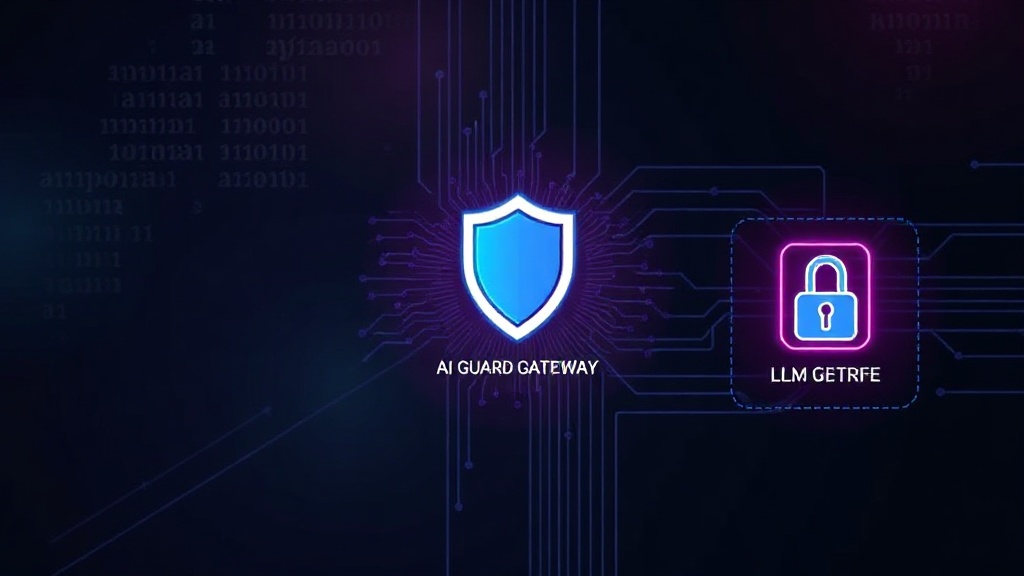
In response to this escalating threat, a new open-source project, AI Guard Gateway, has been developed. Version 0.1.0 marks its initial release, offering a technical solution to mitigate these risks. AI Guard Gateway is designed as a security-focused inverse proxy, intended to be deployed in front of any language model. Its primary function is to act as a gatekeeper, inspecting and filtering incoming requests before they reach the AI model itself.
The development methodology employed is Spec-Driven Development (SDD). This approach emphasizes defining clear acceptance criteria for each feature, ensuring that the gateway functions precisely as intended and addresses the identified security concerns systematically. This rigorous approach aims to build a reliable and robust security tool.
Technical Implementation and Key Features
AI Guard Gateway tackles several critical security vectors:
Prompt Injection Mitigation
One of the most significant threats to LLMs is prompt injection. Attackers craft specific inputs that manipulate the model into performing unintended actions, bypassing safety filters, or revealing confidential information. AI Guard Gateway implements mechanisms to detect and neutralize these malicious prompts. This involves analyzing the structure and content of user inputs, identifying patterns indicative of injection attempts, and either blocking the request or sanitizing the input before it is passed to the LLM. The goal is to ensure that the model only processes legitimate user queries and adheres to its intended operational boundaries.
Endpoint Hijacking Prevention
The gateway directly addresses the issue of exposed endpoints being hijacked. By acting as a reverse proxy, it can enforce security policies that are absent in direct API exposure. This includes:
- Authentication and Authorization: Implementing robust authentication mechanisms ensures that only authorized users or applications can access the AI model. This can range from API keys to more sophisticated OAuth flows, preventing anonymous abuse.
- Rate Limiting: To prevent denial-of-service attacks and resource exhaustion, AI Guard Gateway can enforce strict rate limits on incoming requests. This ensures fair usage and protects the underlying infrastructure from being overwhelmed.
- Input Validation and Sanitization: Beyond prompt injection, general input validation helps prevent other forms of abuse, such as malformed requests or attempts to exploit vulnerabilities in the model's processing pipeline.
- Access Control: Fine-grained access control can be implemented to restrict specific users or groups to certain models or functionalities, further enhancing security.
Resource Protection
By preventing unauthorized access and controlling the flow of requests, AI Guard Gateway also serves to protect the underlying computational resources. Unchecked access can lead to unexpected spikes in usage, incurring significant costs and potentially impacting the performance for legitimate users. The gateway's control mechanisms ensure that resource consumption remains within predictable and manageable limits.
Spec-Driven Development (SDD) in Practice
The adoption of Spec-Driven Development (SDD) is a key differentiator for AI Guard Gateway. Instead of traditional test-driven development (TDD) or behavior-driven development (BDD), SDD focuses on defining the system's behavior through a formal specification. For AI Guard Gateway, this means that every security rule, every filtering mechanism, and every access control policy is defined upfront with clear, verifiable acceptance criteria. This method ensures that the developed system strictly adheres to its intended security posture and that its effectiveness can be objectively measured. This is particularly important for security tools, where precise and predictable behavior is paramount.
The Broader Implications for AI Deployment
The release of AI Guard Gateway v0.1.0 signifies a crucial step towards more secure AI deployments. As organizations increasingly integrate AI models into their products and workflows, the security of these models and their associated APIs becomes paramount. This tool provides a readily available, open-source solution that addresses immediate threats like prompt injection and endpoint hijacking. It empowers developers and security professionals to deploy AI models with greater confidence, knowing that a dedicated security layer is in place.
The trend towards exposing AI functionalities via APIs is irreversible. Without robust security measures, the risks will continue to grow. AI Guard Gateway offers a foundational layer of defense, but it also highlights the need for a broader security mindset in AI development. This includes secure coding practices, continuous monitoring, and a proactive approach to identifying and mitigating emerging threats. As AI capabilities expand, so too must our strategies for securing them.