
The AI Lexicon: Navigating the New Language of Intelligence
The rapid ascent of Artificial Intelligence has unleashed a torrent of new terminology. From foundational concepts to cutting-edge jargon, understanding this evolving lexicon is no longer optional for anyone involved in technology. This glossary aims to demystify the most crucial terms, providing clarity for developers, founders, security professionals, and data scientists alike.
Foundational Concepts: LLMs, Training Data, and Parameters
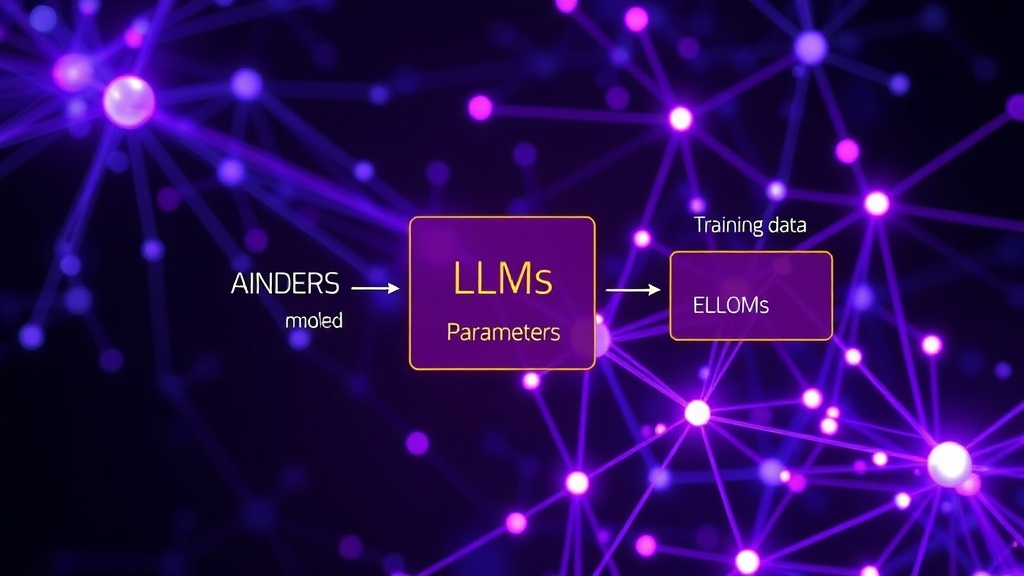
At the core of modern AI are Large Language Models (LLMs). These are massive neural networks, trained on colossal datasets, capable of understanding, generating, and manipulating human language. Think of an LLM less like a simple program and more like a vast, interconnected library where every book is related to every other book, allowing it to draw complex inferences and generate coherent text. The scale is defined by its parameters – the numerical values the model learns during training. More parameters generally mean a more capable, but also more computationally expensive, model. The quality and diversity of the training data are paramount; it's the raw material from which the AI learns patterns, biases, and knowledge. Biased training data inevitably leads to biased AI outputs, a critical consideration for ethical development and deployment.
Generative AI and Its Quirks: Hallucinations and Prompt Engineering
The most visible application of LLMs today is Generative AI, systems designed to create new content – text, images, code, music, and more. This capability, however, comes with its own set of challenges. One of the most discussed is AI Hallucination. This occurs when an AI model generates factually incorrect or nonsensical information, presenting it with confidence as if it were true. It’s akin to a brilliant student who, under pressure, confidently invents facts to fill gaps in their knowledge. Mitigating hallucinations requires careful model design, fine-tuning, and robust validation processes. Crucial to eliciting desired outputs from generative models is Prompt Engineering. This is the art and science of crafting effective inputs (prompts) to guide the AI towards generating specific, accurate, and useful results. A well-engineered prompt can be the difference between a helpful response and gibberish.
AI in Practice: Fine-Tuning, Embeddings, and Vector Databases
While pre-trained LLMs are powerful, they are often fine-tuned for specific tasks or domains. This process involves further training a model on a smaller, specialized dataset to adapt its general knowledge to a particular application, such as medical diagnosis or legal document analysis. This is like taking a broadly educated individual and giving them specialized training in a niche profession. A key technology enabling sophisticated AI applications is Embeddings. These are numerical representations of data (words, sentences, images) in a high-dimensional space, where similar items are located close to each other. This allows AI models to understand semantic relationships. Storing and querying these embeddings efficiently is the job of Vector Databases. Unlike traditional databases that store structured data in tables, vector databases are optimized for searching through high-dimensional vectors, making them essential for applications like semantic search, recommendation systems, and anomaly detection.
Ethical and Security Considerations: Bias, Alignment, and Adversarial Attacks
As AI becomes more integrated into society, ethical considerations are paramount. AI Bias, stemming from skewed training data or algorithmic design, can perpetuate and even amplify societal inequalities. Ensuring fairness and equity in AI systems requires constant vigilance and proactive measures. AI Alignment refers to the challenge of ensuring that AI systems act in accordance with human values and intentions, especially as they become more autonomous and capable. This is a complex research area focused on preventing unintended consequences. From a security perspective, Adversarial Attacks pose a significant threat. These are specially crafted inputs designed to trick AI models into making incorrect predictions or classifications. For instance, a subtly altered image that appears normal to humans might be misclassified by an AI. Protecting AI systems from these attacks is a growing field within cybersecurity.
Emerging Trends and the Road Ahead
The AI landscape continues to evolve at breakneck speed. Terms like Reinforcement Learning from Human Feedback (RLHF), a technique used to fine-tune models based on human preferences, are becoming more common. As AI models grow more sophisticated, the focus will increasingly shift towards explainability (understanding *why* an AI made a decision) and robust safety mechanisms. The interplay between these technical terms and their real-world implications will define the next wave of AI innovation and adoption. Staying abreast of this glossary is your first step.