Targeted Neural Stimulation with AI-Generated Video
A novel approach from EPFL researchers leverages artificial intelligence to generate dynamic visual stimuli designed to maximally activate specific target regions within the brain. This work, detailed on Nevo Project, moves beyond static images or simple video clips to create content tailored for precise neural engagement. The core innovation lies in using AI to understand and predict how visual input influences neural activity, then optimizing video generation to elicit a desired response in a targeted brain area.
Traditional methods for studying or influencing brain activity often rely on indirect measures or broad stimulation techniques. This new method aims for a level of precision previously unattainable. By treating video generation as an optimization problem – where the objective function is the maximal activation of a given brain region – the AI can explore a vast design space of visual content to find what works best. This is akin to tuning a radio to a specific station, but instead of radio waves, we are tuning visual information to specific neural frequencies.
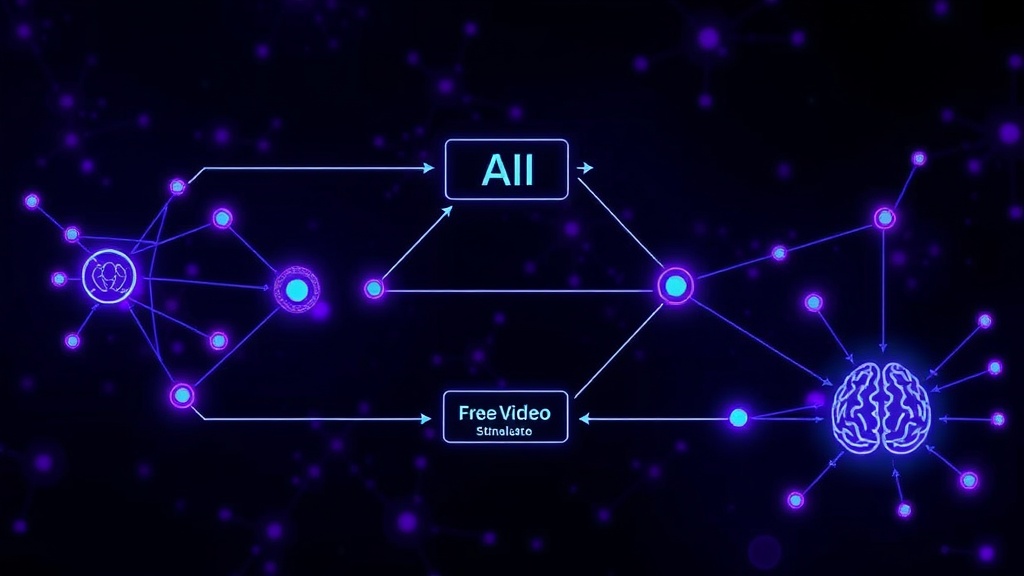
The process likely involves a feedback loop. Researchers would identify a target brain region (e.g., using fMRI or EEG data). An AI model, trained on existing data correlating visual stimuli with neural responses, would then generate candidate video segments. These segments would be presented to subjects, and the resulting brain activity would be measured. This data would then be used to refine the AI's video generation algorithm, iteratively improving its ability to drive the target region. This iterative refinement is crucial, as individual neural responses can vary.
The Technical Underpinnings of AI Video Generation
At its heart, this technique relies on advanced generative AI models, likely variations of diffusion models or Generative Adversarial Networks (GANs) adapted for temporal data. These models are capable of producing highly realistic and complex visual sequences. The challenge, however, is not just generating *any* video, but generating videos with specific perceptual and, consequently, neural properties. This requires a deep understanding of how visual features like color, motion, contrast, and semantic content translate into neural signals.
Researchers would need to develop a robust objective function that quantifies the desired neural activation. This could involve correlating specific visual features with known neural responses in the target region. For instance, if a particular brain area is known to respond strongly to rapid, high-contrast motion, the AI would be tasked with generating videos featuring such elements. Conversely, if the goal is to suppress activity or induce a specific state, the AI would generate stimuli designed to achieve that.
The training data is paramount. This would likely consist of large datasets of videos paired with corresponding neural activity recordings (e.g., fMRI, EEG, or even single-neuron recordings in animal models). The AI learns to map visual characteristics to neural outputs. The novelty here is the *direction* of this mapping: instead of predicting neural activity from video, it's optimizing video generation *for* a specific neural outcome. This is a form of closed-loop control, where the AI acts as both the stimulus generator and the controller, guided by real-time or near-real-time neural feedback.
Potential Applications and Future Directions
The implications of precisely controlling neural activity through AI-generated video are vast. In neuroscience research, it offers an unprecedented tool for probing brain function. Scientists can use these videos to selectively activate or deactivate specific neural circuits and observe the resulting cognitive or behavioral changes, leading to a more granular understanding of brain networks. This could accelerate research into conditions like Parkinson's disease, epilepsy, or depression, where specific neural circuits are implicated.
For brain-computer interfaces (BCIs), this technology could enable more intuitive and responsive control systems. Imagine a BCI that interprets user intent by observing subtle neural responses to AI-generated visual cues, allowing for smoother interaction with prosthetic limbs or computer systems. It could also form the basis for novel therapeutic interventions. For example, AI-generated videos could be used in neurofeedback therapies to retrain aberrant neural pathways, potentially treating conditions like anxiety, PTSD, or attention disorders.
One surprising detail is the potential for creating highly personalized stimuli. Because neural responses are individual, an AI system could adapt its video generation to a specific person's unique brain activity patterns, leading to more effective and less intrusive interventions. This moves beyond one-size-fits-all approaches to a truly bespoke form of neuromodulation.
However, significant challenges remain. The accuracy and resolution of current neural recording techniques limit the granularity of control. The computational cost of generating and optimizing videos in real-time is substantial. Furthermore, ethical considerations surrounding direct neural manipulation, even through visual stimuli, will need careful navigation. What happens when AI can precisely target and influence specific thought processes or emotional states? This is a question that will require thoughtful societal discussion as the technology matures.
Broader Implications for AI and Neuroscience
This research sits at the confluence of generative AI, neuroscience, and human-computer interaction. It represents a paradigm shift from using AI *to analyze* brain data to using AI *to actively shape* brain activity. This opens up new avenues for AI applications that go beyond mere information processing into direct biological interaction. The ability to generate complex, dynamic stimuli that elicit specific neural responses is a powerful capability with profound implications.
The success of this approach hinges on bridging the gap between the abstract representations learned by AI models and the concrete biological reality of neural networks. It requires interdisciplinary collaboration between AI researchers, neuroscientists, and engineers. As AI models become more sophisticated and our understanding of the brain deepens, we can expect to see even more advanced forms of AI-driven neural modulation emerge. The future may involve AI systems that not only generate content but also orchestrate biological responses with remarkable precision.