A recent post on the r/artificial subreddit has highlighted a fascinating intersection of artificial intelligence and human creativity. A user, /u/ManifestMitchell, shared a link to a video where they learned to play an AI-generated song acoustically. The original AI-produced track, complete with an animated video, was created by a channel described as "faceless," and the poster is actively seeking to credit the original AI creators.
The AI's Musical Genesis
The core of the story lies in the AI's capability to generate not just music, but a complete production including lyrics, melody, and arrangement, further enhanced by a visual animation. While the specific AI model or platform used remains unidentified, the existence of such a tool capable of producing a song that resonates enough to be learned and performed by a human is significant. This isn't merely about a machine composing notes; it's about AI's growing ability to engage with creative output on a level that prompts human interpretation and adaptation.
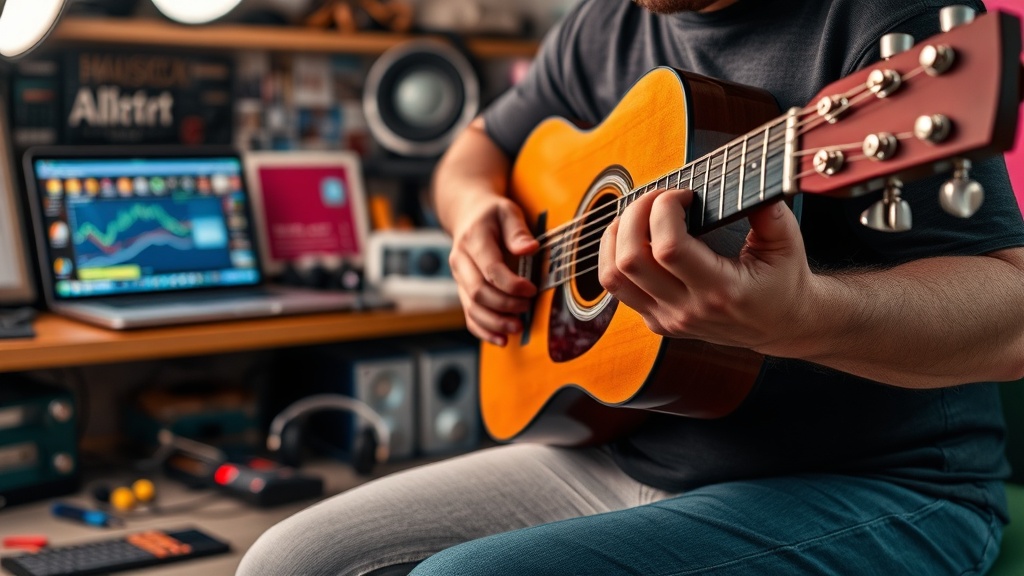
The user shared the AI-generated song and their subsequent acoustic interpretation, inviting the community to help identify the original AI music producer. The post links to a video showing the acoustic performance, demonstrating a human artist's engagement with AI-generated content. This act transforms the AI's output from a static digital artifact into something that can be remixed, reinterpreted, and performed in a traditional, analog format. It’s a testament to the AI’s ability to create something with enough artistic merit to inspire a human performer.
The Search for the AI's Authors
A recurring theme in the discussion is the desire to credit the original creators. In the world of AI-generated content, attribution can be notoriously difficult. Unlike human artists who have established portfolios and identities, AI models and the teams behind them are often less visible. The poster explicitly states, "I can't find the original creator, but a faceless channel had AI write & produce this song and then did an animation video for it. If you know of it or can find it please credit them in the comments." This plea underscores a growing challenge in the creative industries: how do we properly attribute and acknowledge the origin of AI-assisted or AI-generated works?
The community's response, as evidenced by the comments on Reddit, often involves speculation about the tools used. Possibilities range from advanced music generation models like those from Google's Magenta project or OpenAI's Jukebox, to more integrated platforms that offer AI songwriting and production assistance. The "faceless channel" aspect further complicates matters, suggesting a deliberate choice to focus on the AI's output rather than a human persona, or perhaps a method to anonymize the source of the AI-generated content. This anonymity raises questions about the business models and ethical considerations surrounding AI content creation.
AI as a Creative Catalyst
The act of learning the AI's song acoustically is more than just a cover; it's a form of cross-pollination between artificial and human intelligence. The AI provided the raw material – the composition, lyrics, and production. The human artist then took this digital blueprint and applied their own skill, emotion, and interpretation through a physical instrument. This process highlights how AI can serve not as a replacement for human creativity, but as a powerful catalyst. It can provide inspiration, overcome creative blocks, or offer entirely new sonic palettes that artists can then build upon.
Think of this less like AI replacing a musician and more like a musician discovering an unusual, pre-written chord progression they’d never have conceived on their own. They can then take that progression and weave it into their own musical tapestry, adding their unique voice and style. The AI didn't just write a song; it initiated a creative dialogue. The acoustic performance is the human response in that conversation, demonstrating that the most compelling creative outcomes often arise from collaboration, even when one collaborator is a machine.
Implications for Content Creation and Attribution
This incident, while seemingly small, touches upon broader implications for the future of content creation. As AI tools become more sophisticated, the lines between human and machine authorship will blur further. This raises crucial questions about copyright, ownership, and fair compensation. If an AI generates a hit song, who owns the rights? The developers of the AI? The user who prompted it? Or is it public domain?
The community's effort to find and credit the original creators, despite the difficulties, points to an underlying human desire for provenance and recognition. This is a challenge that will only intensify as AI becomes more deeply integrated into creative workflows. Establishing clear frameworks for attribution and ownership for AI-generated content is becoming an urgent necessity. Without it, we risk a creative landscape where the origins of art are obscured, and the value of human contribution is diluted.
Ultimately, this AI-generated song, learned and performed acoustically, serves as a compelling case study. It showcases AI's creative potential while simultaneously highlighting the enduring human drive to interpret, perform, and connect with art, regardless of its origin. The search for the original AI creators is not just about giving credit; it's about understanding the evolving nature of creativity in the age of artificial intelligence.