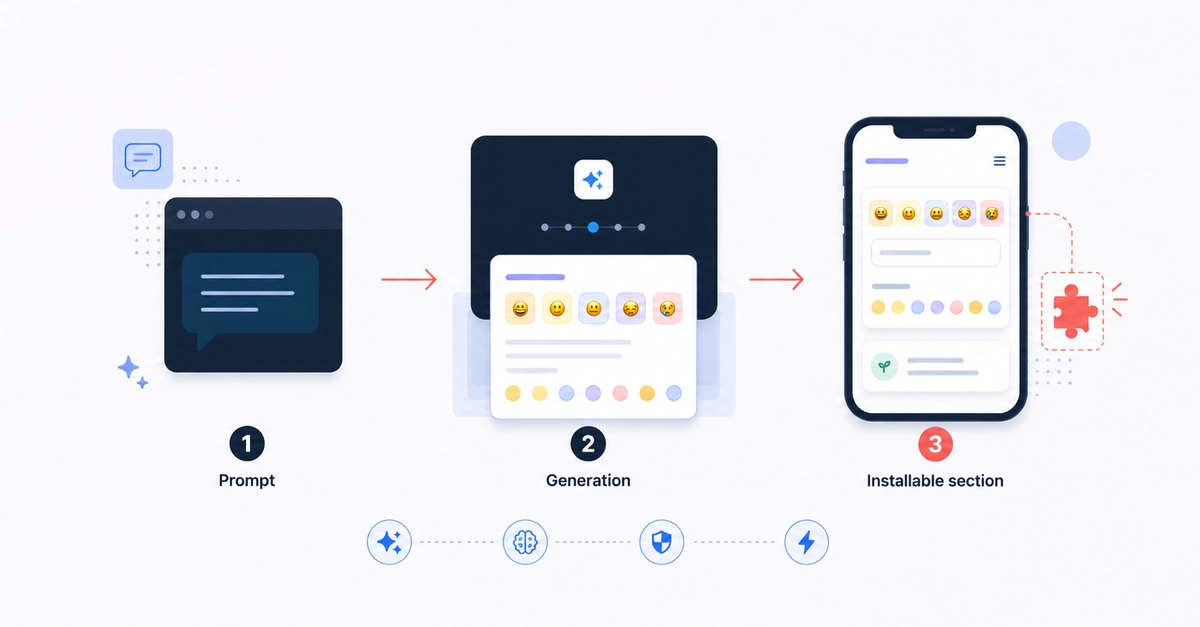
The line between no-code and code is blurring. For platforms that offer pre-built blocks and visual logic wiring, the ability to generate custom code with AI is not about turning users into programmers. Instead, it’s about bridging the gap when a user’s needs outgrow the platform’s existing component library. The challenge, however, is not in the generation itself, which is becoming increasingly trivial in 2026. The true difficulty lies in ensuring that AI-generated code remains functional, secure, and maintainable long after its creation.
The Generation Illusion
The prevailing narrative around AI-generated code often focuses on the novelty of creation. Models can now produce syntactically plausible code snippets and even entire functions with surprising accuracy. This capability has fueled excitement about democratizing development and accelerating prototyping. However, this focus on the output of the prompt overlooks the critical post-generation lifecycle. When a no-code platform leverages AI to generate a missing component, it's not just about filling a void; it's about ensuring that the new piece integrates seamlessly and reliably into the existing application architecture.
Think of it less like a magic wand that conjures a finished product, and more like a highly skilled but literal-minded assistant who can draft a specific document. The assistant can write the words, but you still need to edit it for clarity, check its legal compliance, ensure it aligns with your company’s tone, and file it correctly. Similarly, AI can write code, but the platform must then handle the integration, testing, security hardening, and ongoing maintenance. This is where the real engineering effort begins.
Beyond Plausibility: The Production Imperative
What does it take for AI-generated code to be production-ready? Several factors come into play, moving beyond mere code generation to address the entire software development lifecycle:
- Maintainability: Code must be readable, well-documented, and structured logically. AI models can sometimes produce convoluted or overly complex solutions that are difficult for humans to understand or modify later. Platforms need to enforce coding standards and potentially refactor AI output to ensure long-term maintainability.
- Security: AI-generated code can inadvertently introduce vulnerabilities. Without rigorous security scanning and adherence to secure coding practices, these components could become attack vectors. This requires integrating static analysis security testing (SAST) and dynamic analysis security testing (DAST) tools into the generation pipeline.
- Testability: For AI-generated code to be reliable, it must be accompanied by a robust suite of automated tests. This includes unit tests, integration tests, and end-to-end tests. The AI itself could potentially generate these tests, but validating their completeness and effectiveness is crucial.
- Integration: The generated code must fit seamlessly into the existing application. This involves managing dependencies, ensuring compatibility with other modules, and handling data contracts correctly. Poor integration can lead to runtime errors and instability.
- Performance: While AI might generate functional code, it may not always be optimized for performance. Profiling and optimization may be necessary to ensure the application remains responsive and efficient, especially under load.
- Version Control and Rollback: Like any other code, AI-generated components need to be managed under version control. Clear mechanisms for tracking changes, rolling back to previous versions, and understanding the impact of updates are essential.
The Platform's Role: From Generator to Guardian
The true innovation in integrating AI code generation into no-code platforms lies in the platform’s ability to act as a guardian of that code. This means building sophisticated tooling and processes that automate the heavy lifting of making AI-generated code production-ready. This involves:
Automated Refactoring and Optimization: The platform should be capable of analyzing generated code and applying best practices for readability, efficiency, and maintainability. This could involve transforming verbose code into more concise structures or suggesting alternative, more performant algorithms.
Integrated Security Auditing: A critical component is the automated scanning of generated code for common vulnerabilities like SQL injection, cross-site scripting (XSS), and insecure direct object references. The platform should flag potential issues and, where possible, automatically remediate them.
Intelligent Testing Frameworks: Beyond just generating code, the platform should also generate associated unit and integration tests. These tests should be designed to cover edge cases and potential failure points, providing confidence in the code’s reliability.
Dependency Management and Compatibility Checks: When a new piece of code is generated, the platform must ensure it doesn’t conflict with existing libraries or introduce compatibility issues. This requires a deep understanding of the application’s dependency graph and the ability to resolve conflicts.
Contextual Understanding: The AI needs to understand the broader context of the application it’s generating code for. This allows it to make more informed decisions about security, performance, and integration, rather than just fulfilling a narrow request.
The Unanswered Question: Scalability of Trust
While the technical challenges of making AI-generated code production-ready are substantial, an even more profound question looms: how do we build and scale trust in code that is not directly written or fully understood by the human developer? For a no-code platform, where the user's technical expertise is intentionally limited, the burden of trust shifts entirely to the platform provider. If an AI-generated component fails, introduces a security flaw, or causes performance degradation, who is accountable? The platform must provide a level of assurance that rivals or exceeds traditional development workflows. This requires transparency in how code is generated, rigorous validation processes, and clear communication about the limitations and risks involved. The future of AI in no-code hinges on proving that generated code is not just a convenience, but a reliable and secure foundation for applications.